
The silk paper of the 1st issue is a frequently misunderstood area of revenue collecting. When the term "silk paper" is used, the lay collector usually conjures up images of the 2nd- and 3rd-issue documentaries, which have a paper that is chock full of threads. The 1st-issue silk paper looks nothing like this.
| 1st Issue Silk Paper | 2nd Issue Paper |
|---|---|
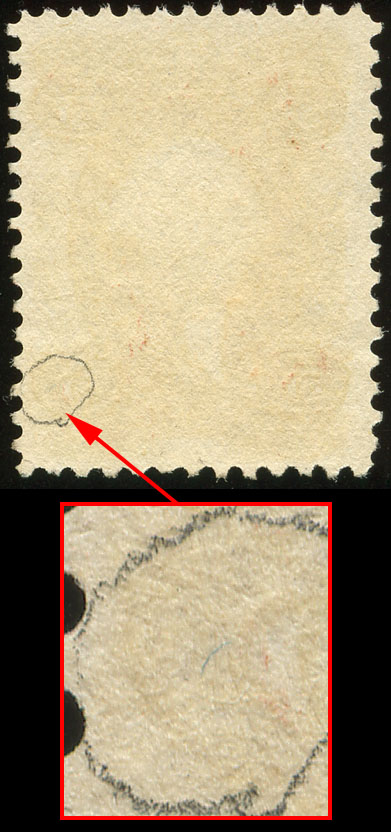 |
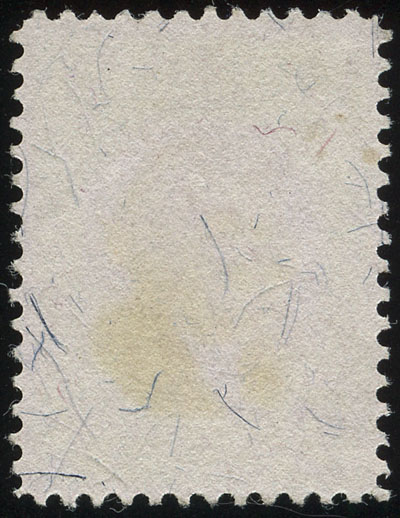 |
| Closeup of 1st issue silk thread (not from the above stamp) using a USB microscope | |
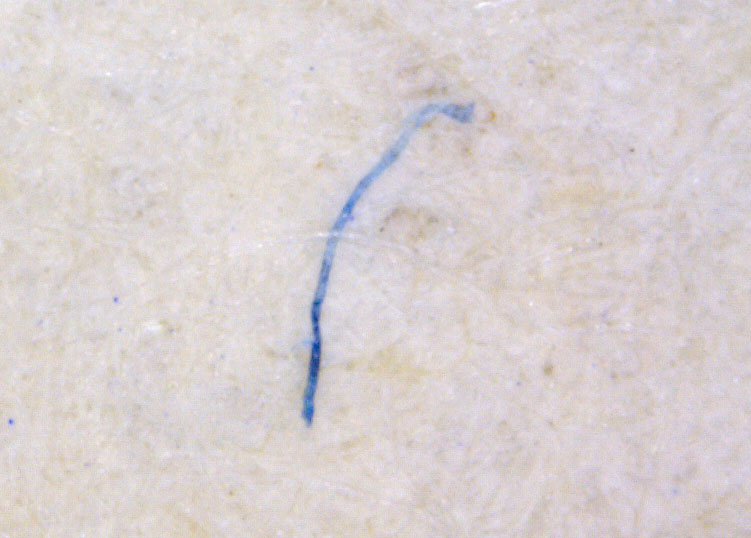 |
|
From The Boston Book  :
:
There are, for this issue, four distinct and easily recognizable papers, viz., thin, medium, thick and silk. The first is hard, brittle, sometimes almost transparent, and generally of a yellowish or grayish appearance. The second is of various degrees of thickness, always very soft and white, and often quite porous. In this work it will be understood to embrace all varieties not included under either of the other headings.
The third, or thick variety, is often very white, hard, and rather brittle. In fact it is so thick as to be almost a thin bristol-board. The fourth is self-explanatory, it being merely a rather soft, thick paper, closely resembling the second, or medium variety, as described above, into the composition of which a few scattering silk fibres have been introduced. These fibres are very easily overlooked, as, as a general rule, they are very minute and widely scattered, so that often a stamp will show but a single fibre.
I like the information that Richard Friedberg provides in his book Introduction to United States Revenue Stamps (1994, Linn's Stamp News):
While it is always nice to be able to see the blue threads with the naked eye, that is not always possible. Magnification can help. These days, I use an 8-power glass. The shade in which the stamp is printed is often a giveaway as to whether the stamp in question is on silk paper, but accurately identifying it seems to be an ability that a collector acquires only with years of study. It is better to take a glass and examine the back of the stamp for fibers.
If the stamp that you have in front of you has a cancel prior to 1869, it is not and cannot be silk paper. If the cancel is dated 1871, the odds are pretty good that it will be silk paper. On the stamps canceled between 1869 and 1871, you'll have to examine the stamp closely.
I emphasized the statement above, because I don't know that it is necessarily true. Sometimes when documents were filed and revenue stamps affixed after the fact, the clerk would backdate the cancel on the stamp to match the original transaction date on the document, rather than the date the document was actually being filed. Therefore, it is possible that the date on the stamp's cancel is considerably earlier than the date the stamp was affixed, meaning that a silk paper stamp could have been used in 1870 or 1871 but bear a cancel from an earlier year. This was a fairly uncommon occurrence, and as a general rule, the above statement is true. Just be aware that there could be exceptions.
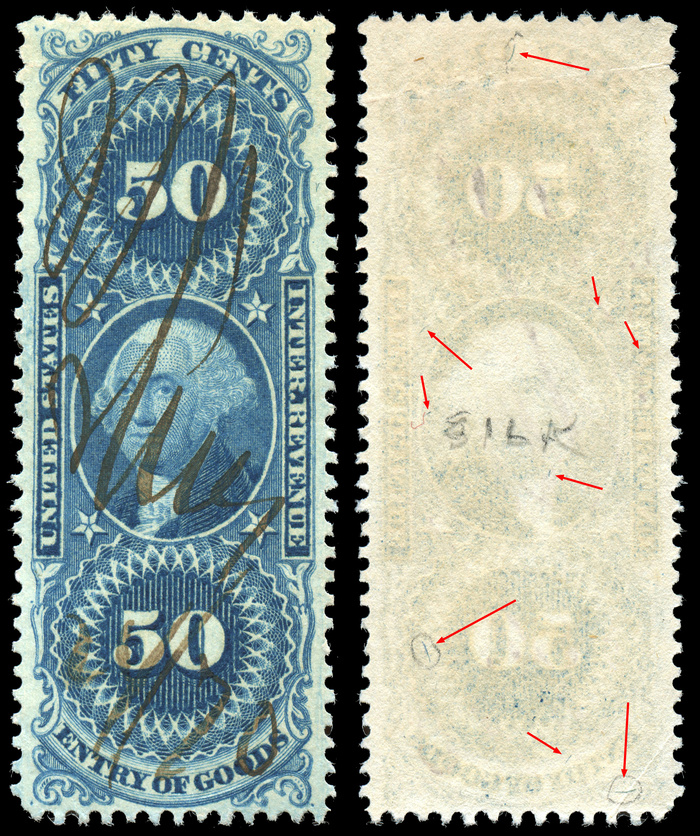
Why all the hullabaloo about silk paper? Because it is an area where even experienced dealers do not necessarily know what is and is not silk paper. I have examined hundreds of supposed silk paper 1st-issue revenues at shows, and more often than not, they are NOT silk paper. I see stamps with pieces of wood pulp circled as silk fibres. I see stamps with debris stuck to the back of the stamp marked as silk paper.
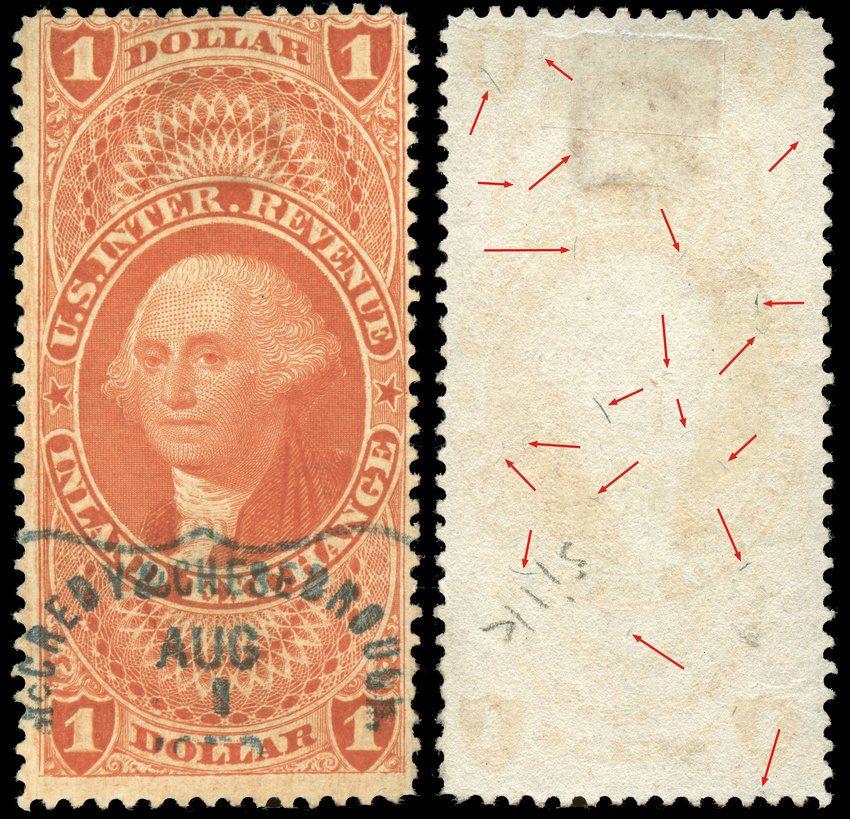
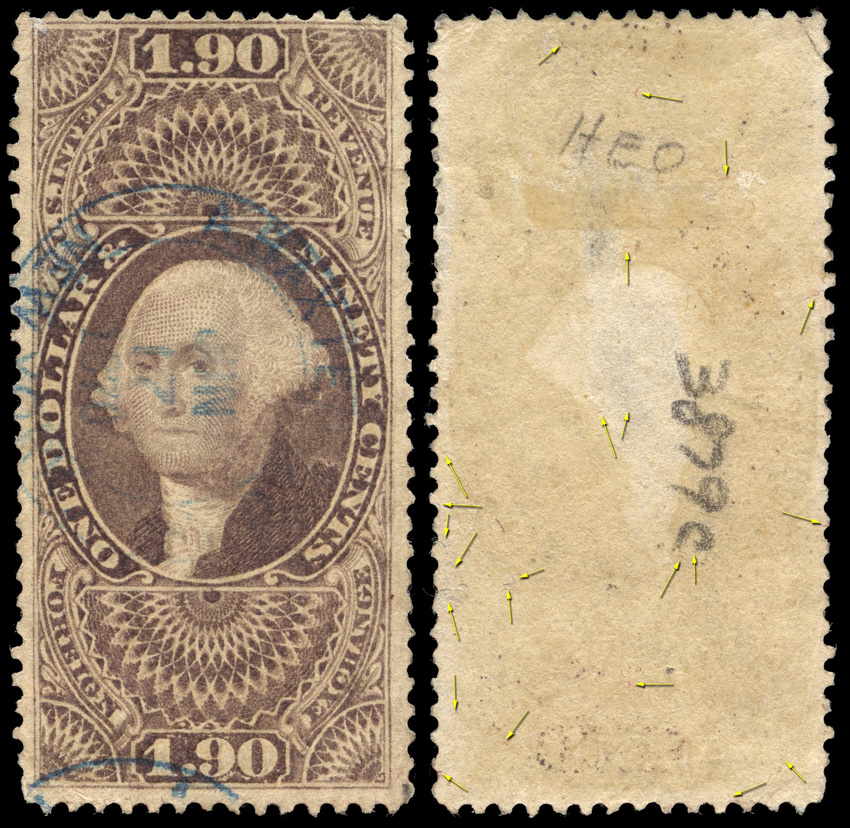
The simplest way I can put it is this: if it is not a blue thread (or in extremely rare cases red), it is not a 1st issue silk paper. Period. Not black. Not brown. Not beige. Blue or red.
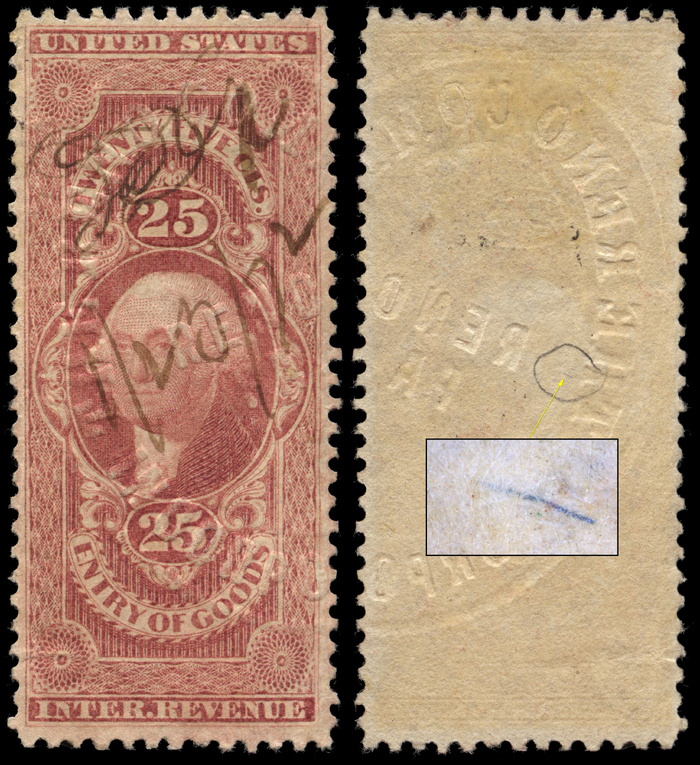
Caution! Even if you can show a blue thread in the paper, you also have to examine the other aspects of the stamp (paper color and texture, ink color, impression, cancel date) as it still may not be a silk paper, but rather foreign matter that somehow got into the paper mix. I found this out the hard way, before I knew better, on the stamp below. Note the opinion on the APEX certificate, that the blue thread is not the silk fiber indicative of silk paper on the First issue. Had I been paying attention to other aspects of the stamp and not focused solely on the silk thread, I would have seen that the shade of ink is all wrong for the R52d, and that the paper was the wrong consistency.
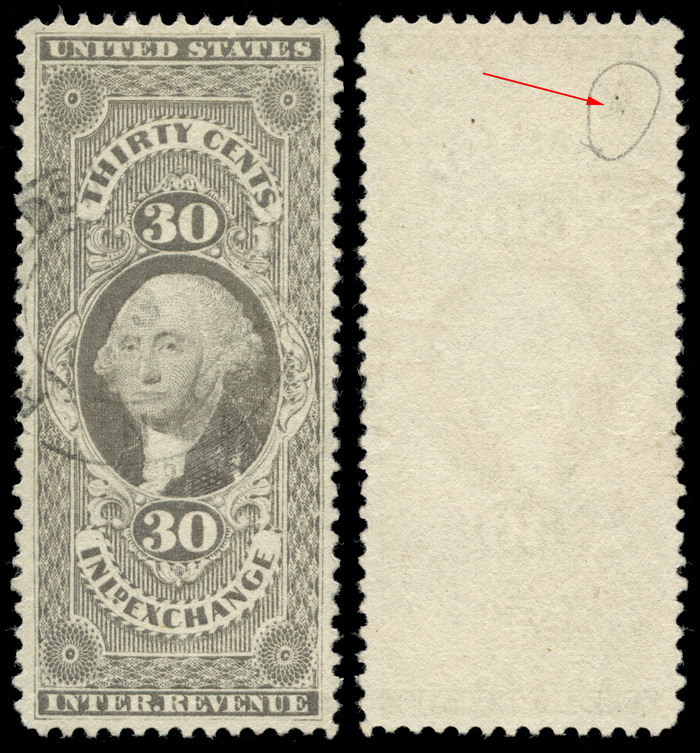
Here's where the fun starts. For every dealer out there that tries to get silk-paper money for non-silk paper, there's a dealer (sometimes even the same one!) who has stamps in his inventory that really are silk paper, but since he either doesn't know what to look for, or hasn't taken the time to carefully examine his inventory for silk fibres, he has them identified and priced as regular versions.
At a show in September of 2011 I was able to pick up 6 silk paper 1st-issue revenues, all cataloging $50 or higher, at non-silk prices (effectively cents on the dollar) simply because I knew what to look for. If you take the time to become familiar with the silk paper, and to be able to recognize at a glance the paper and ink combinations that are indicative of late printings and silk paper, you can have a field day...
1st issue silk paper is an area that is simply NOT conducive to buying online, unless you have a no-questions-asked return privilege. You MUST be able to examine the stamps firsthand. The vast majority of images shown on Internet auction sites and dealer sites are simply not high enough resolution or color fidelity to be able to accurately determine whether or not a stamp really is a silk paper. Even 1200dpi or 2400dpi scans may be insufficient, depending on whether the scanner's optical resolution is high enough, or it is "creating" high resolution by interpolating a lower resolution image.
If a stamp comes with a major certificate (Philatelic Foundation, PSE, APEX, PSAG) that will help ease your mind, but you should still guard against incorrect opinions by having a return privilege.
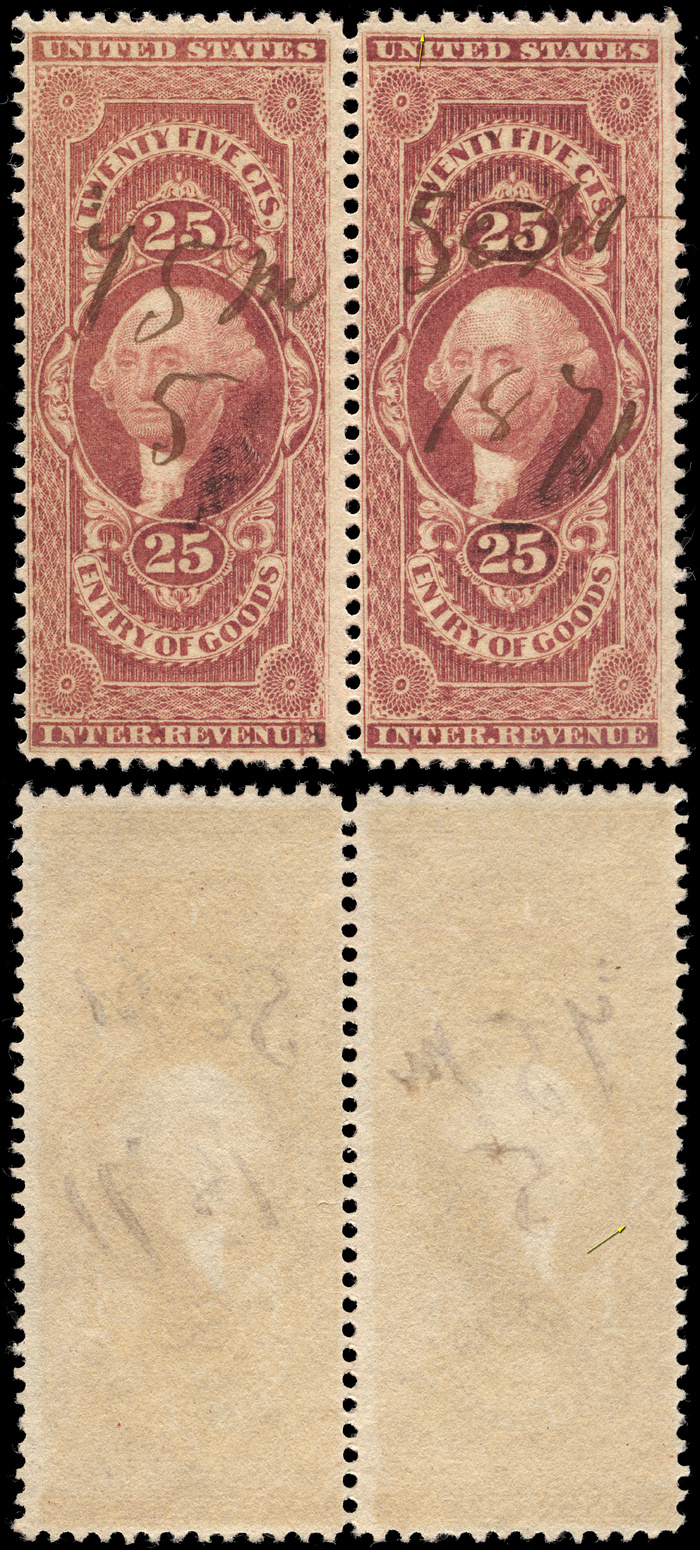
Believe it or not, it can happen. The thread count on some silk paper issues is so sparse, that there is less than one silk thread per stamp. We know this to be the case because there are cases of pairs and blocks where some of the stamps in the multiple show threads, but others do not.
The stamp without any silk threads in it IS a silk paper, however if that stamp were to be removed from the multiple, you could never prove that it is a silk paper. I've always wondered why I occasionally encounter stamps that have the correct ink color, plate impression, paper color, and texture of silk paper, but no silk threads... these are silk papers that drew the short straw; you cannot ask a silk paper premium for them.
Recently reported in The American Revenuer v. 64, no. 2, the Philatelic Foundation issued a rather puzzling opinion about a block of 7 R41d silk paper where some of the stamps showed silk fibres and others did not:
Positions 2 & 3 are genuine Scott R41d, with blue silk fibers, the balance (Scott R41c) with no discernable trace of silk fibers; the multple with a few separations between positions 1 & 2.
In my opinion, the Philatelic Foundation got it wrong. You cannot have a block that is comprised of both R41c and R41d; that would imply two different paper types in the same multiple, which is a physical impossibility. All 7 stamps in the block are R41d. However, if the block were to be ever separated into singles, only the two stamps with silk fibres present would be able to be proven to be silk paper. That still doesn't change the fact that the multiple, in its entirety, is in fact silk paper.
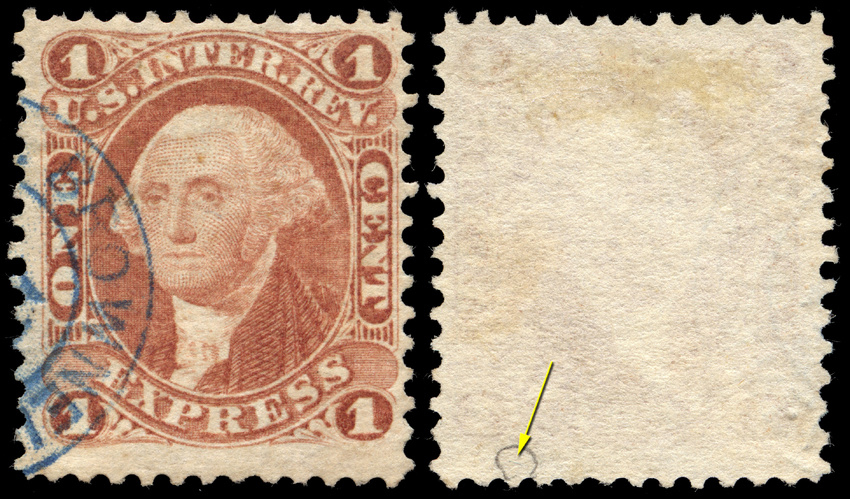
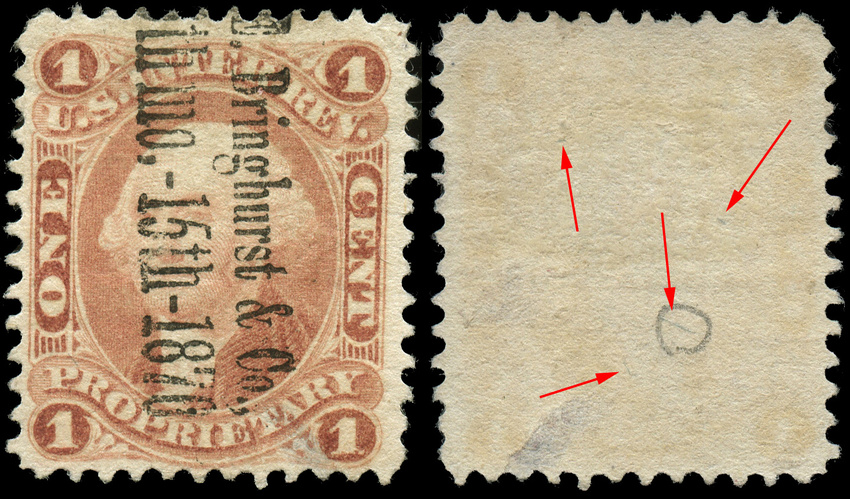
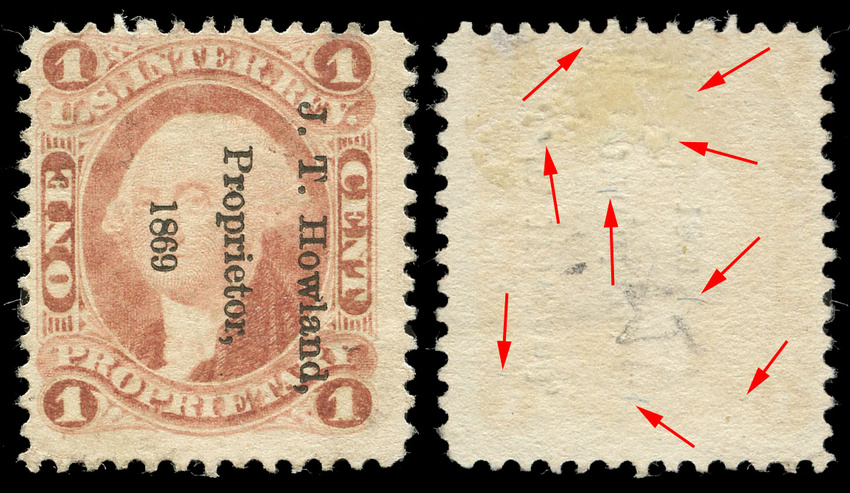
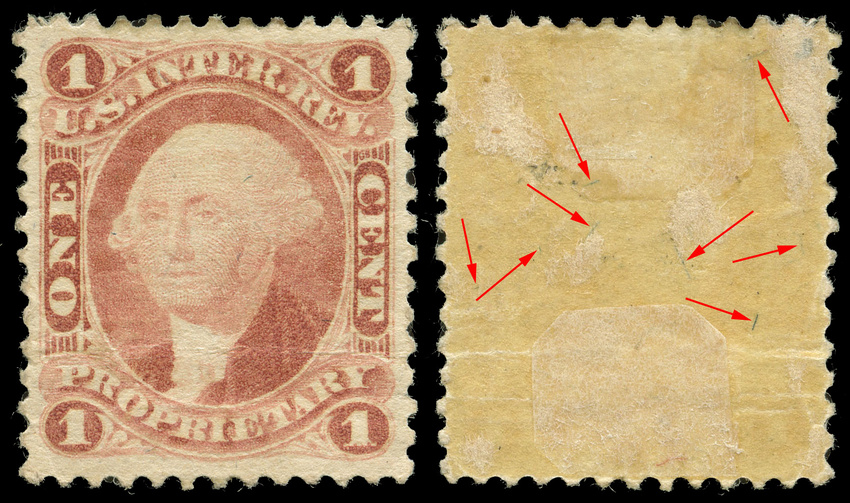
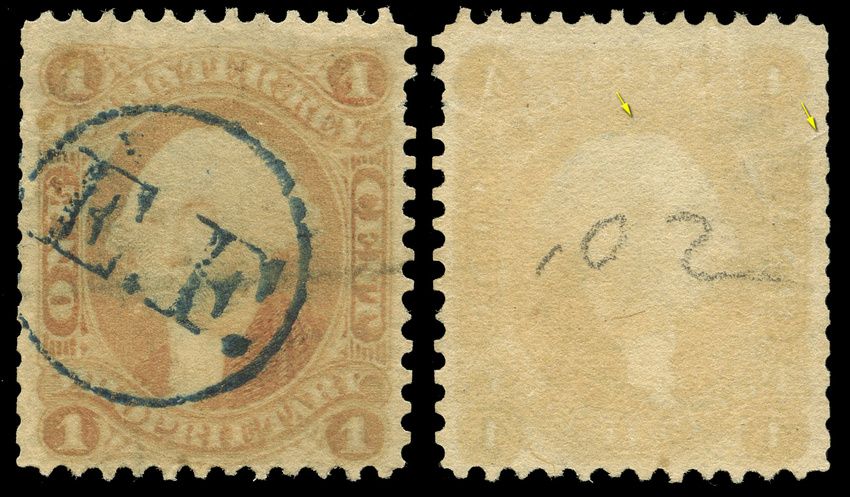
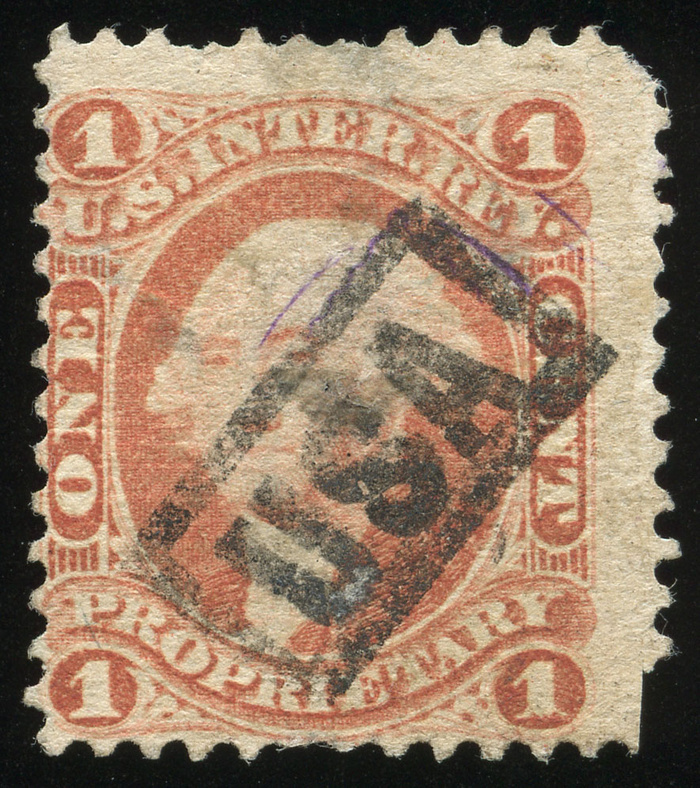
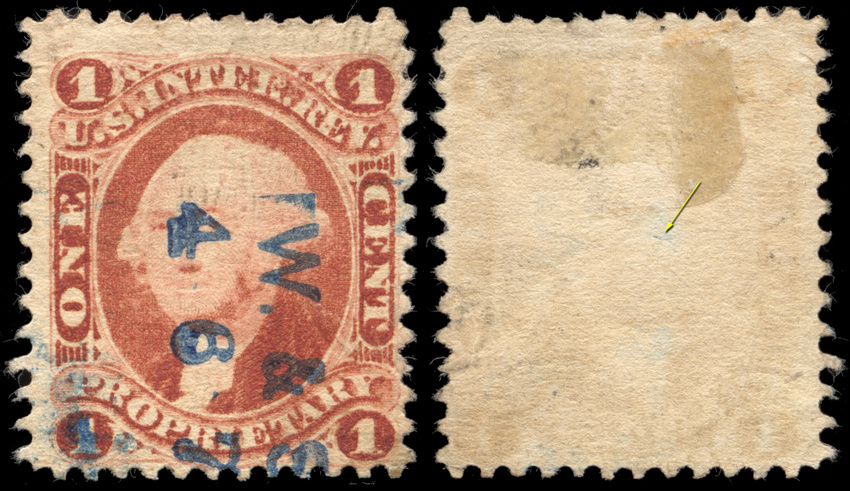
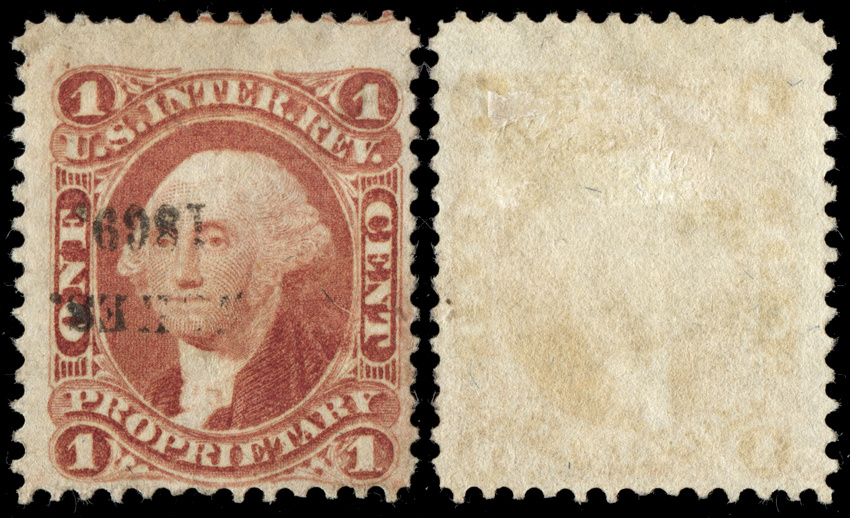
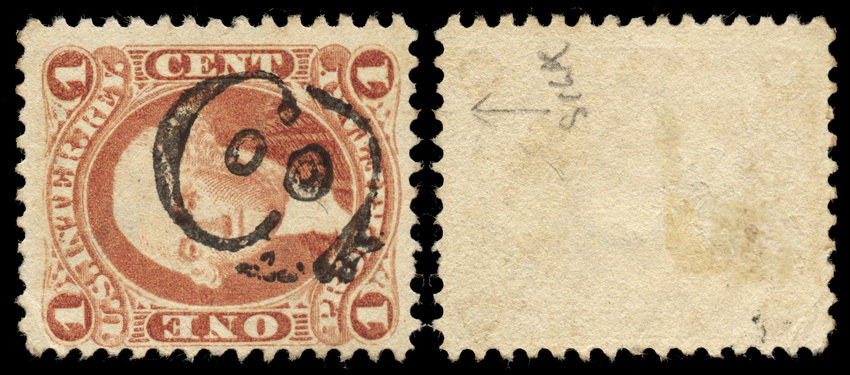
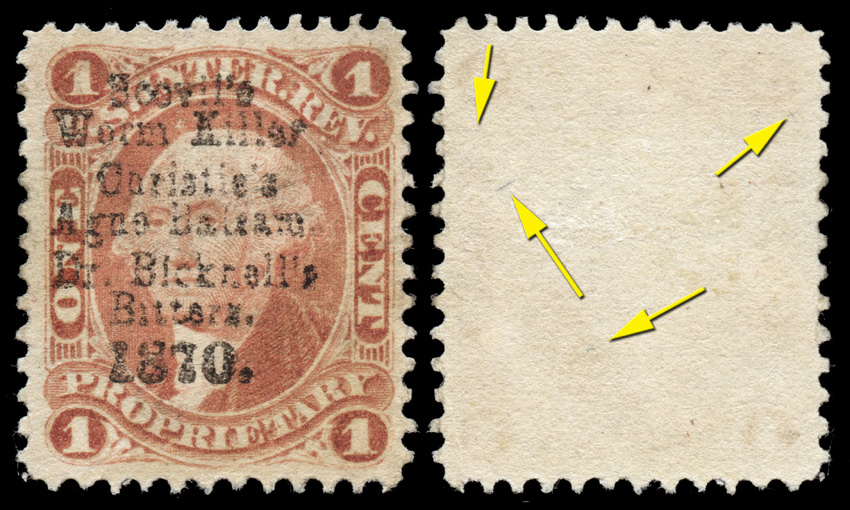
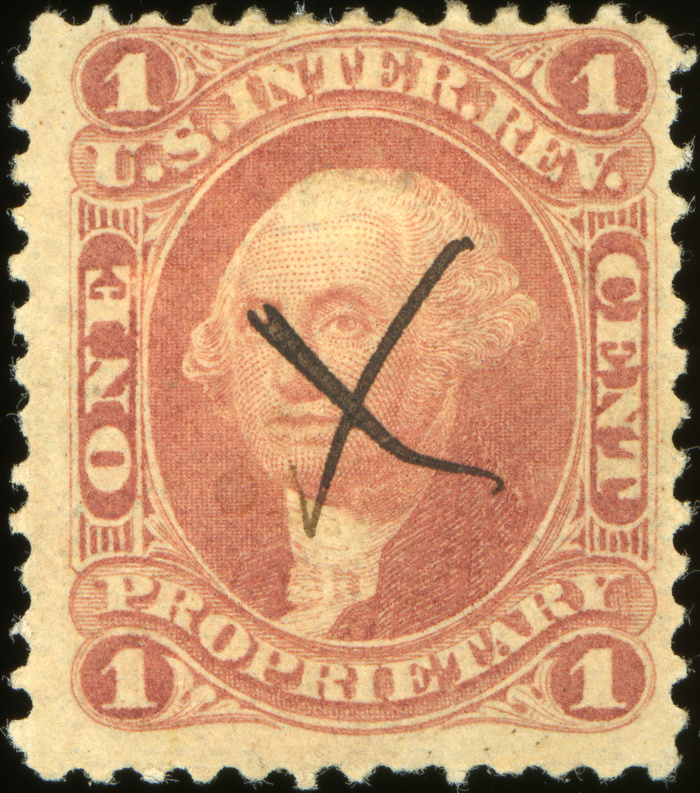
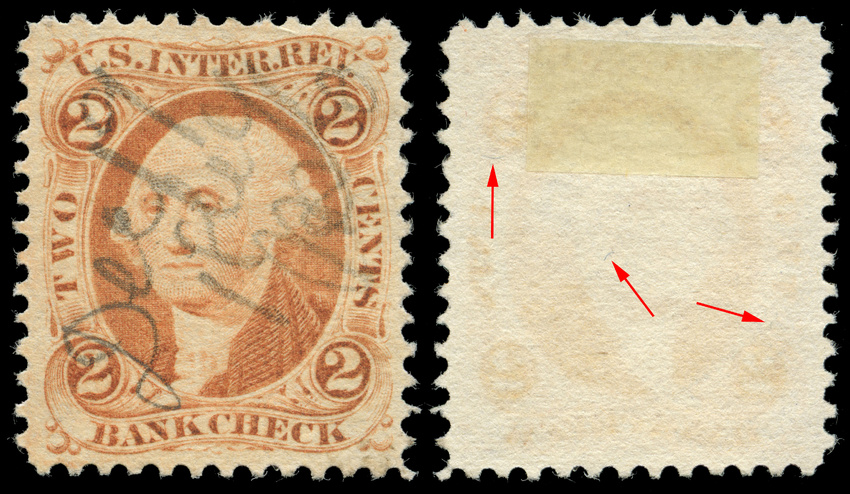
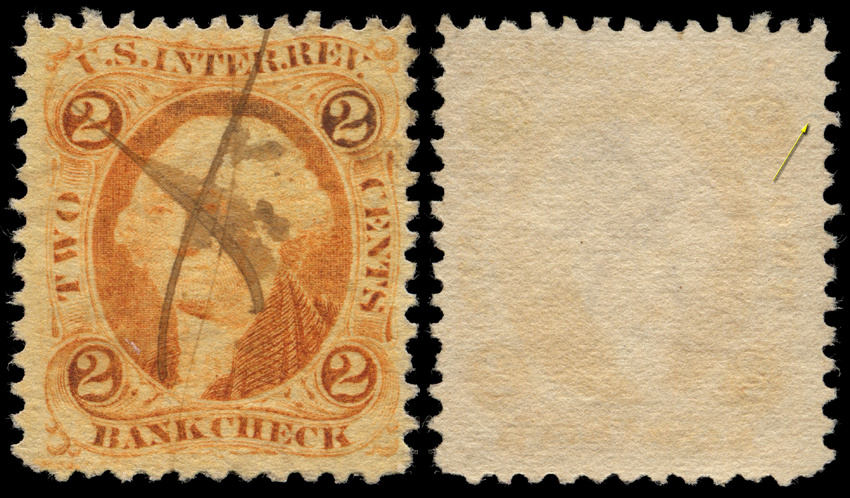
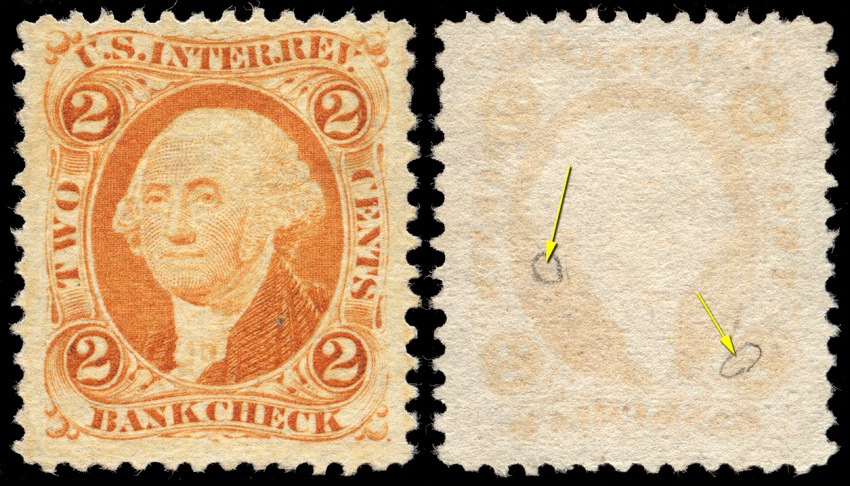
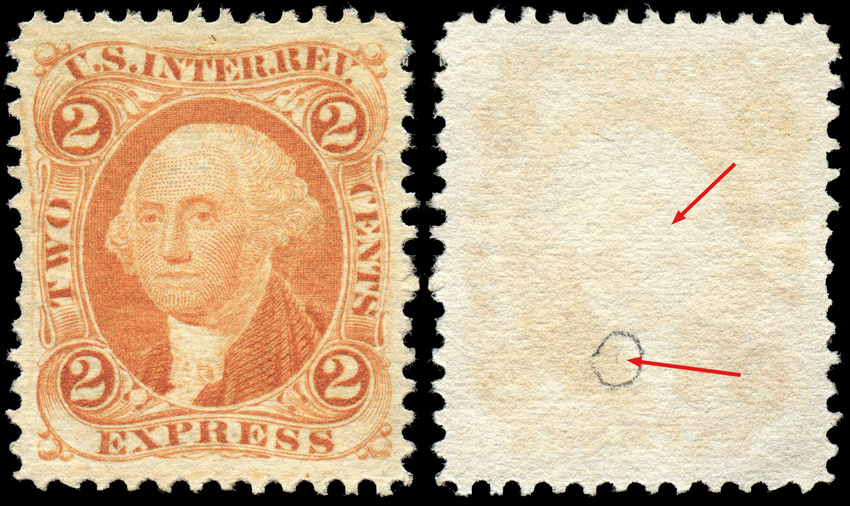
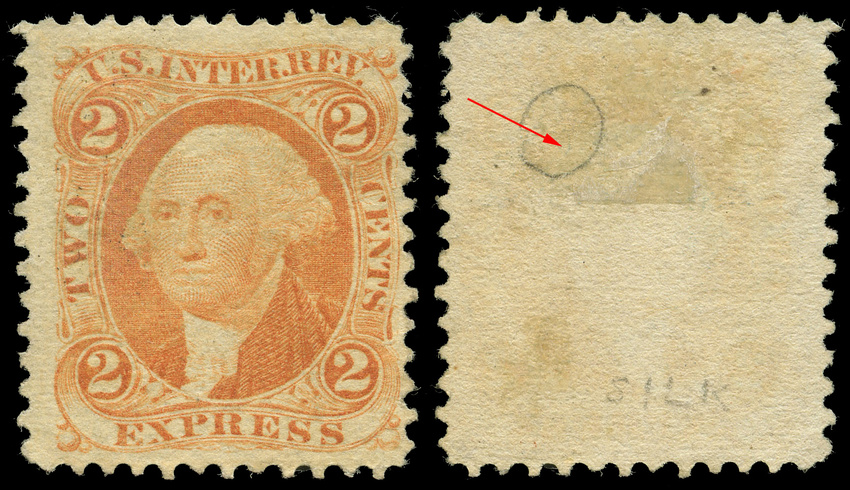
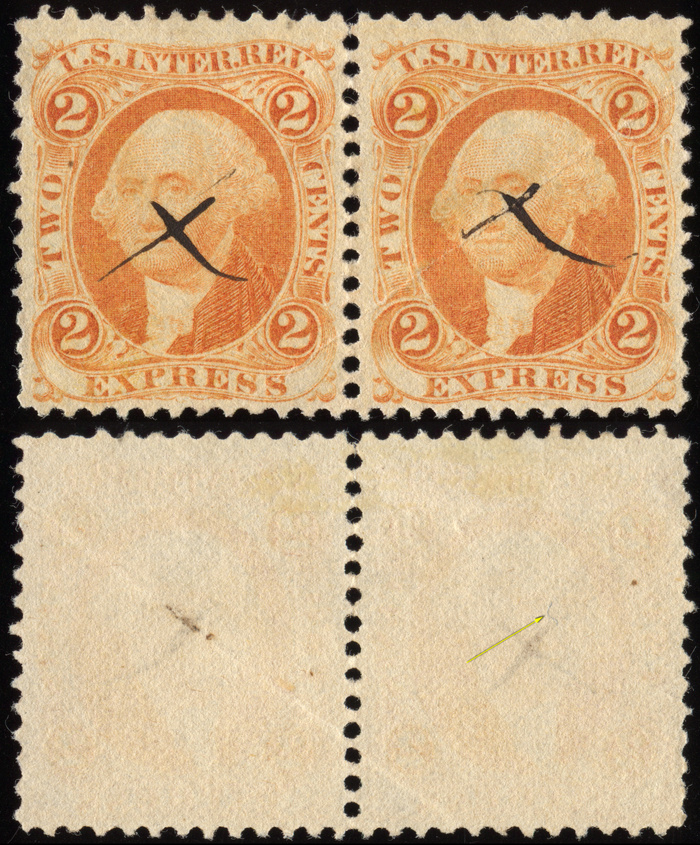
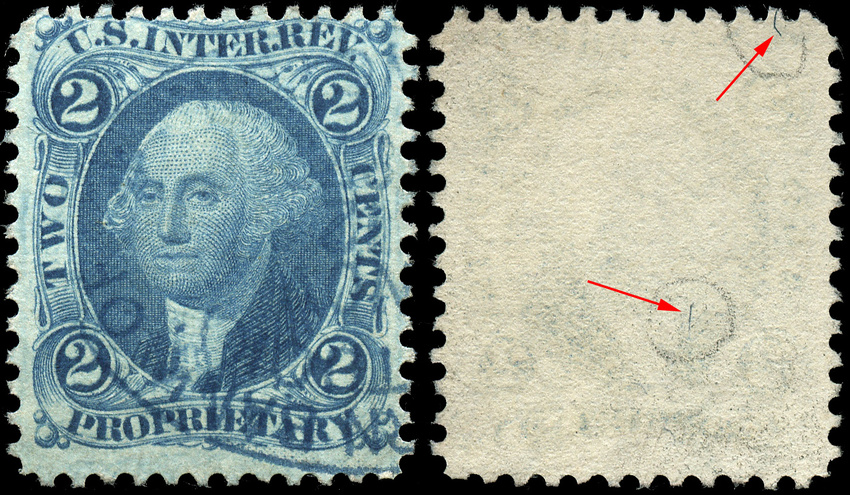
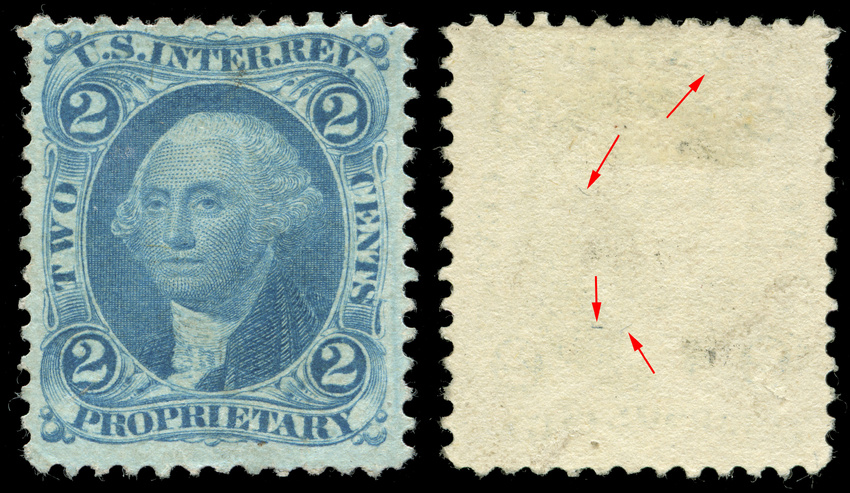
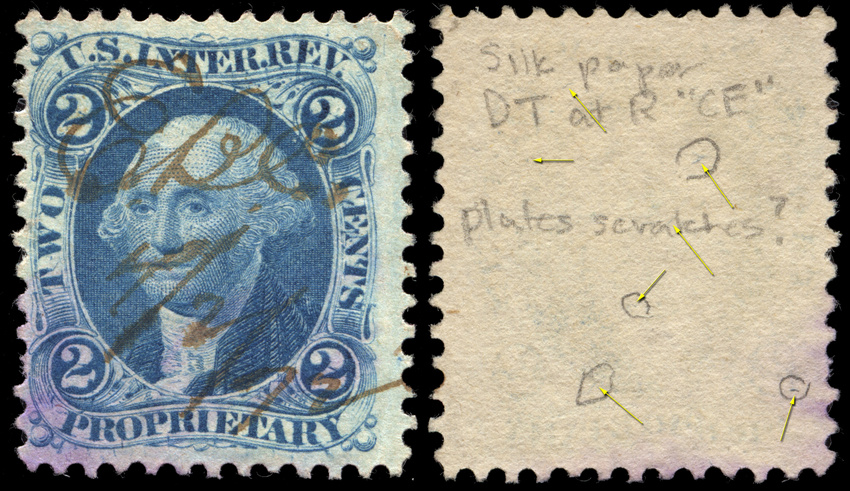
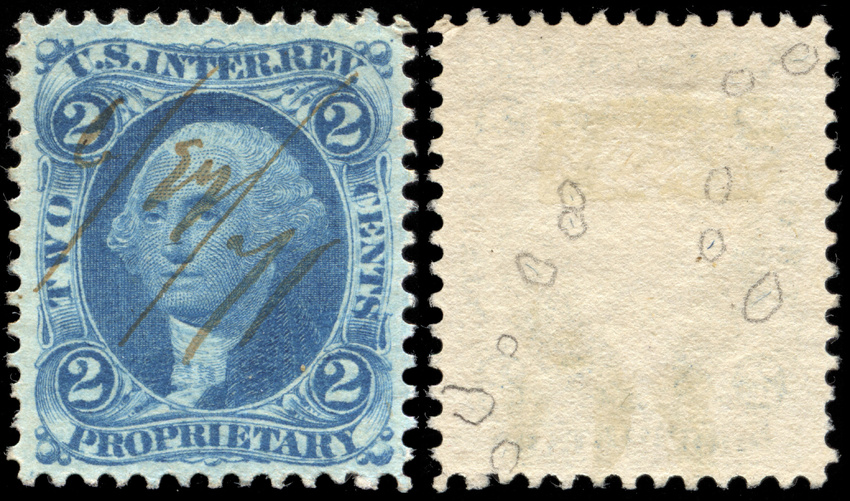
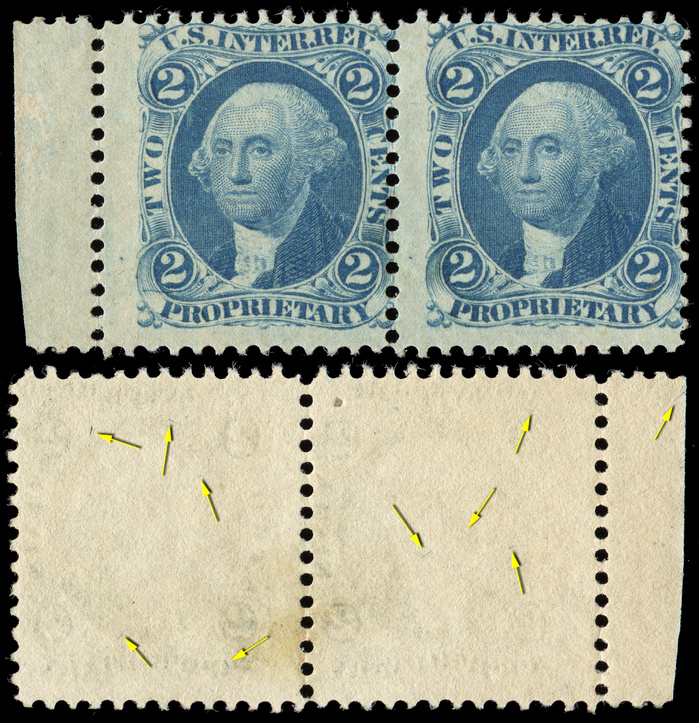
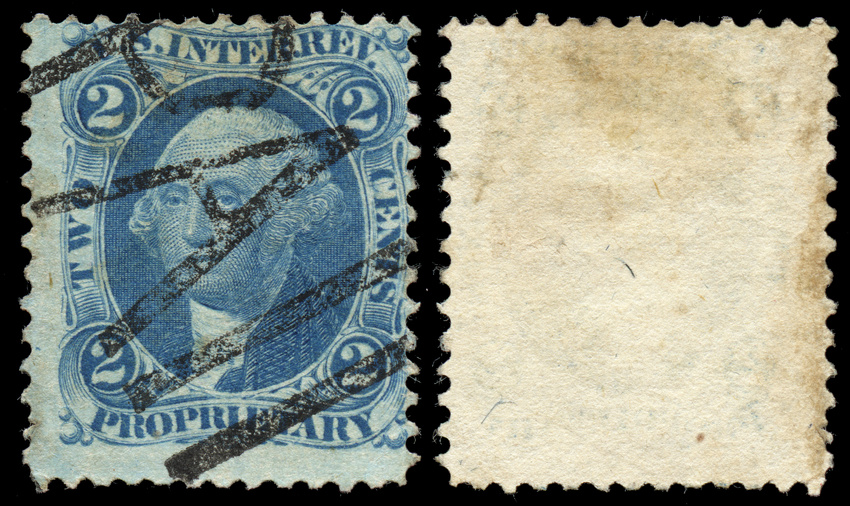
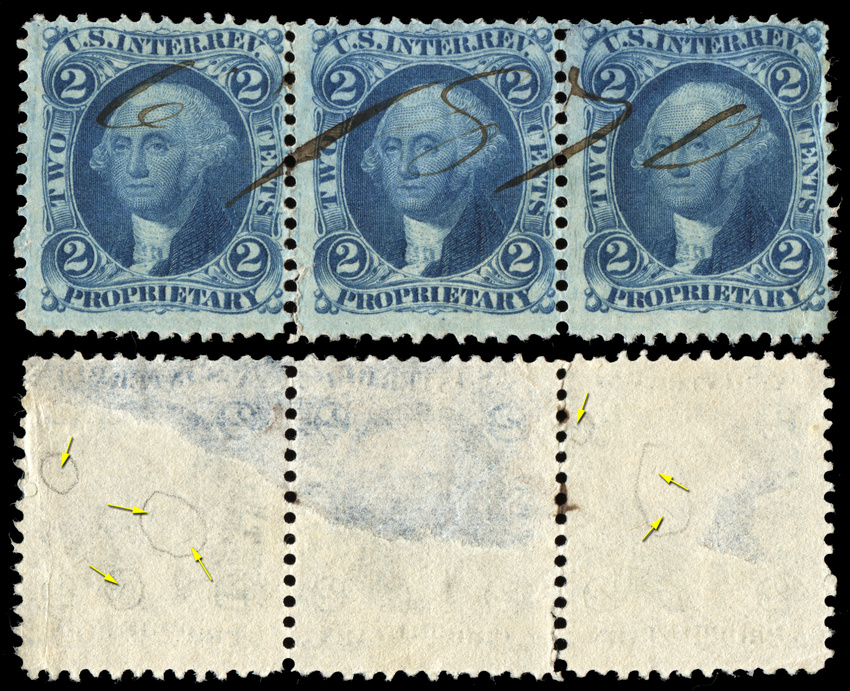
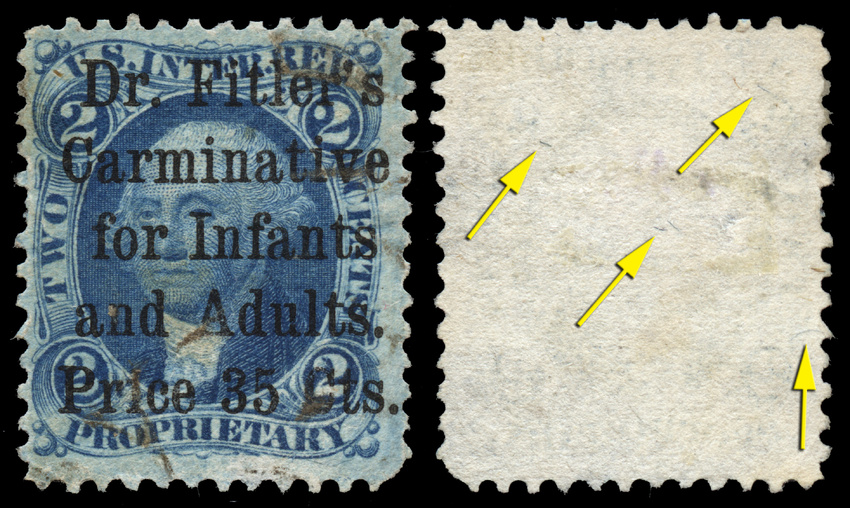
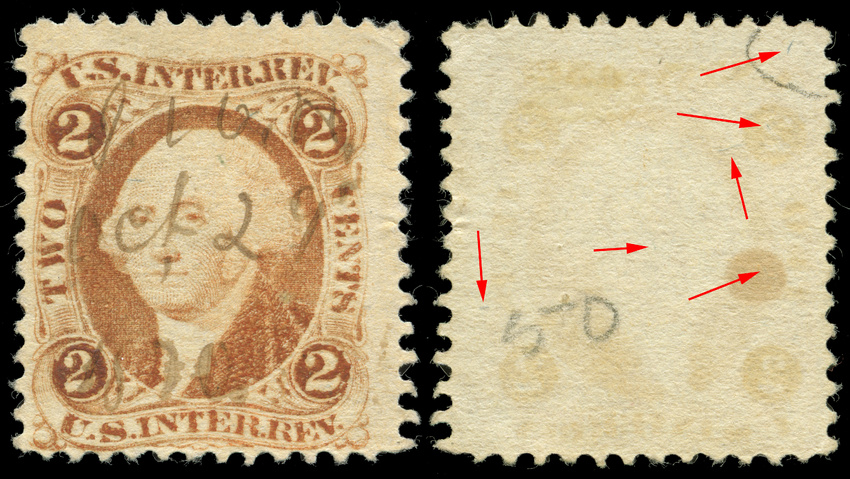
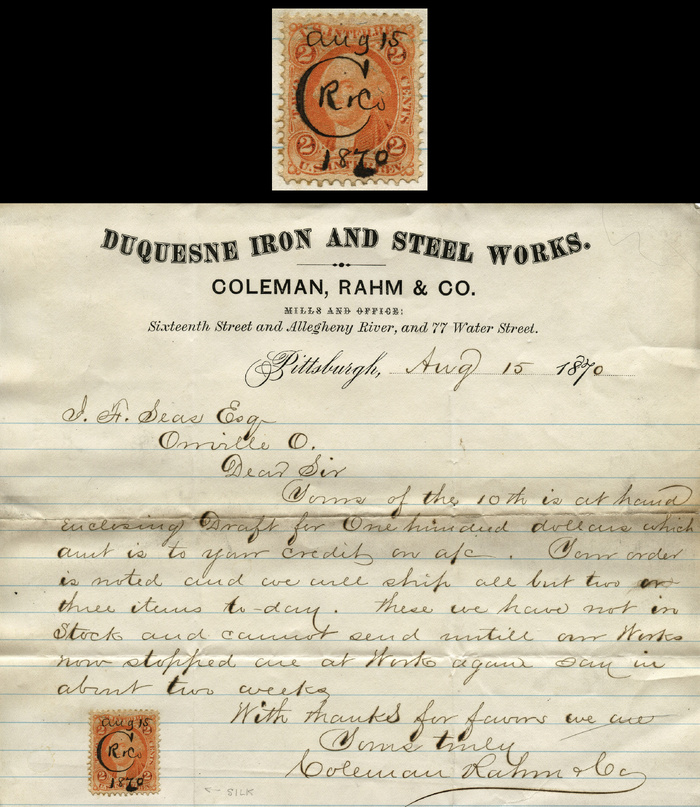
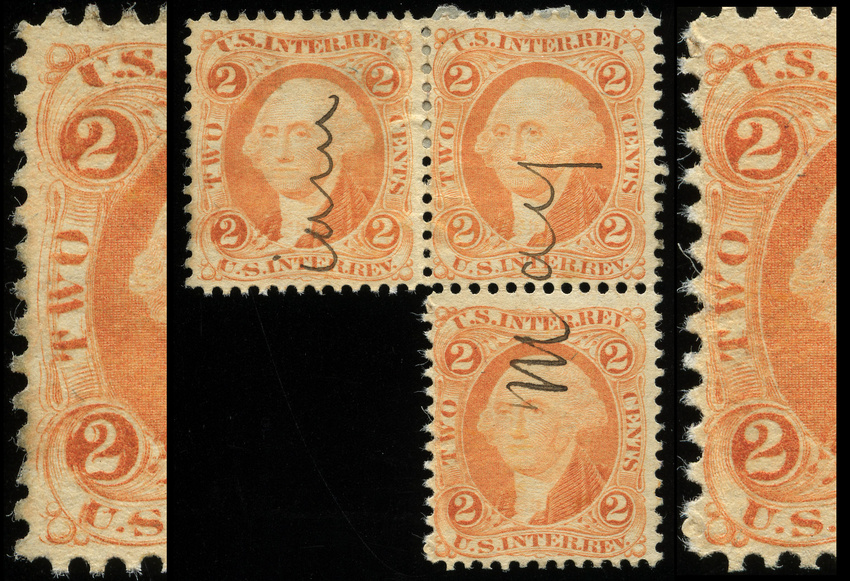
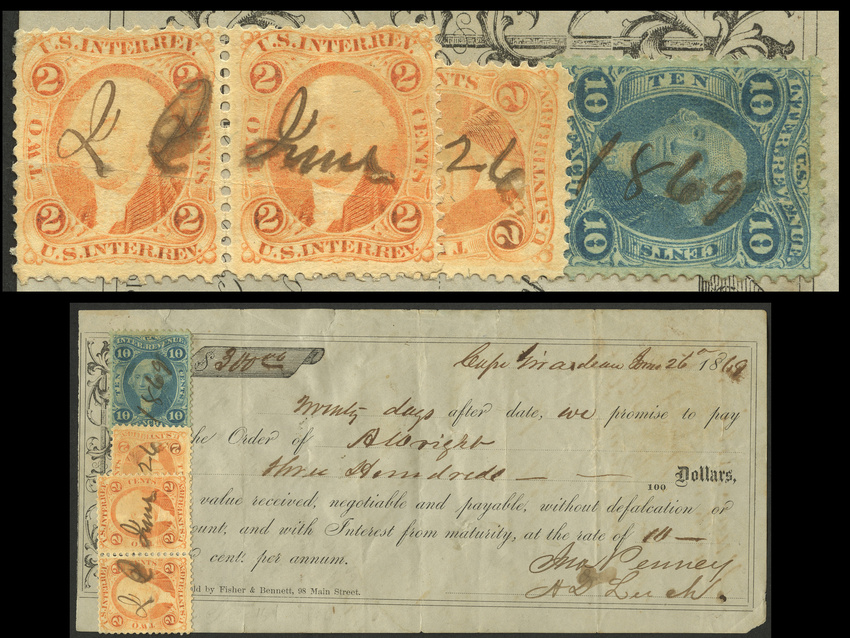
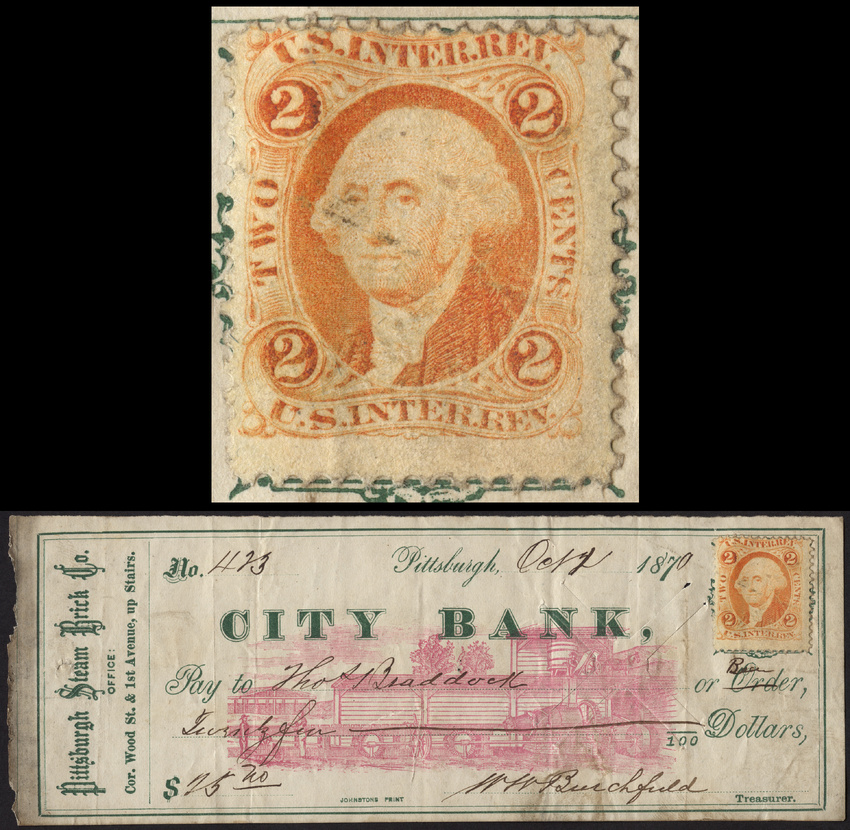
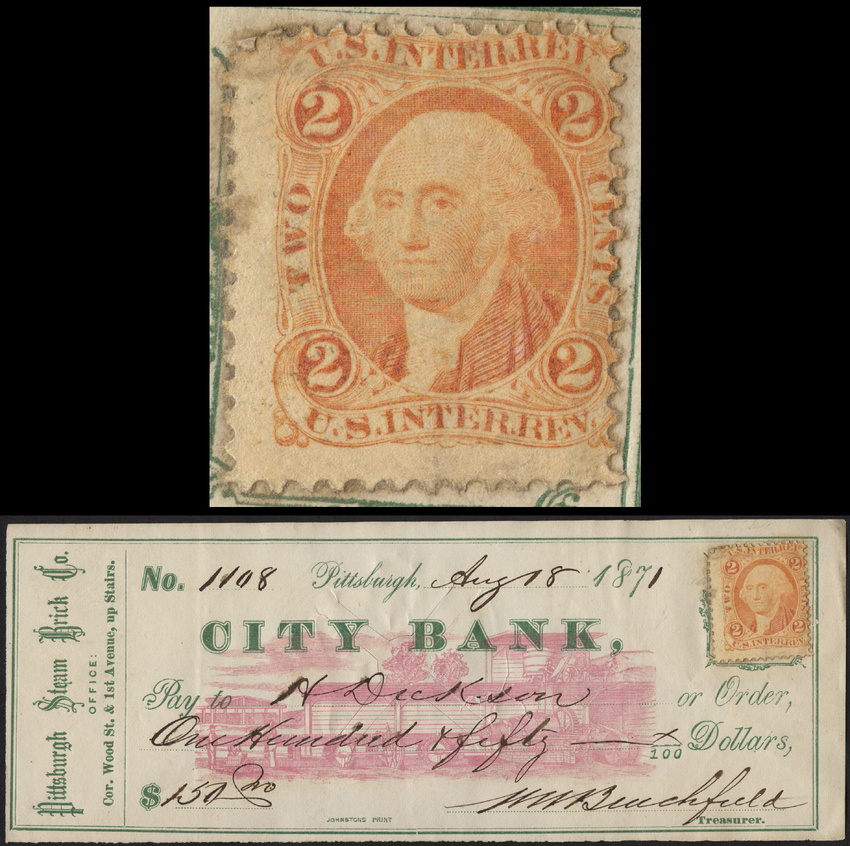
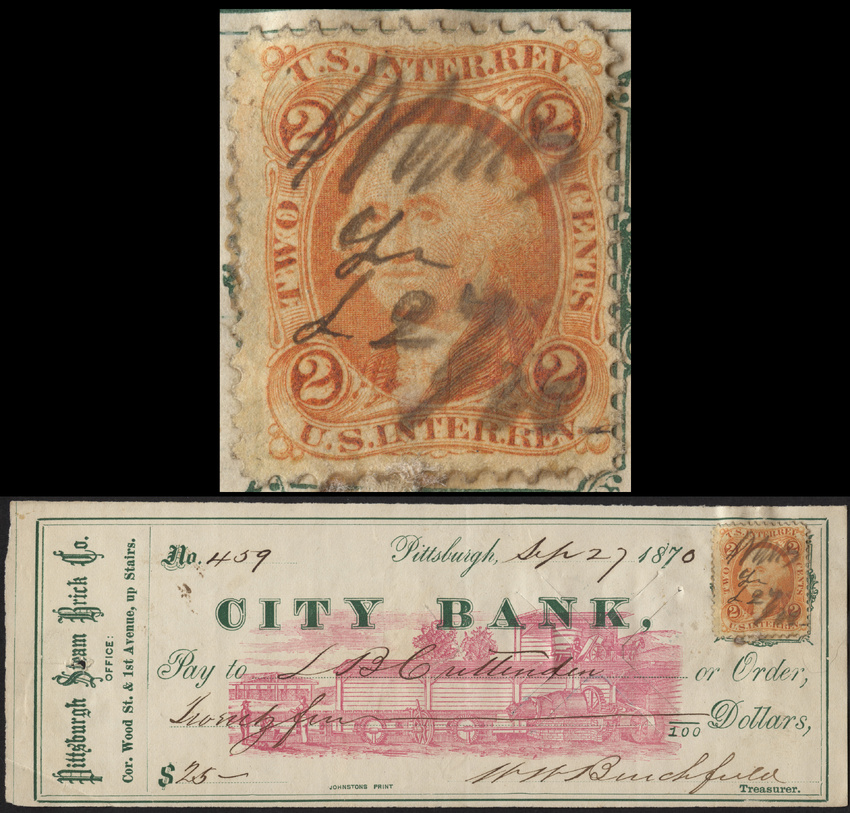
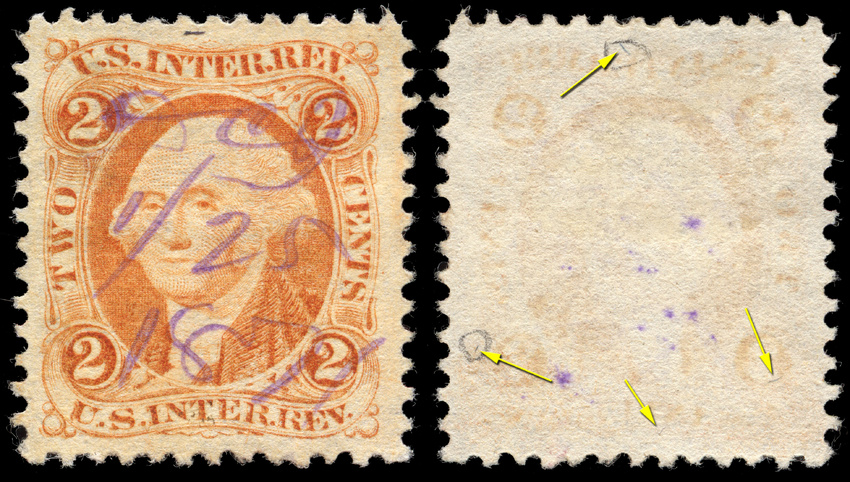
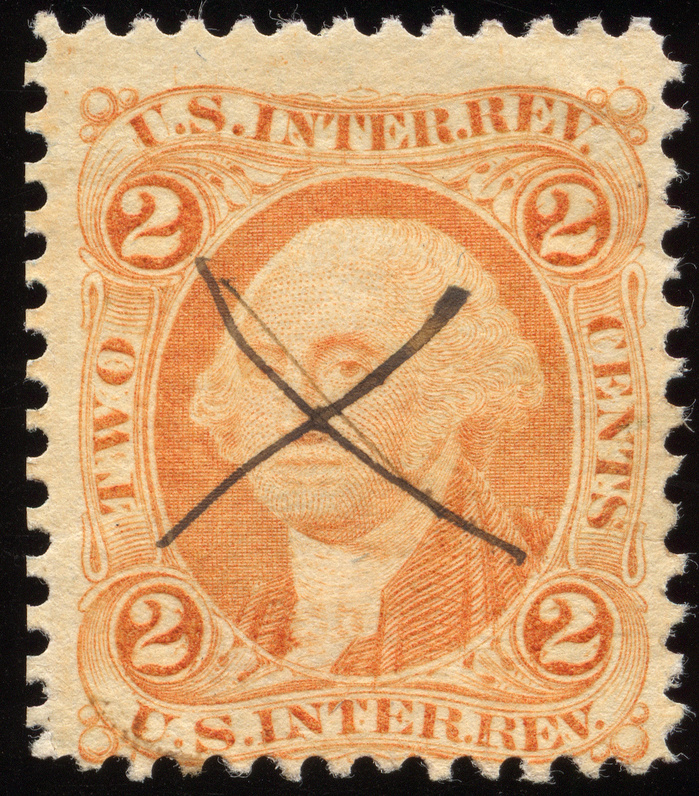
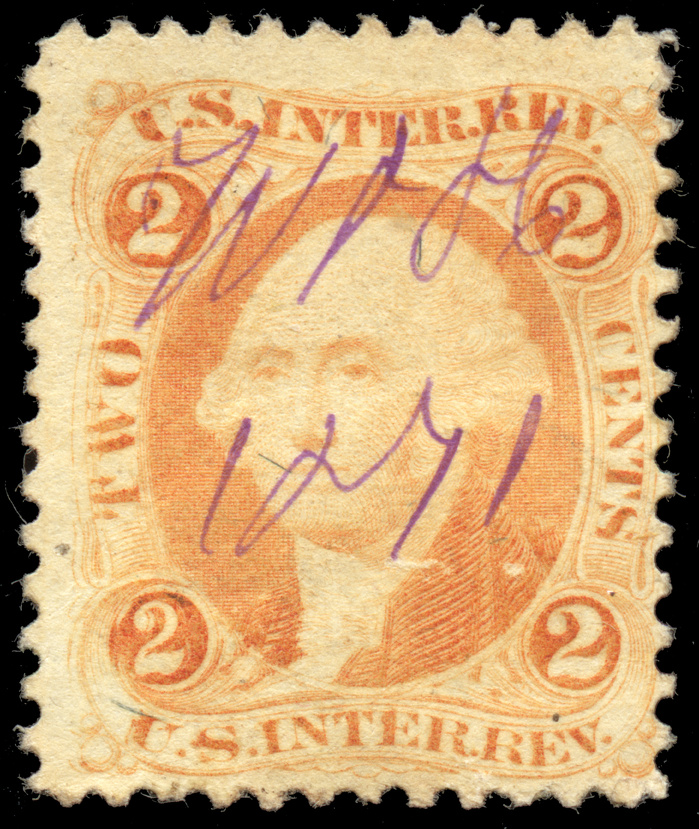
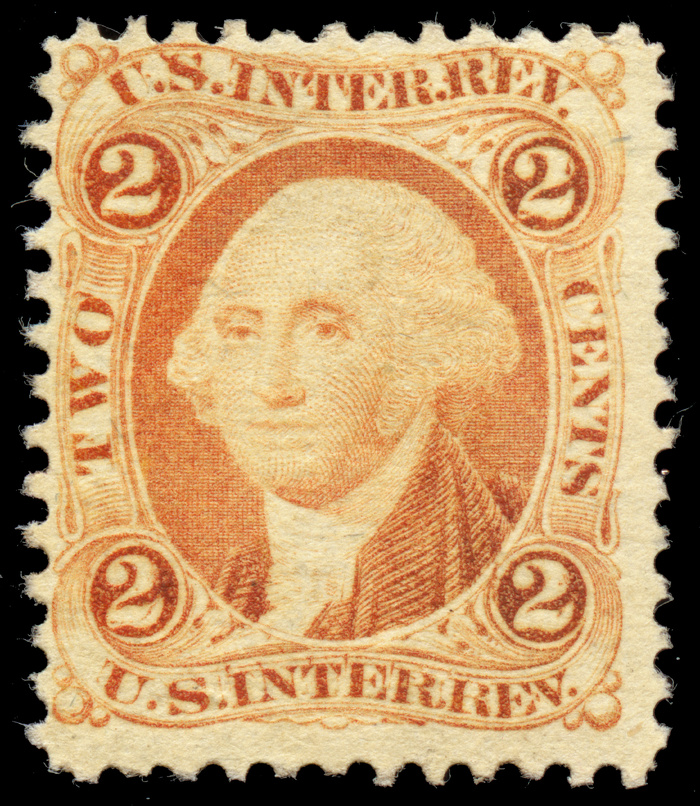
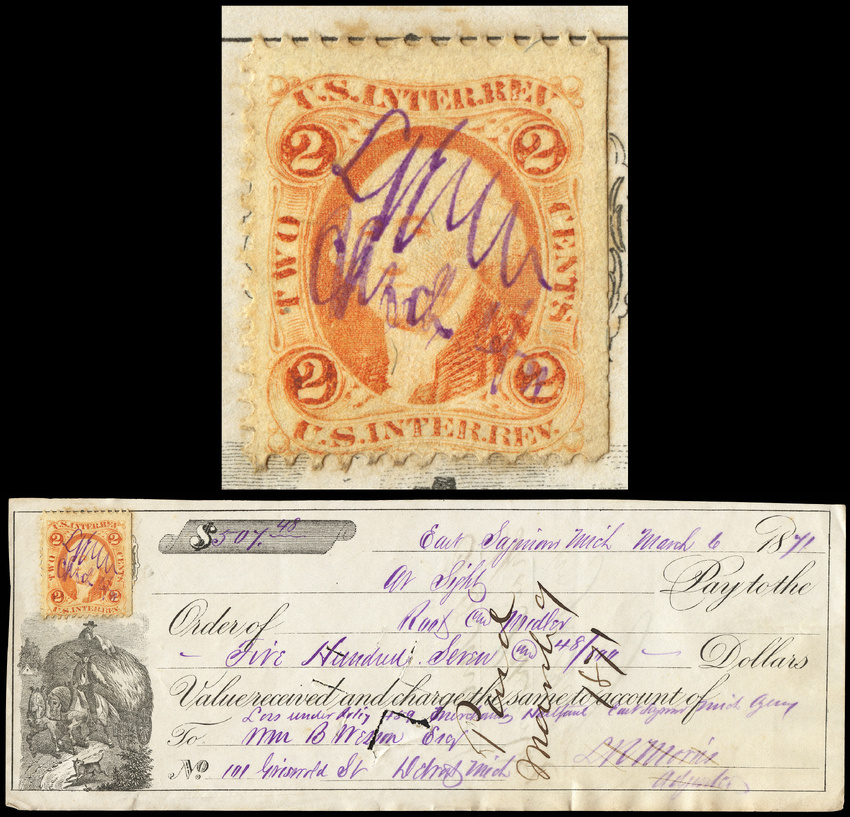
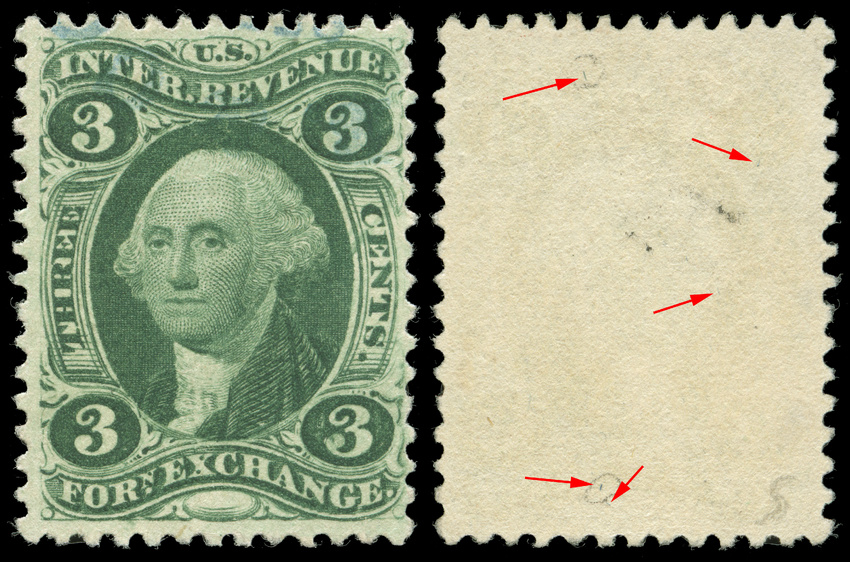
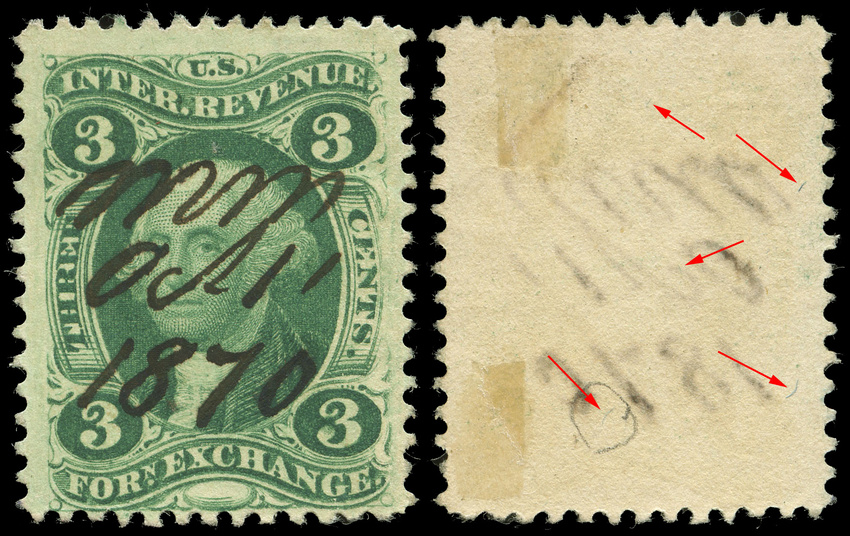
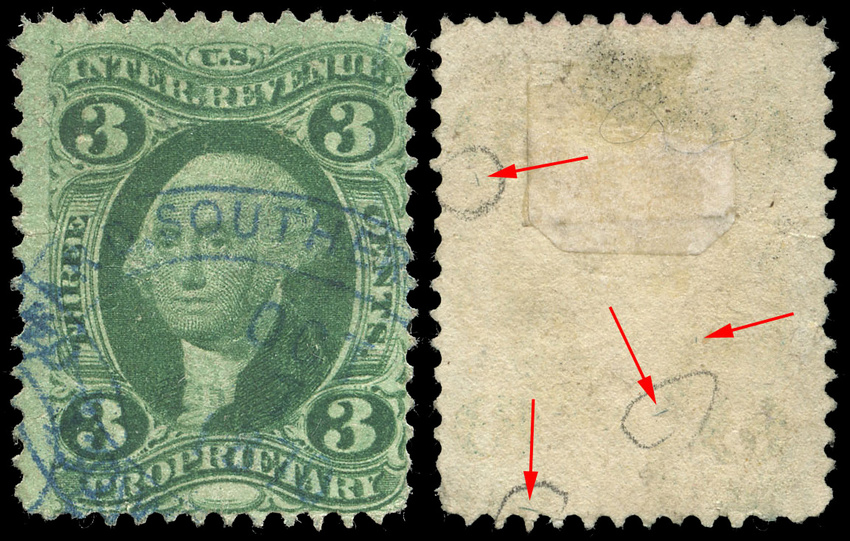
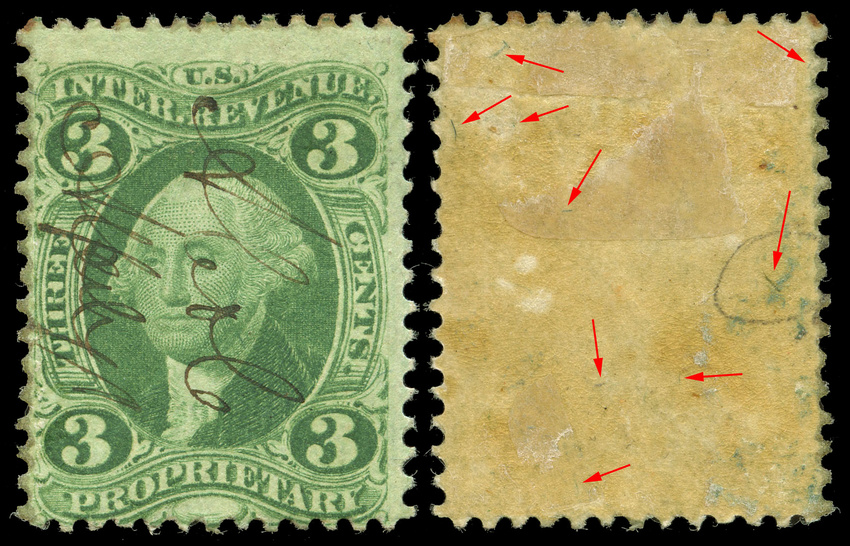
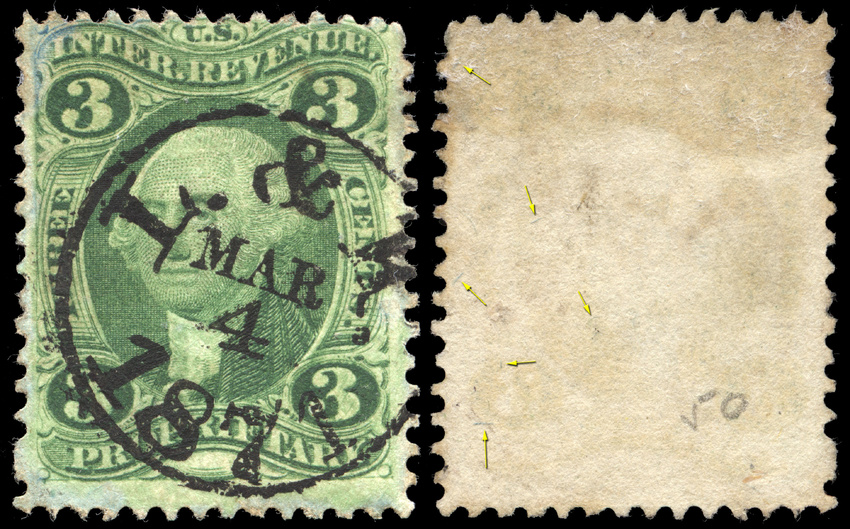
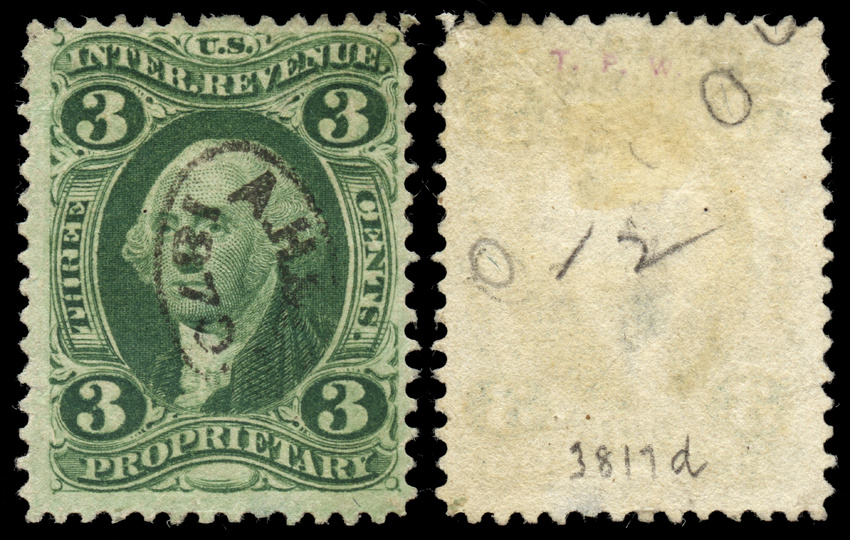
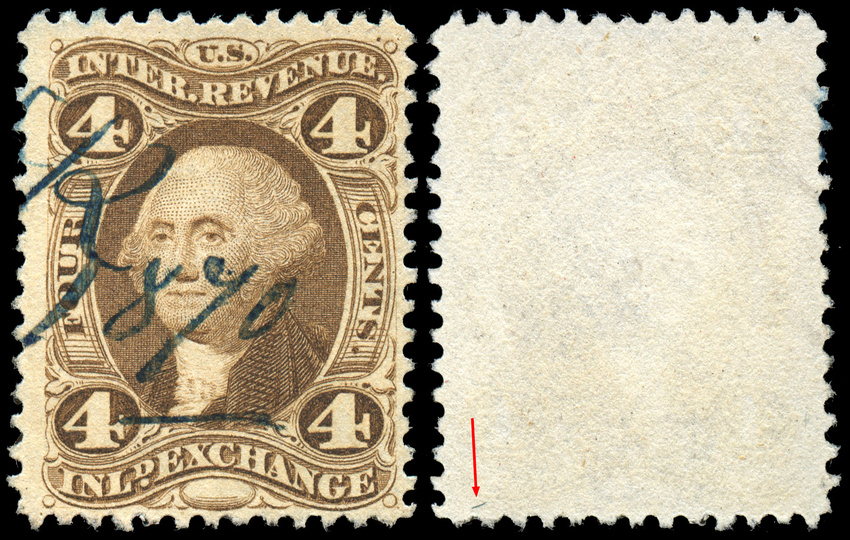
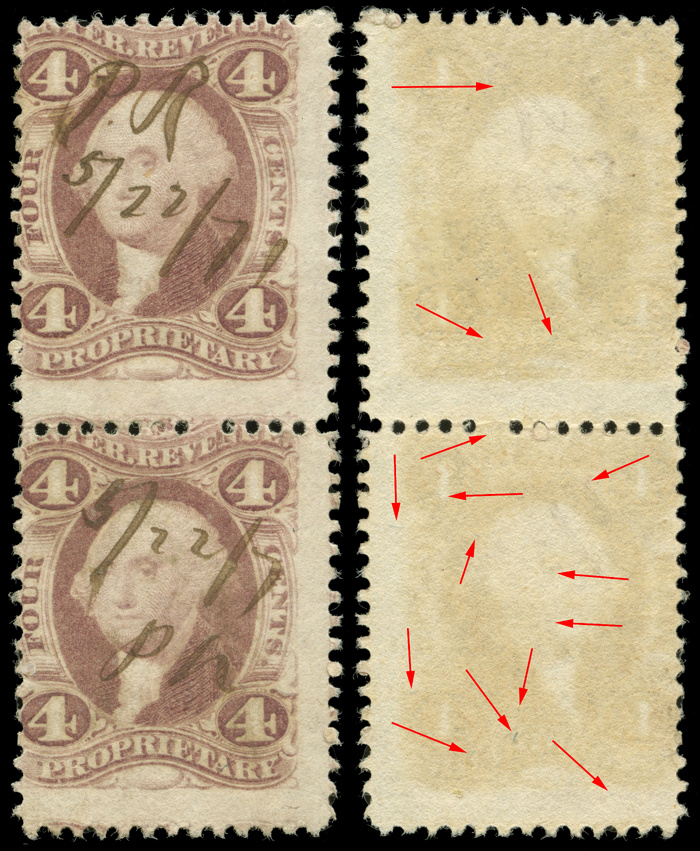
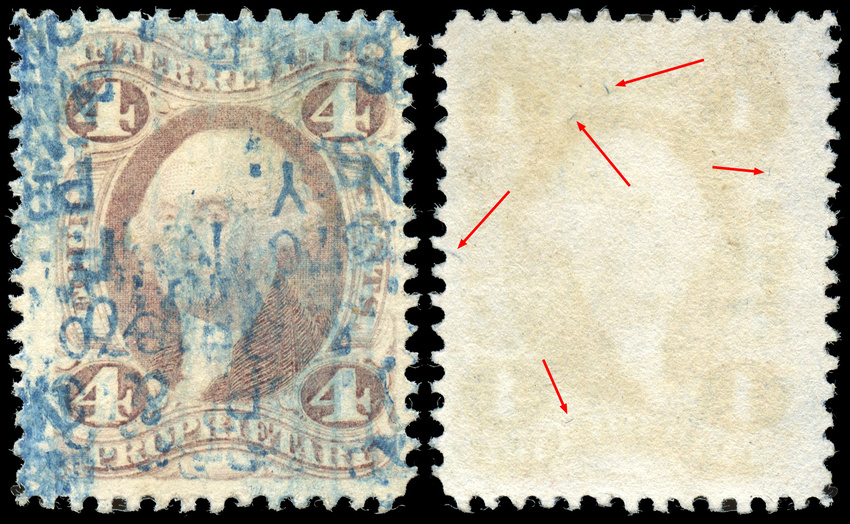
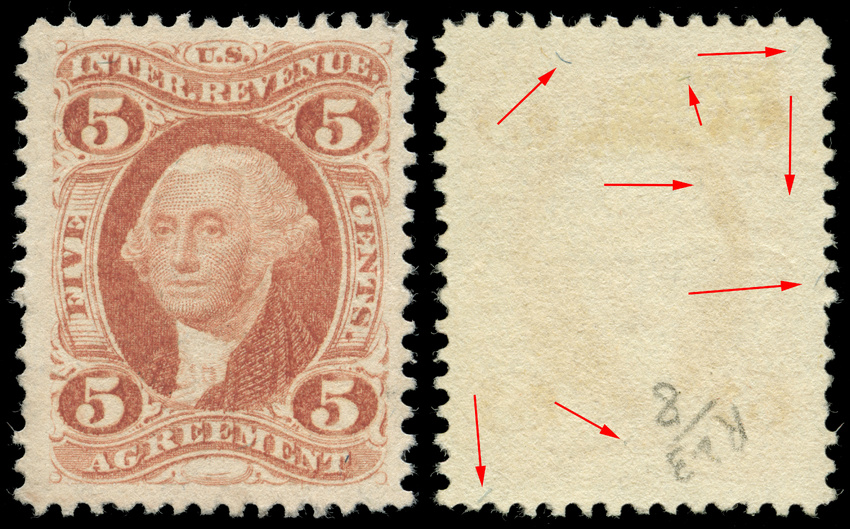
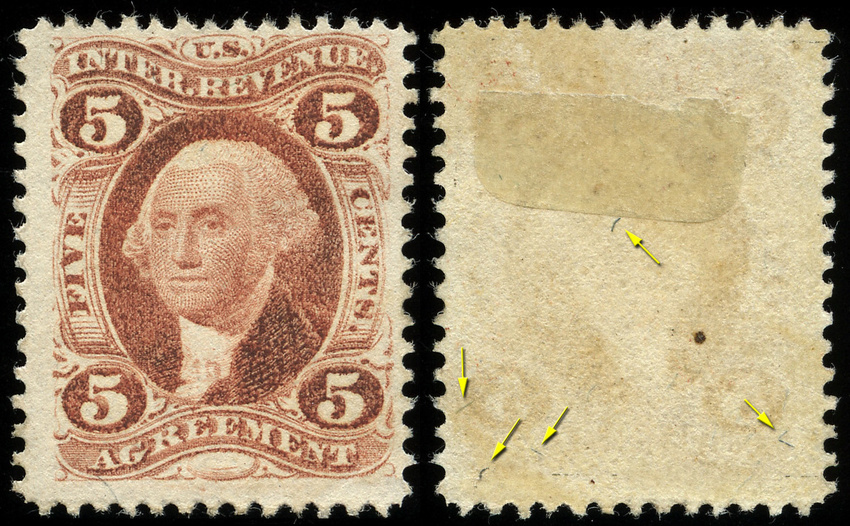
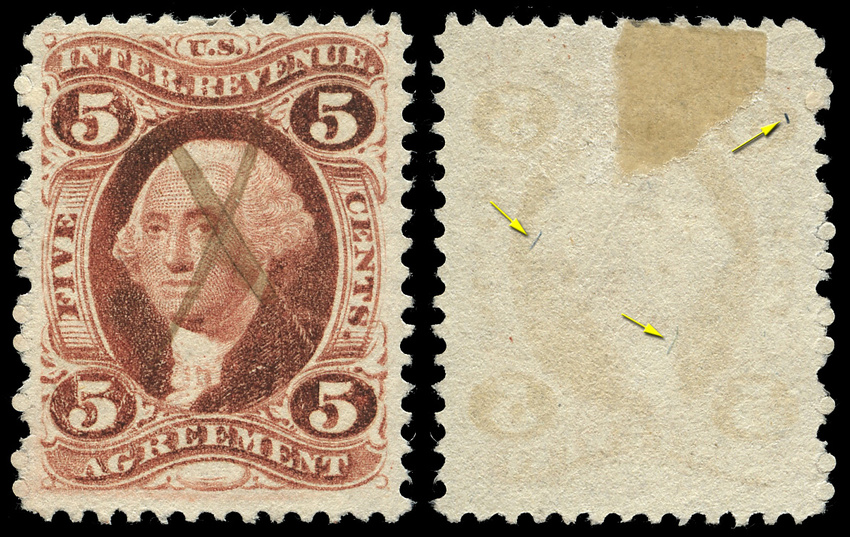
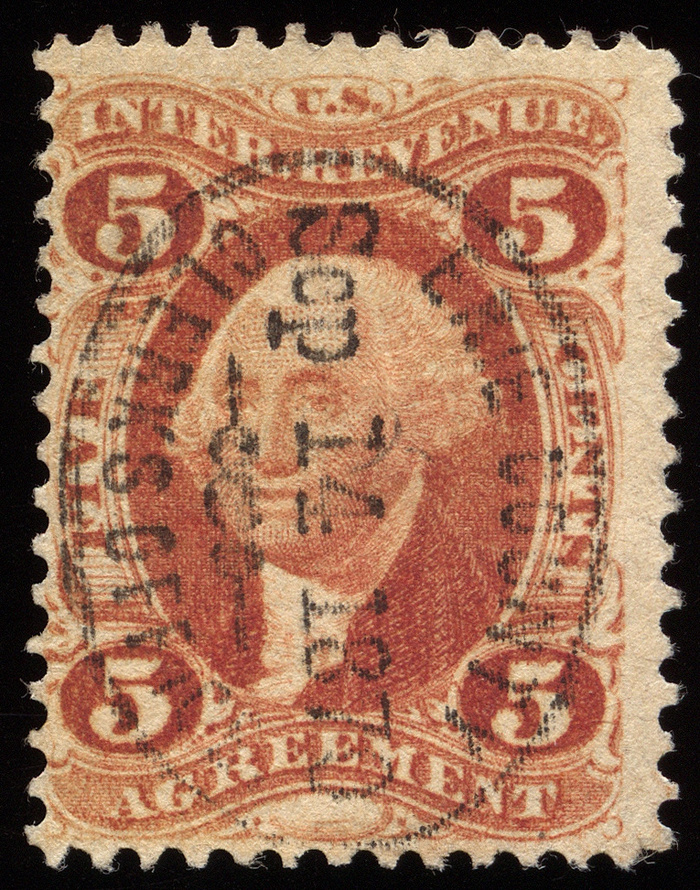
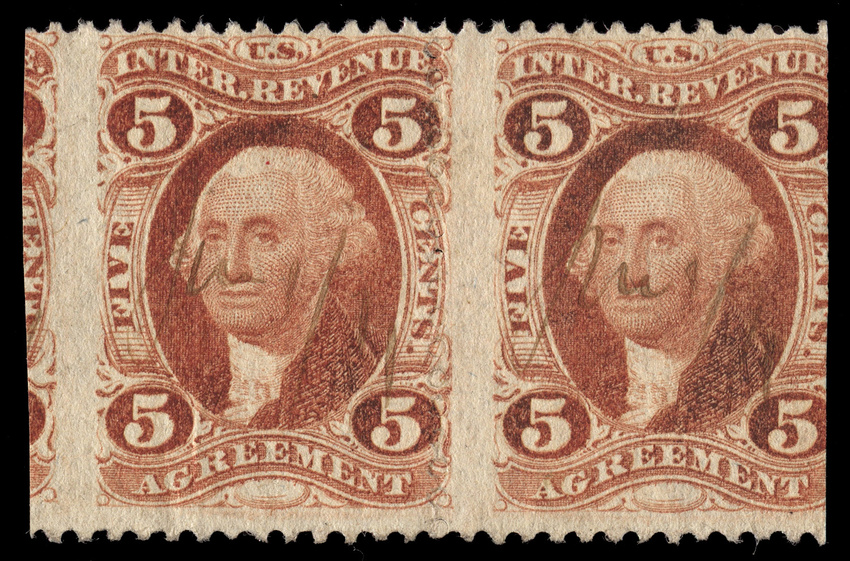
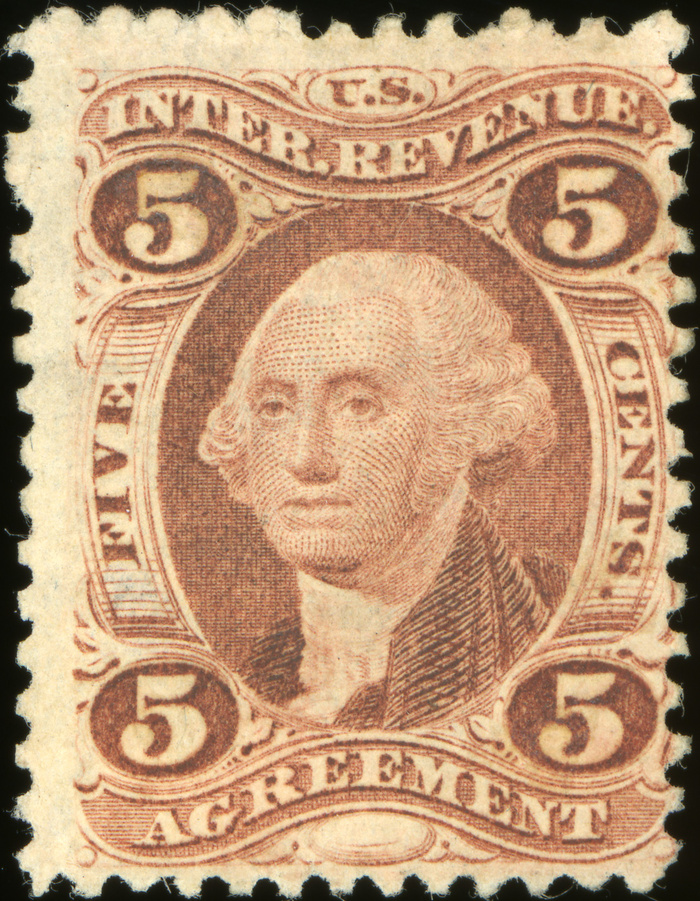
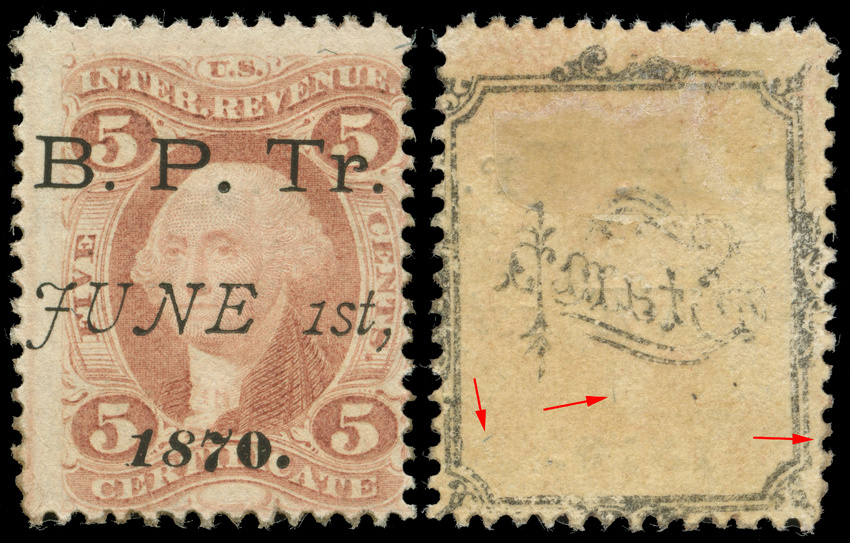
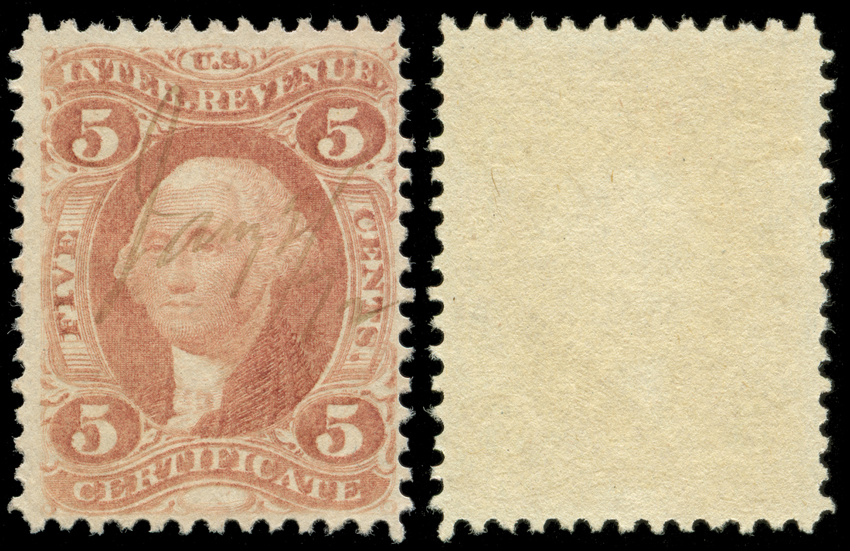
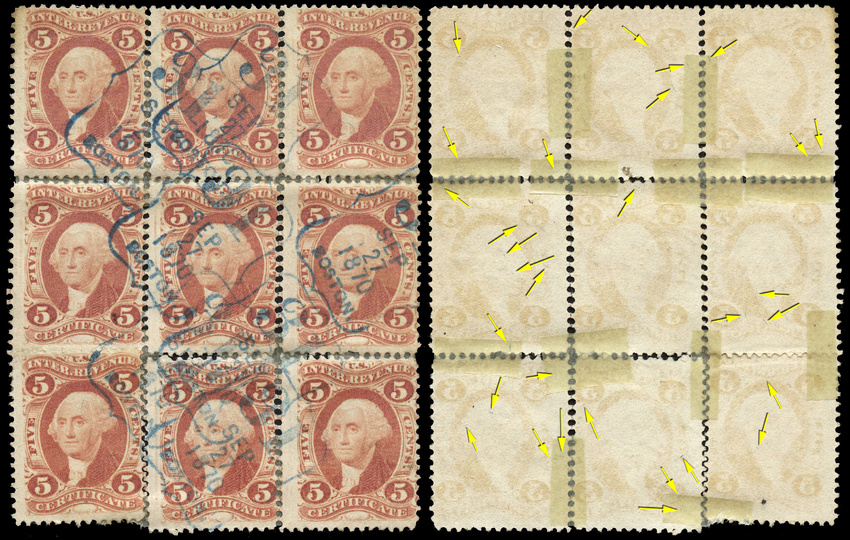
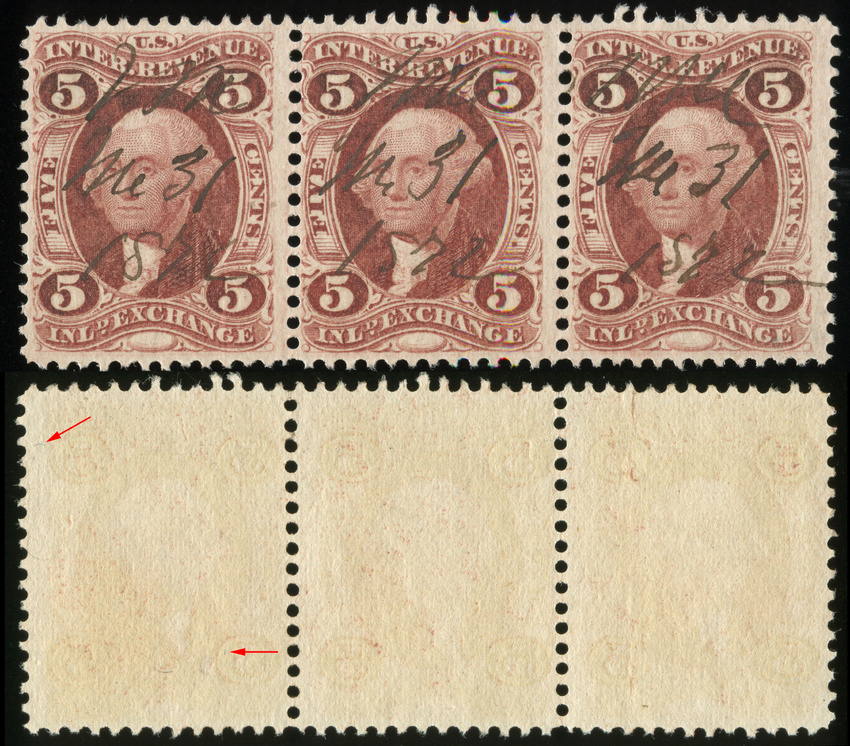
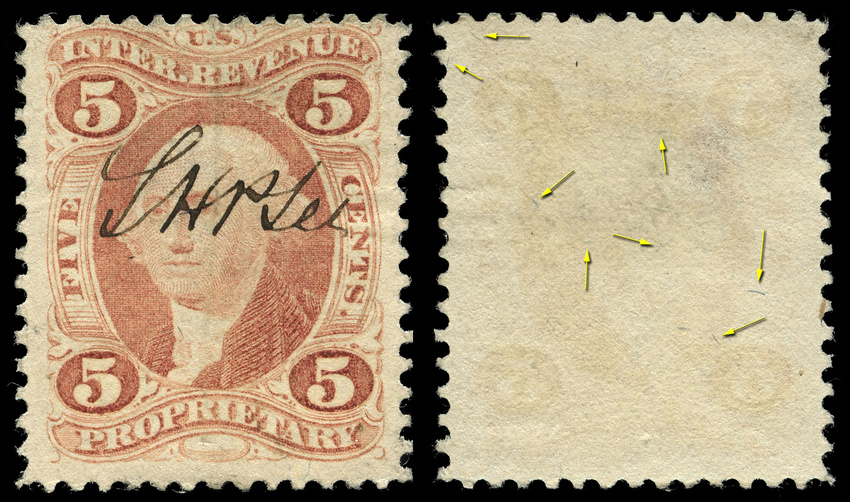
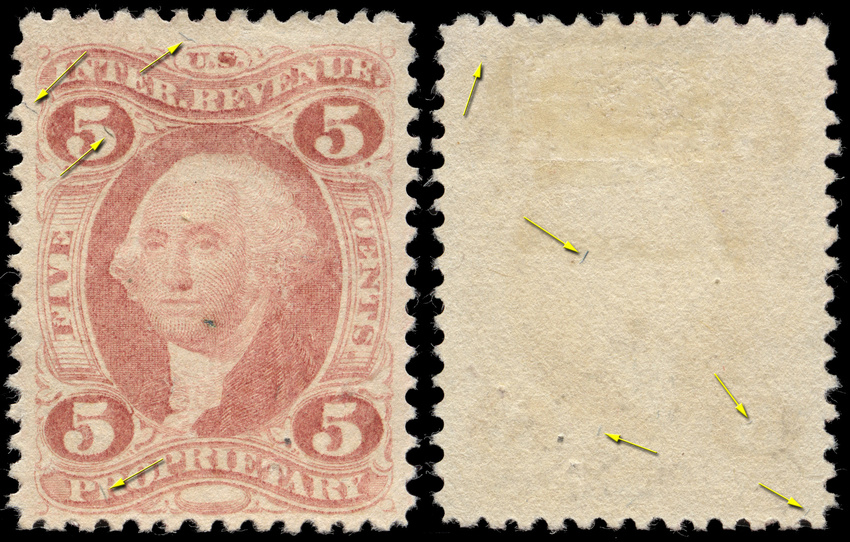
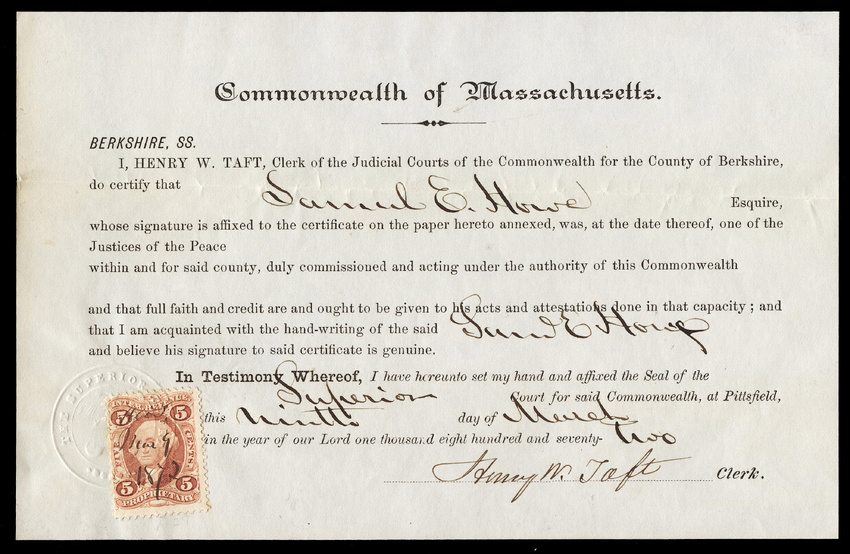
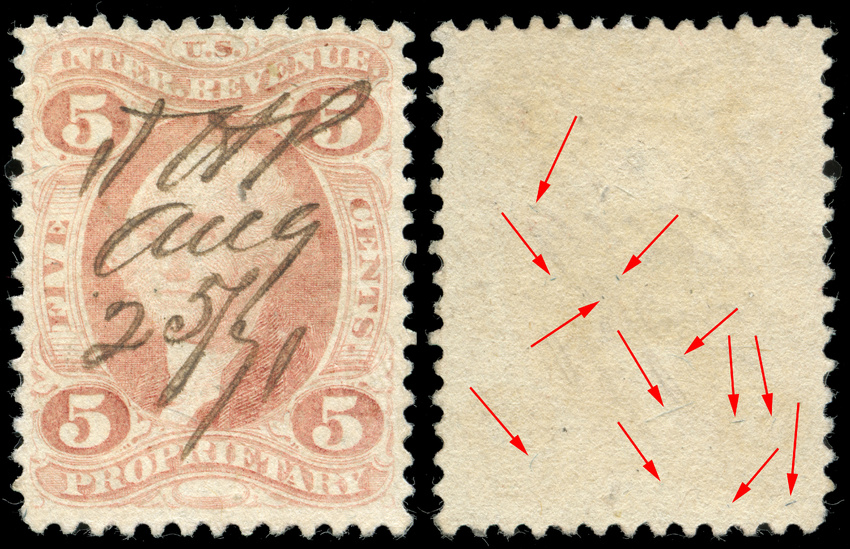
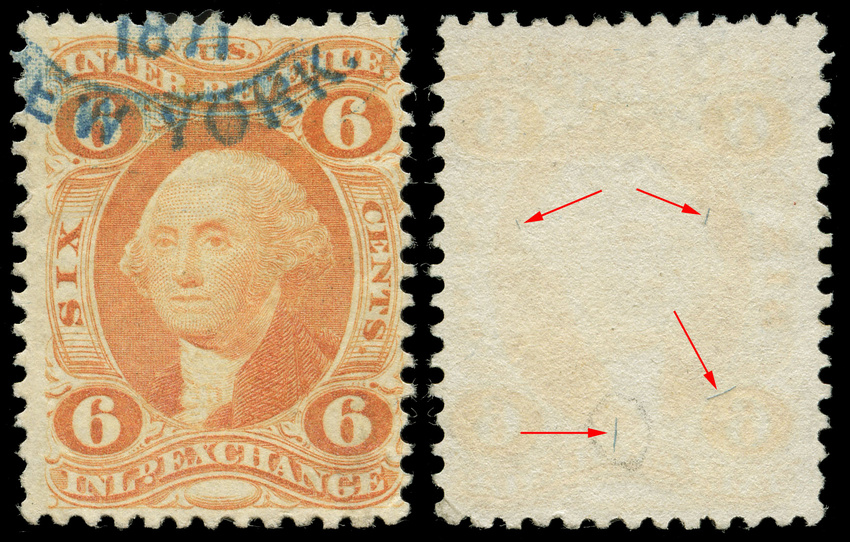
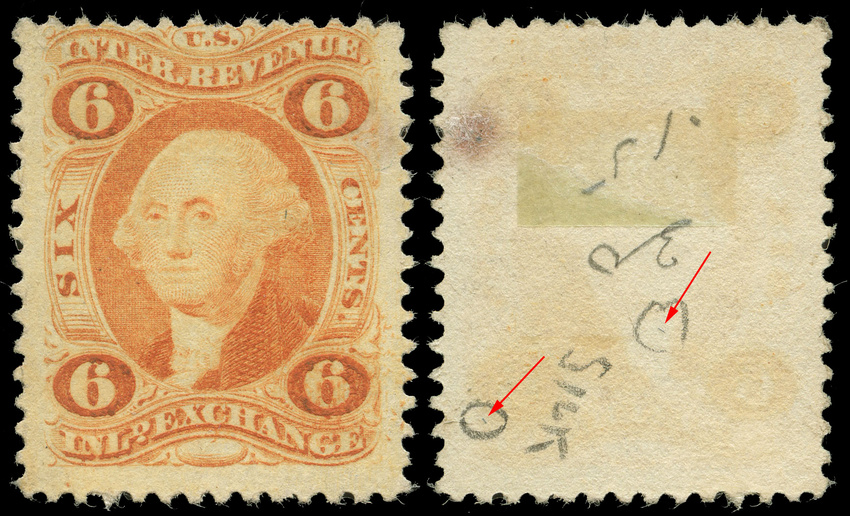
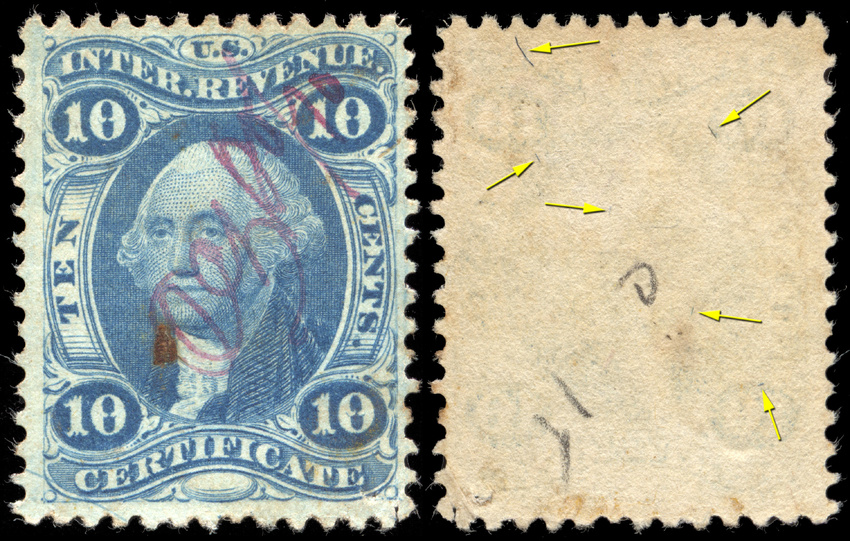
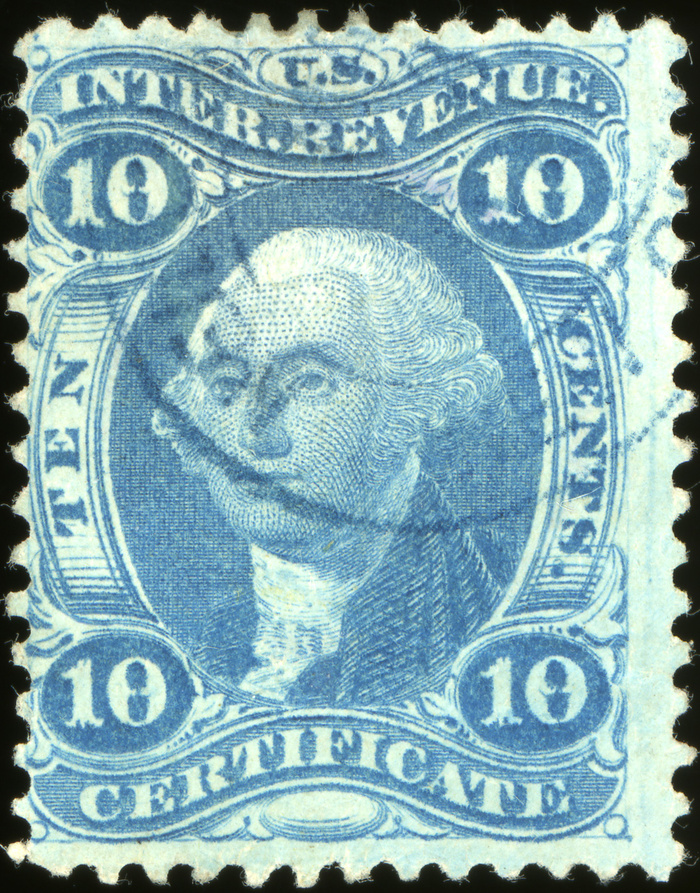
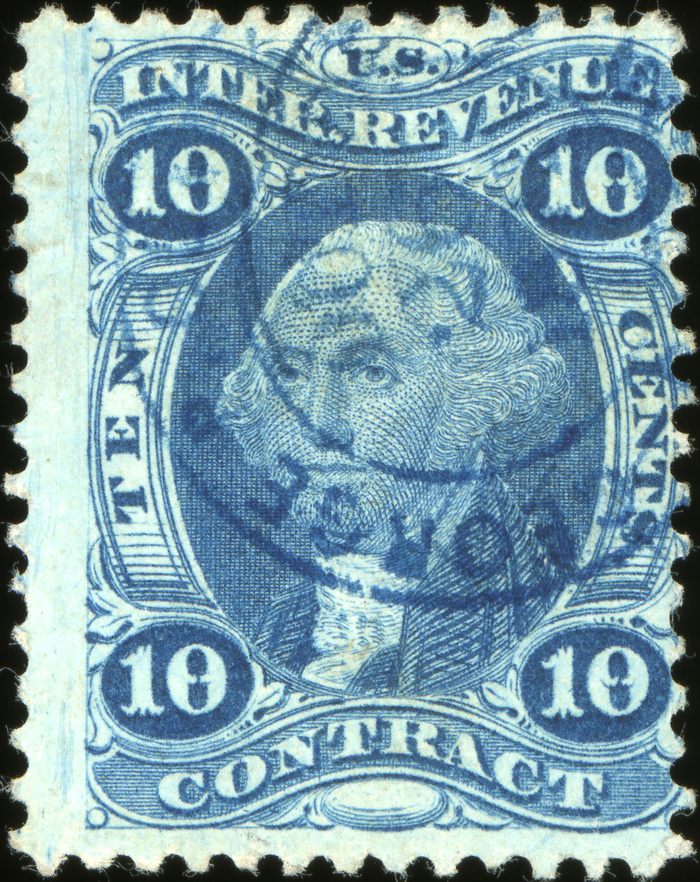
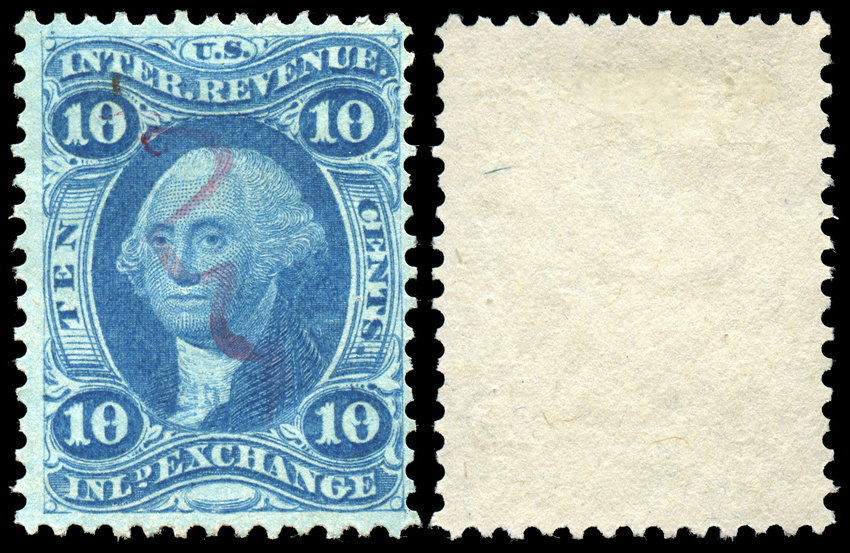
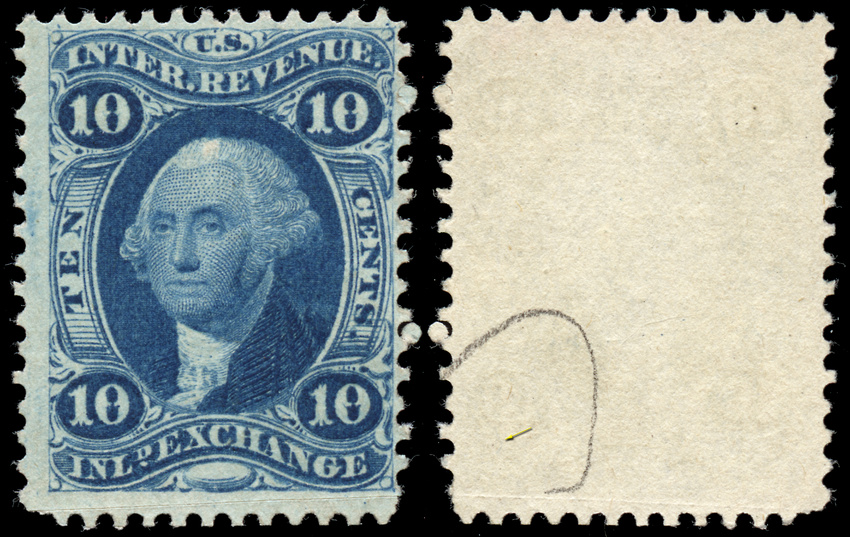
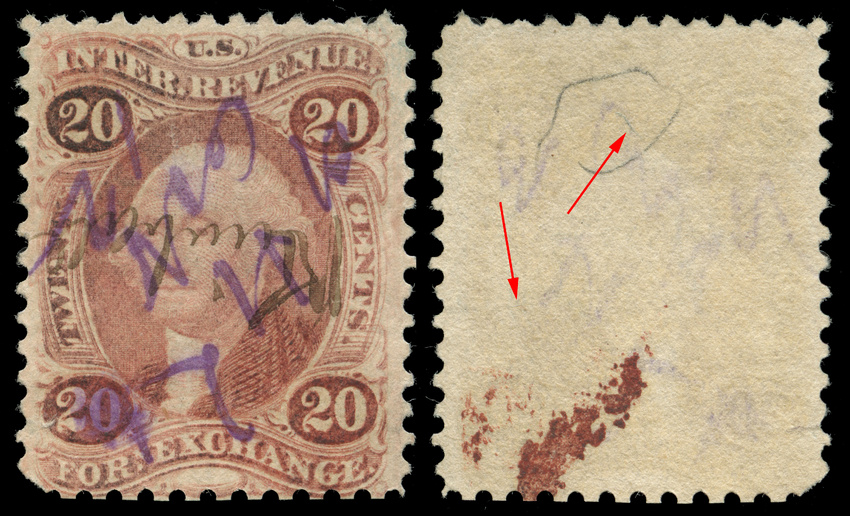
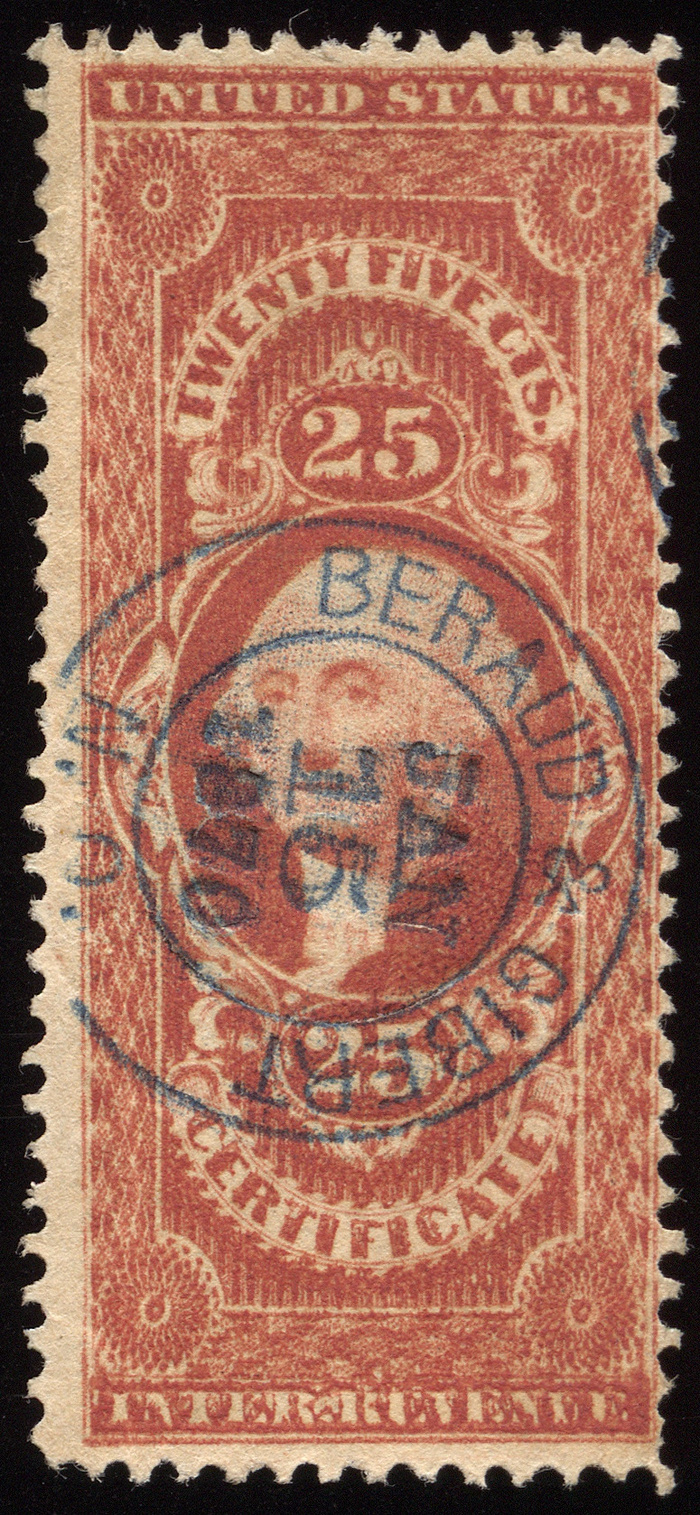
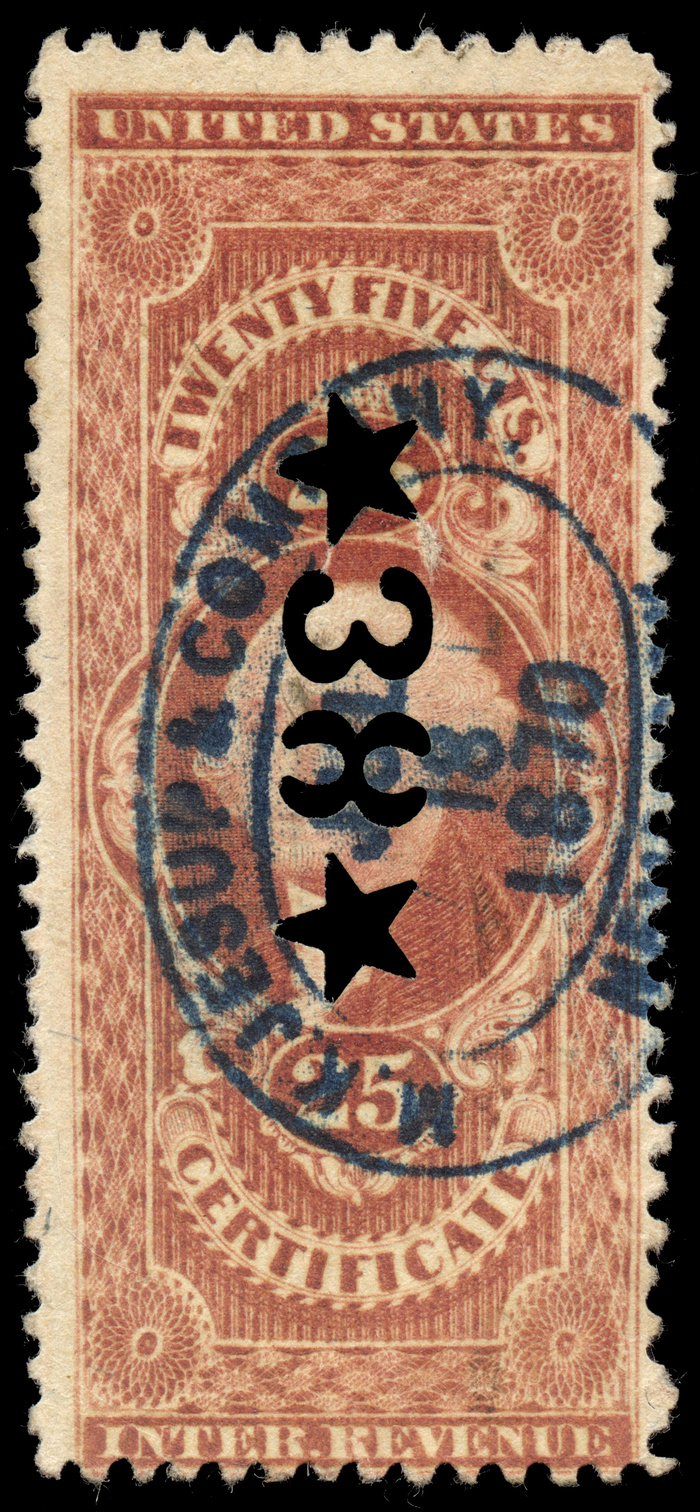
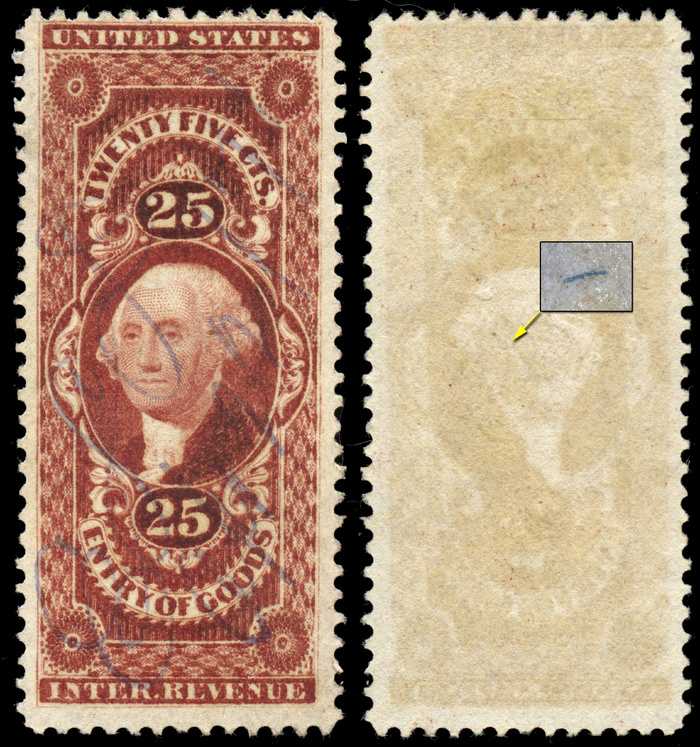
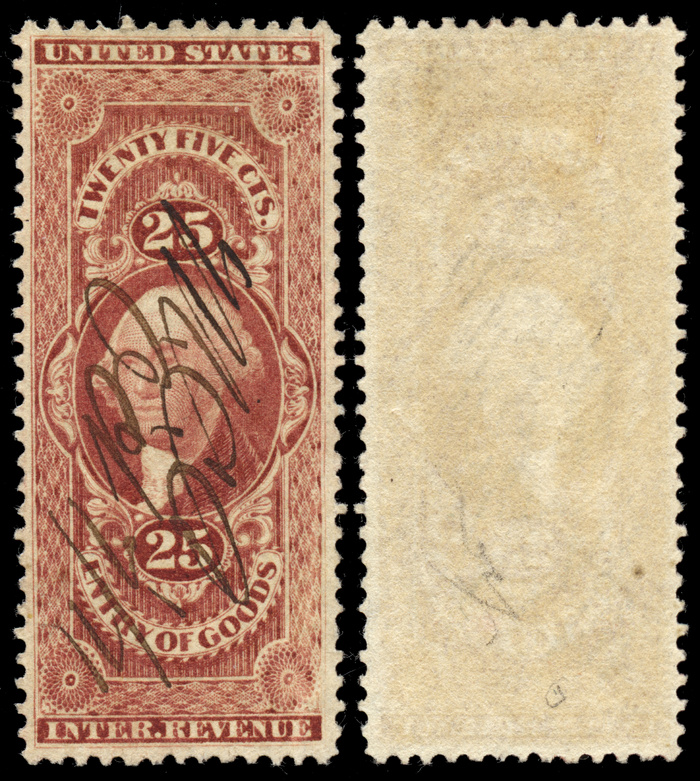
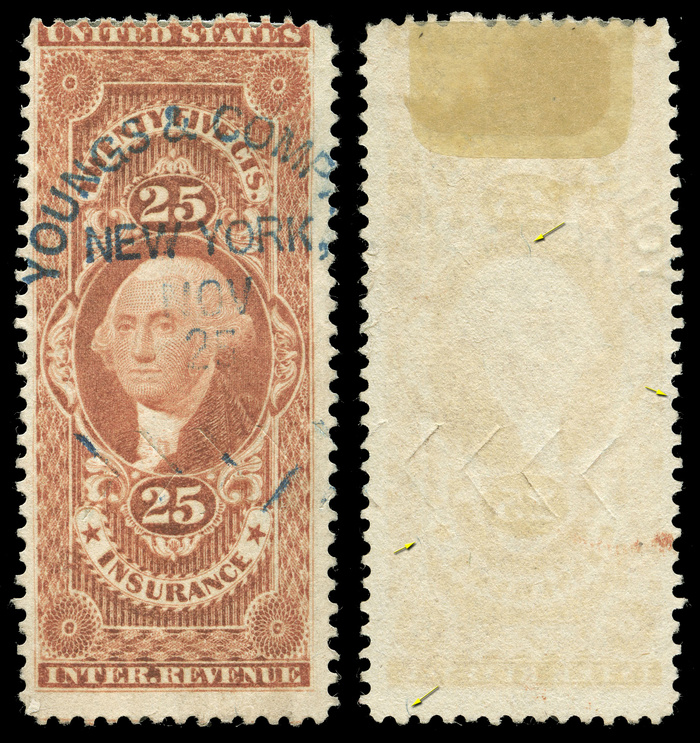
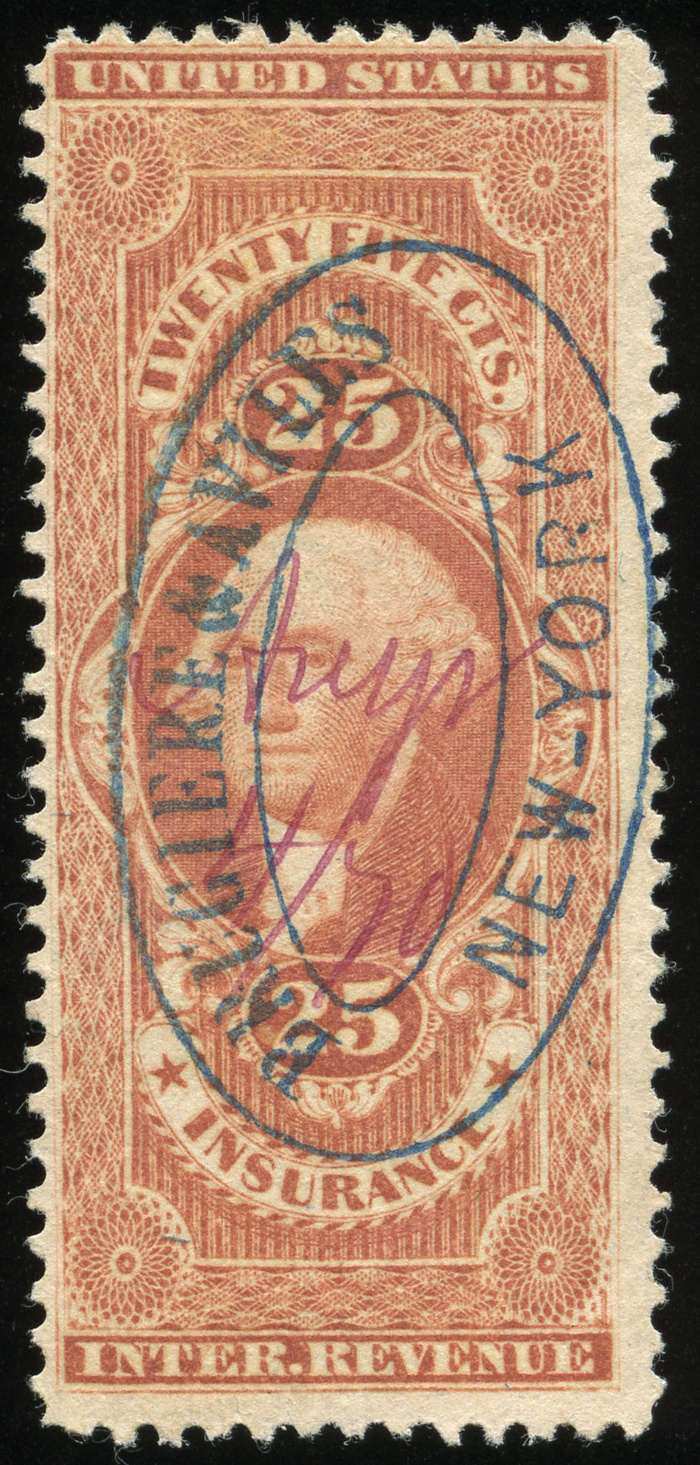
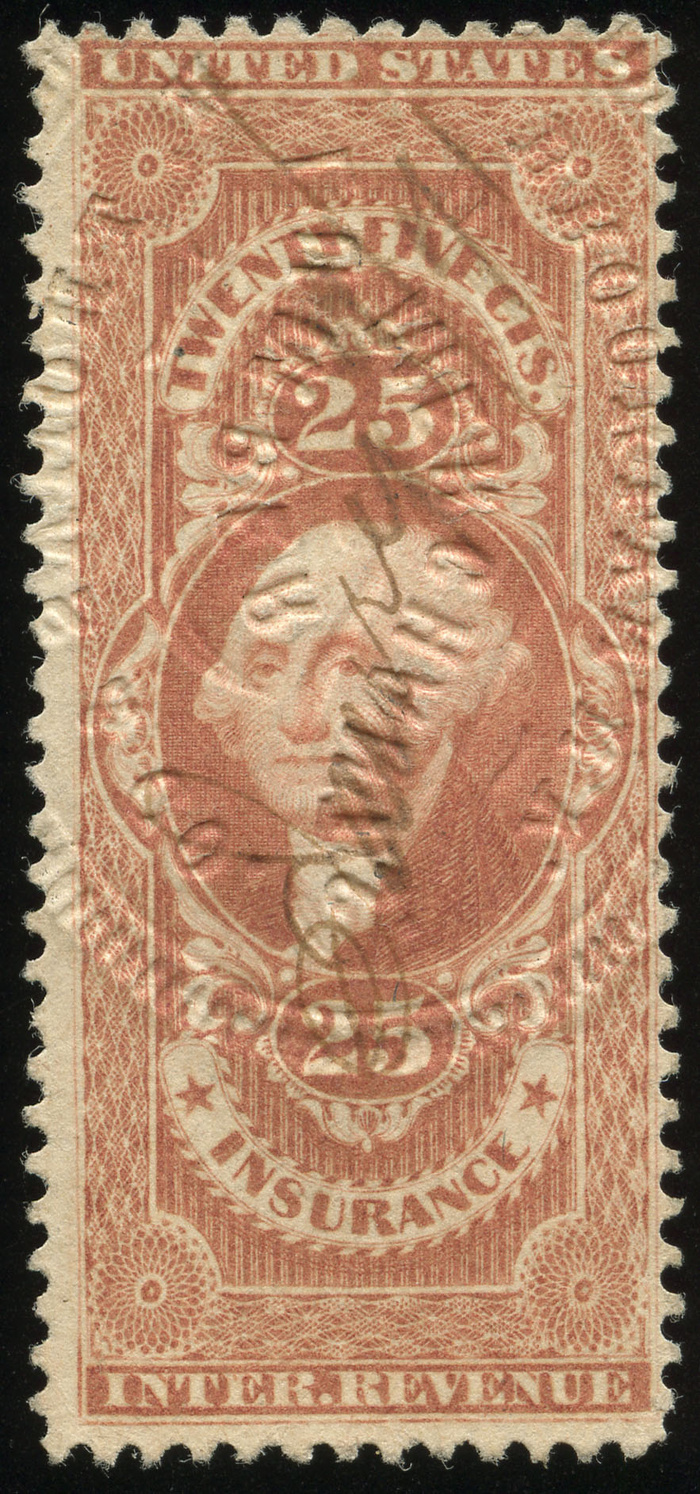
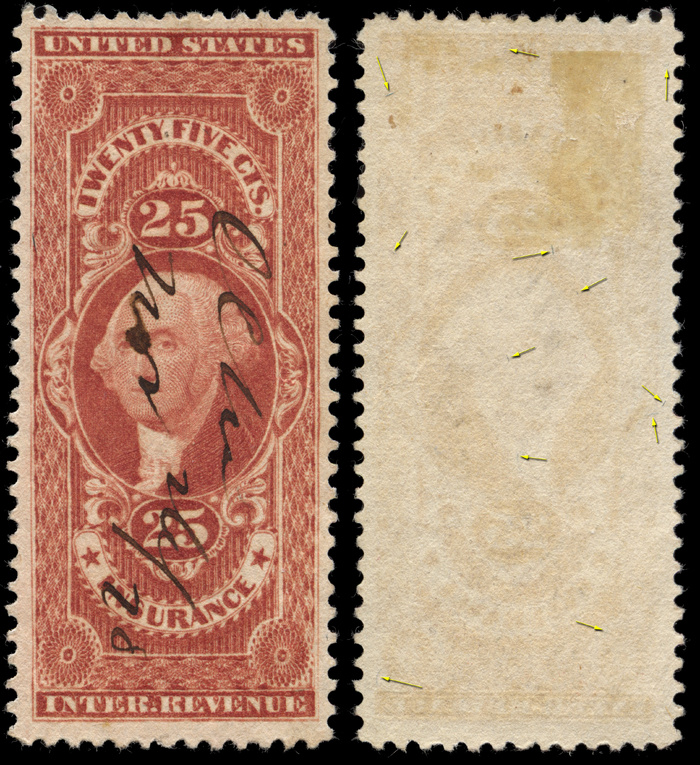
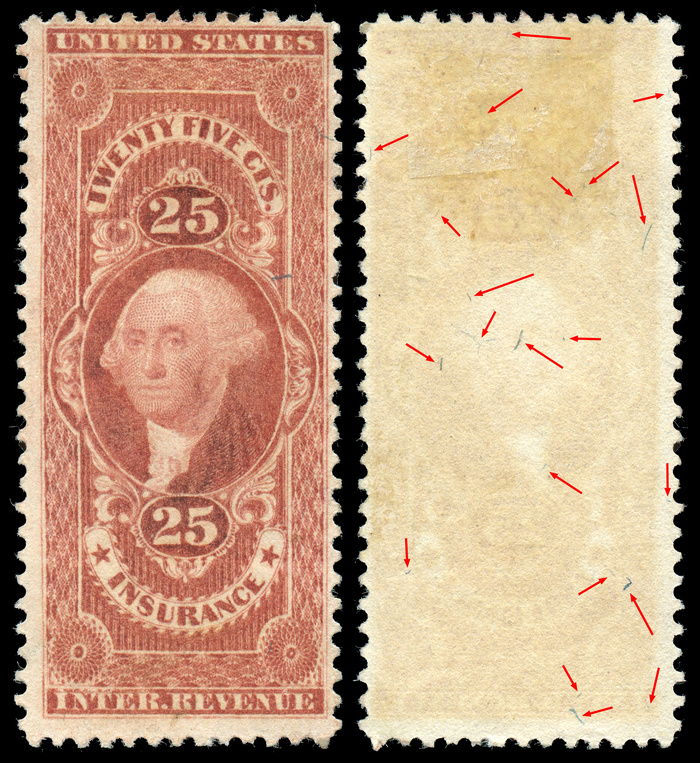
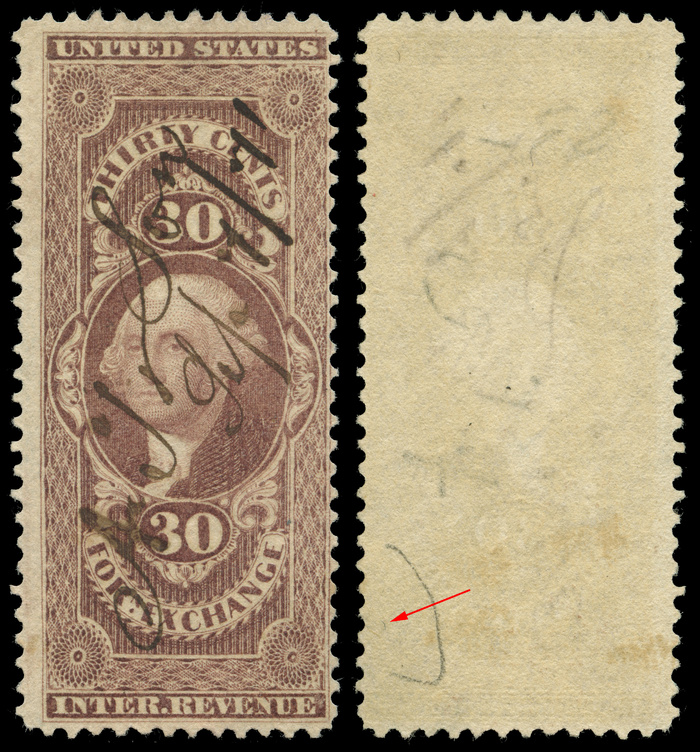
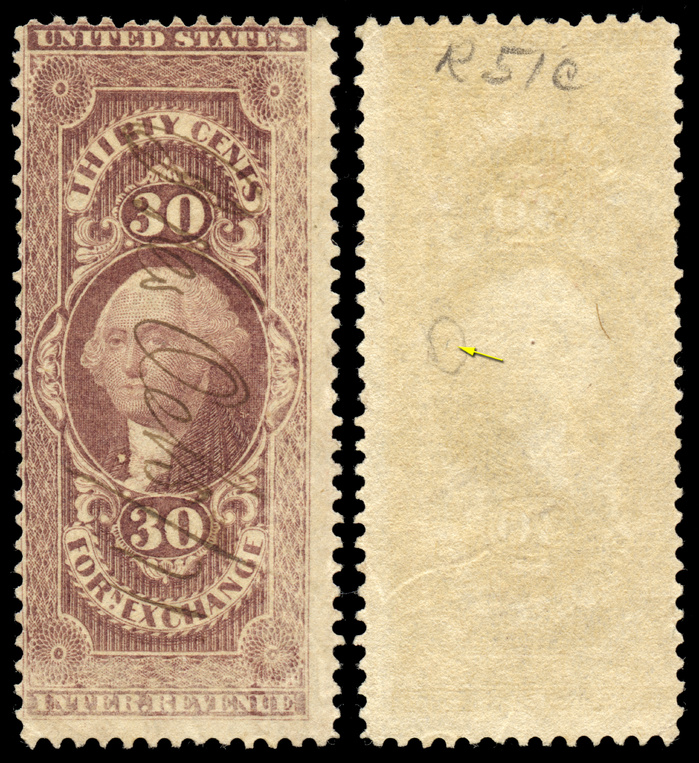
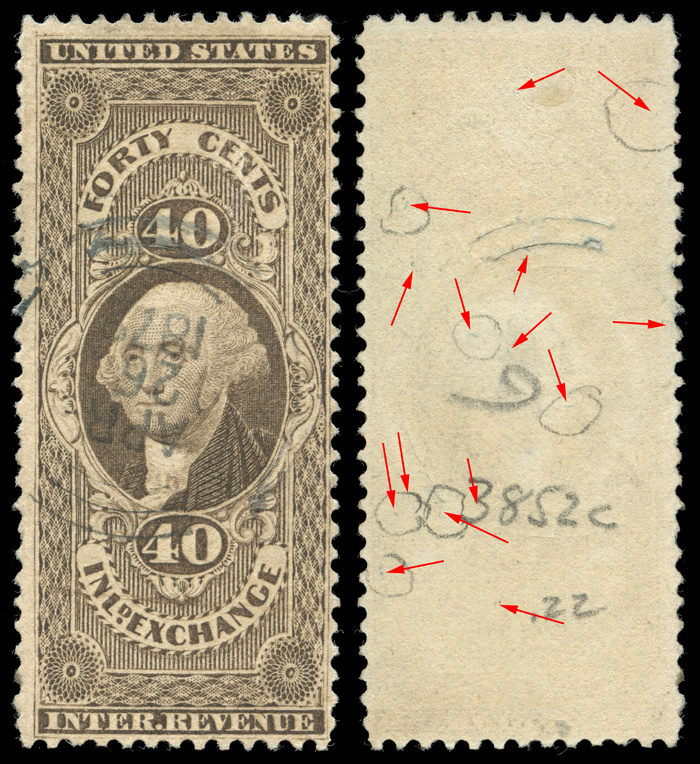
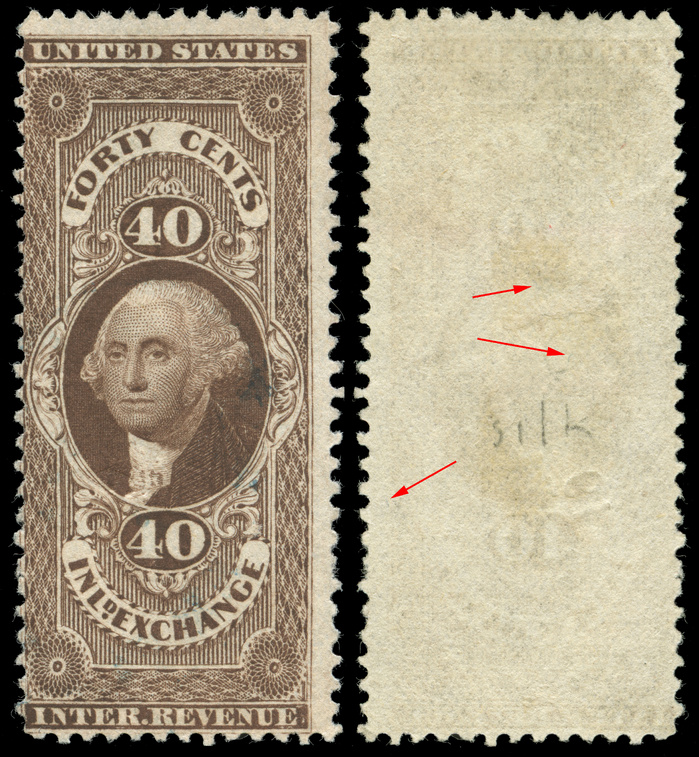
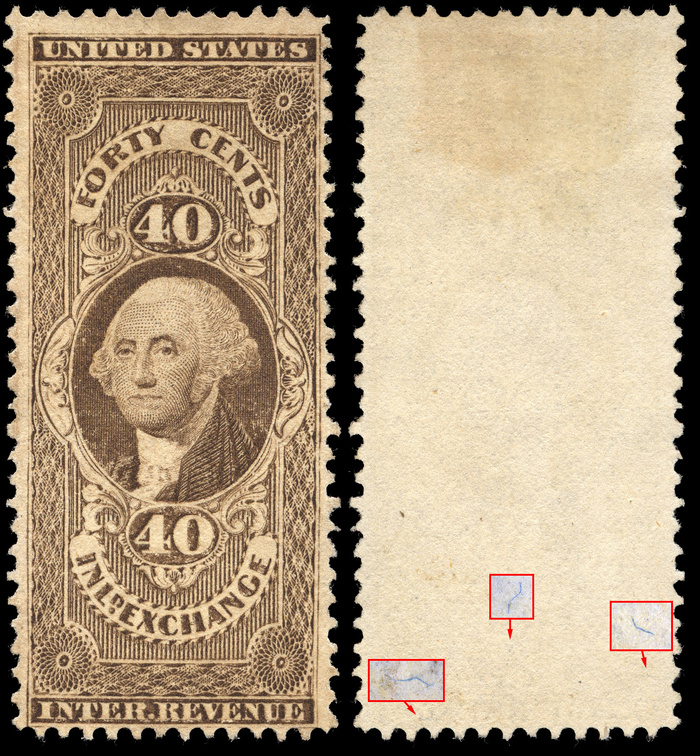
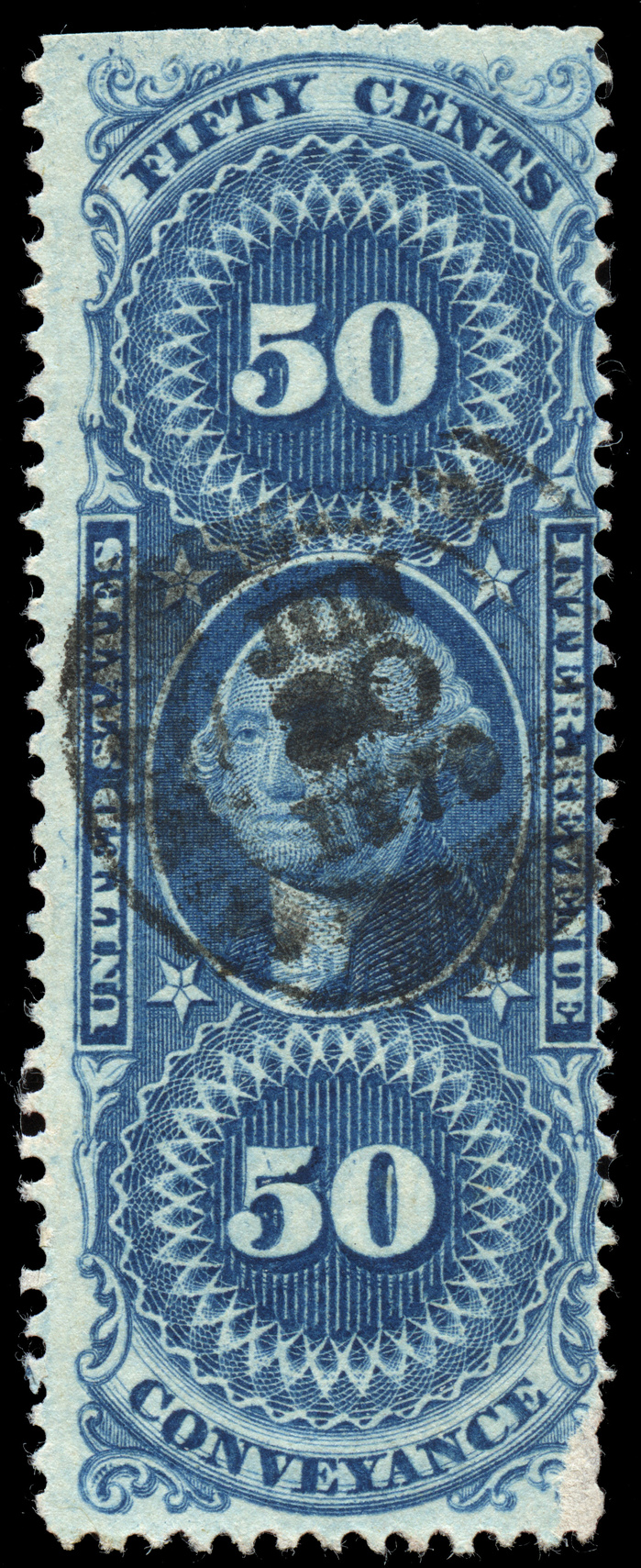
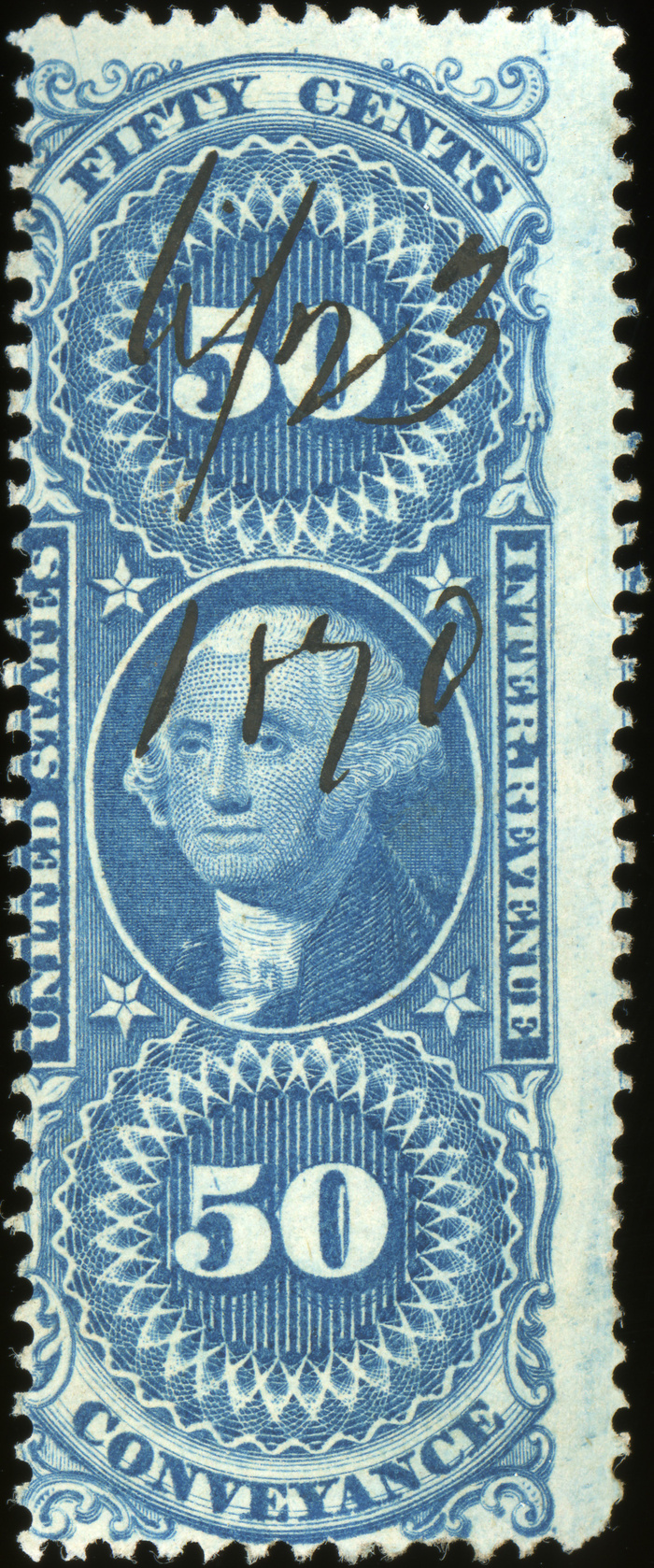
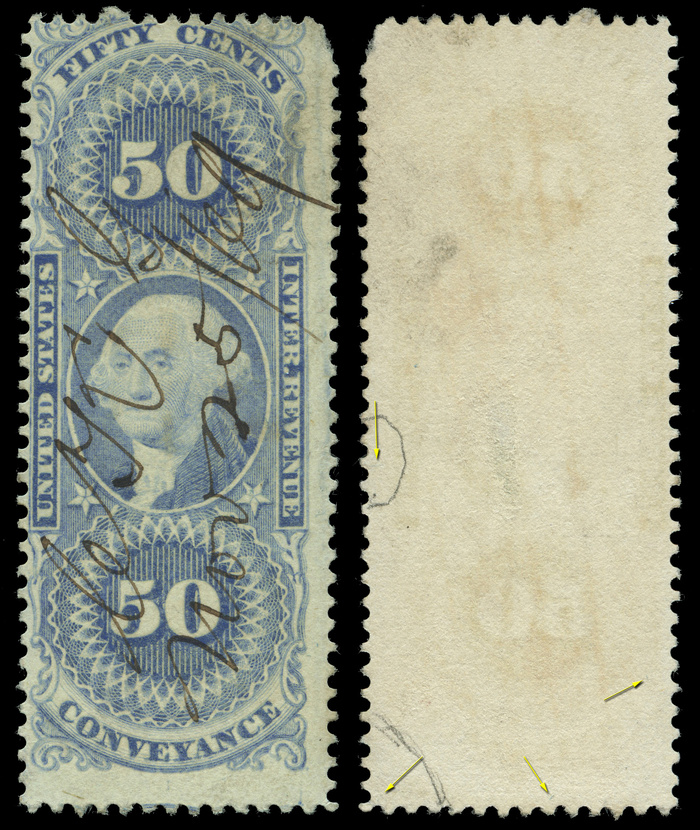
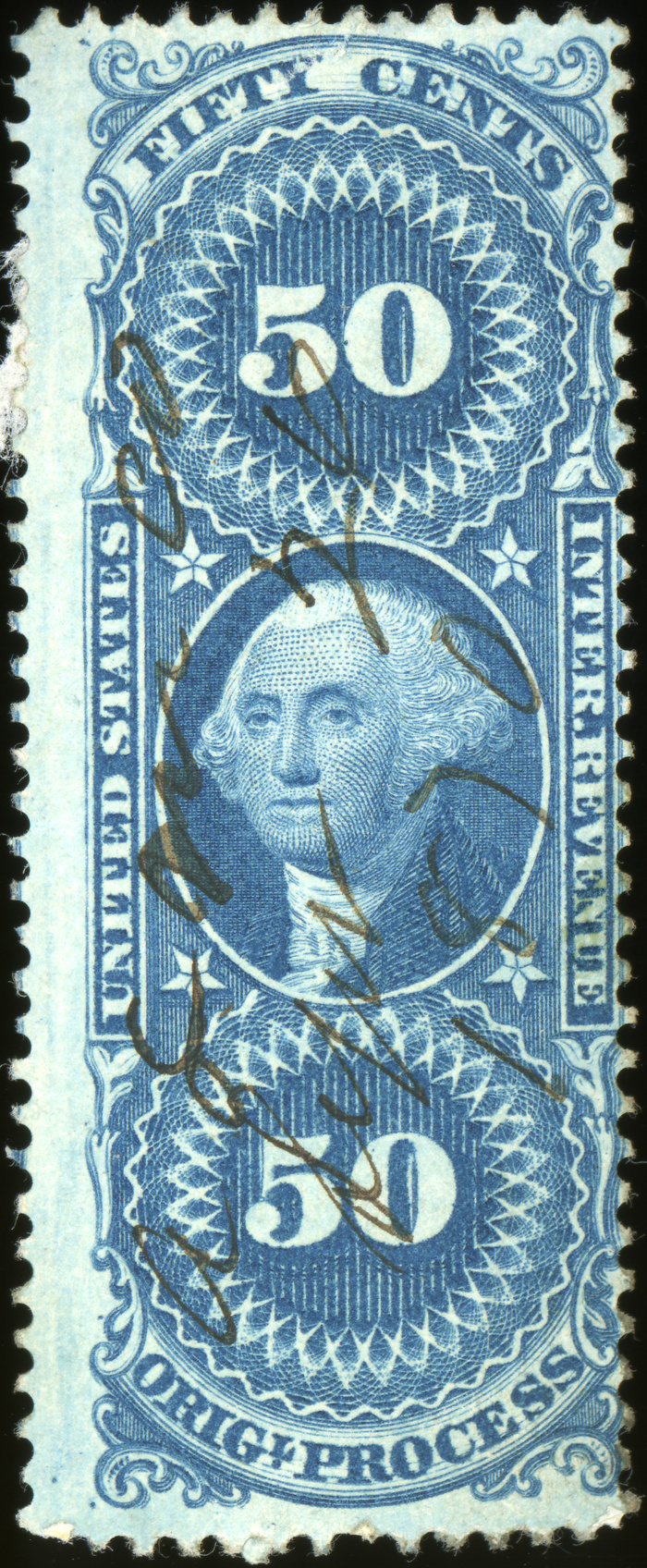
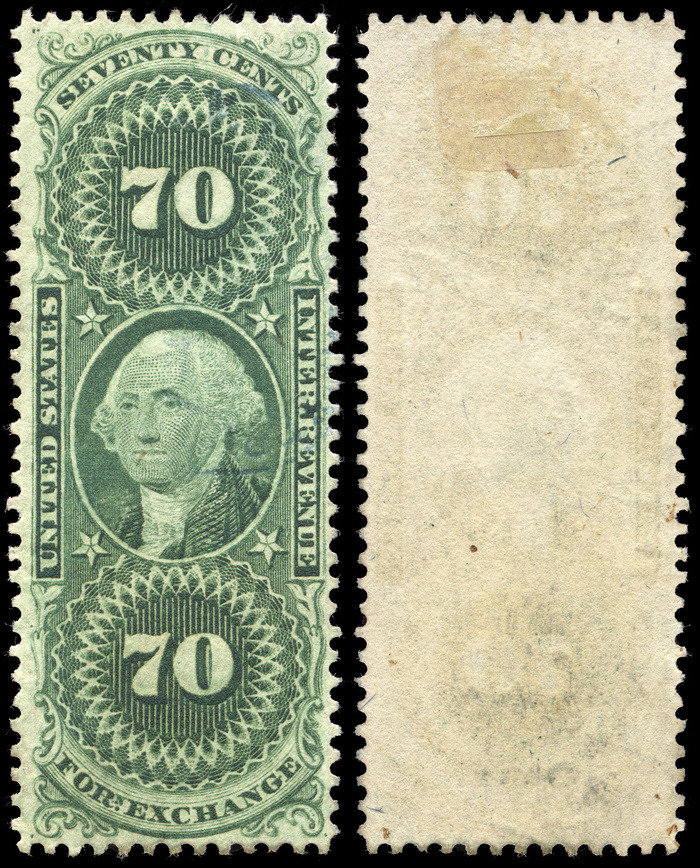
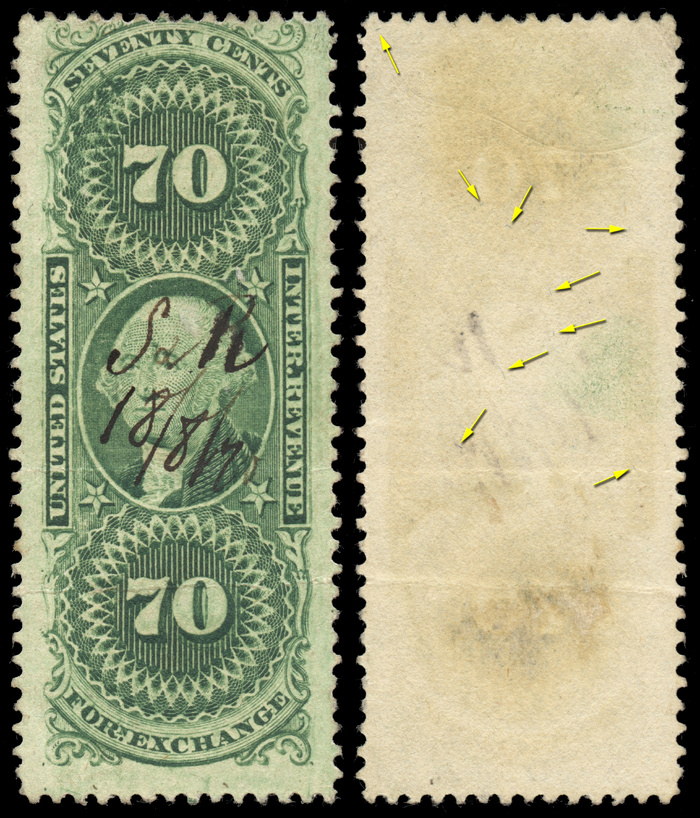
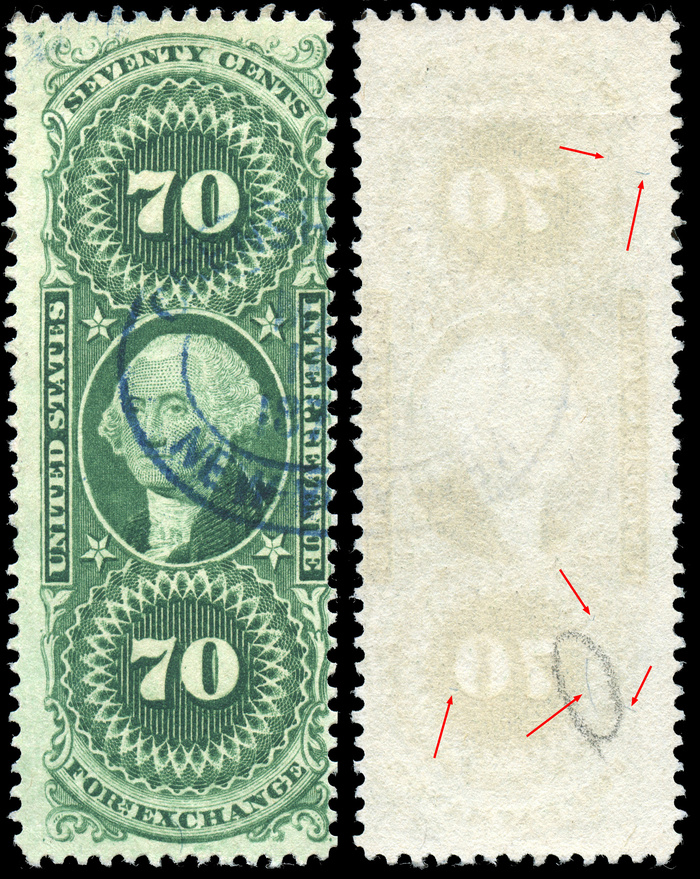
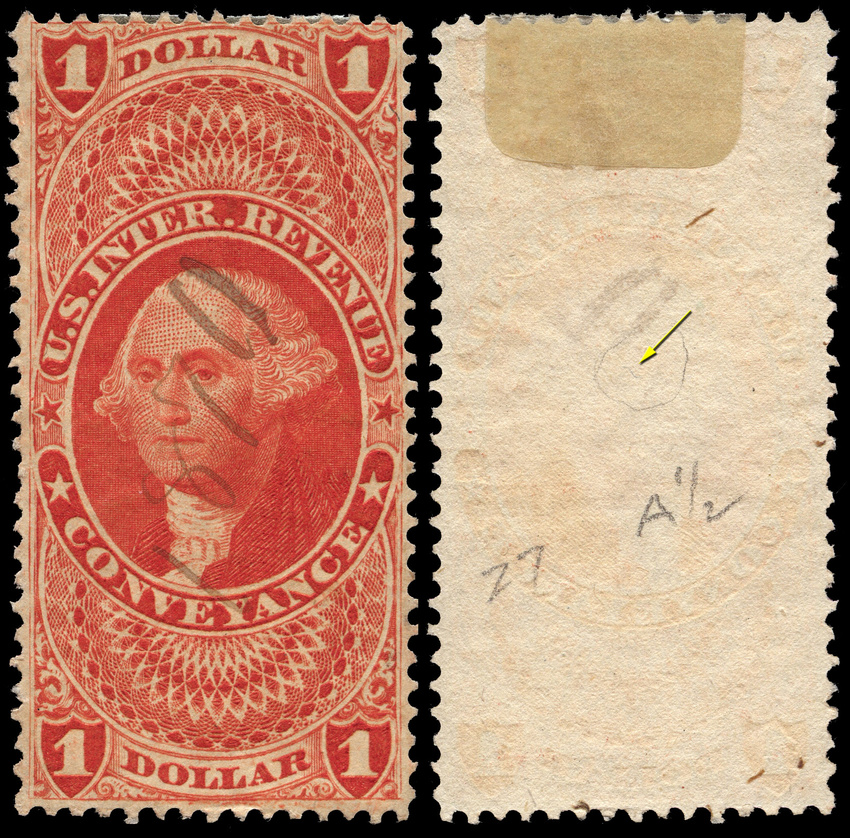
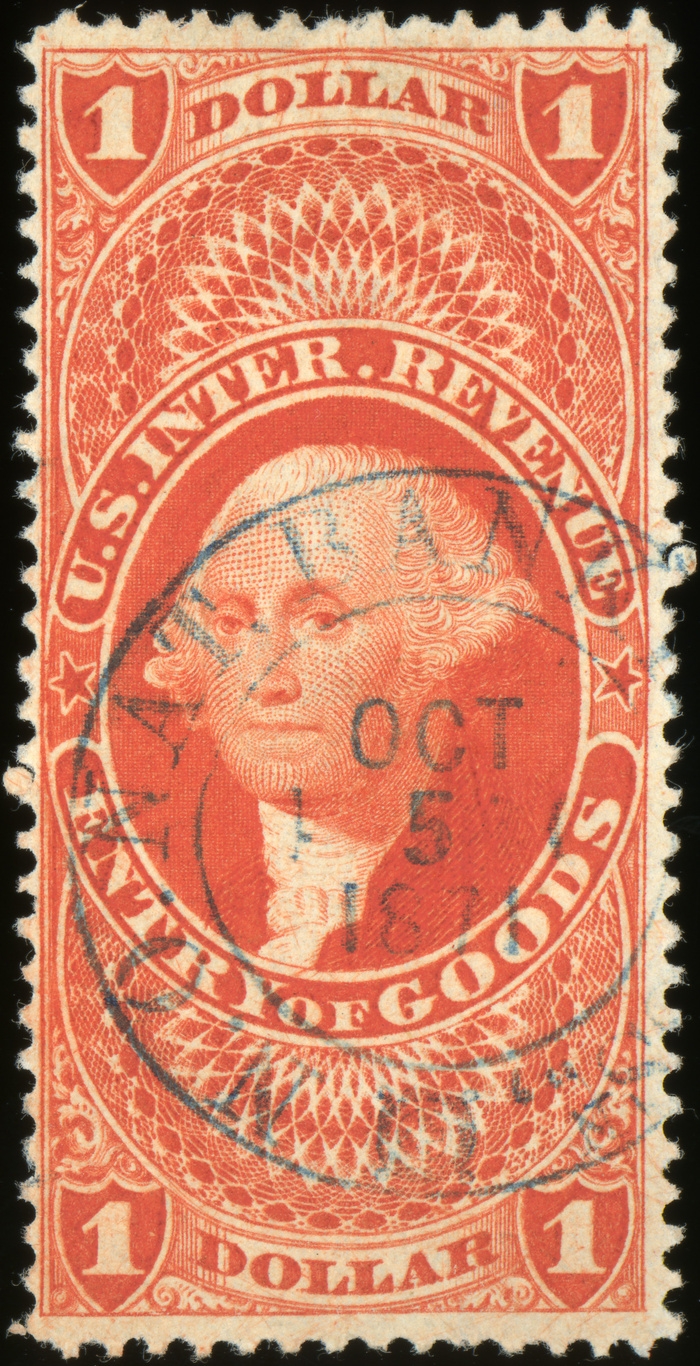
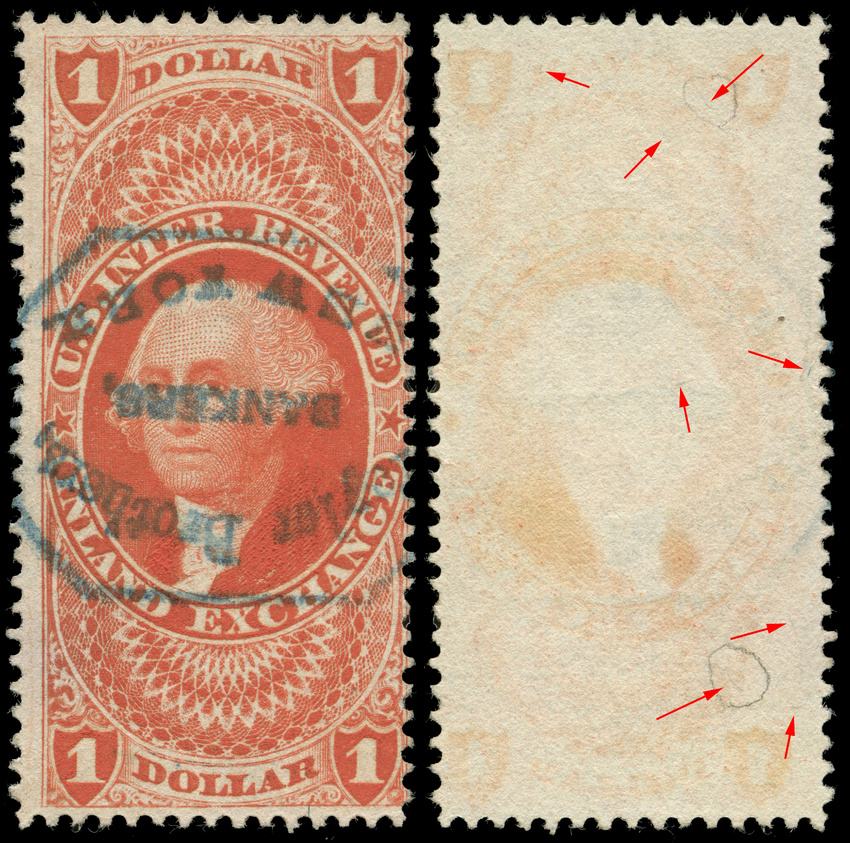
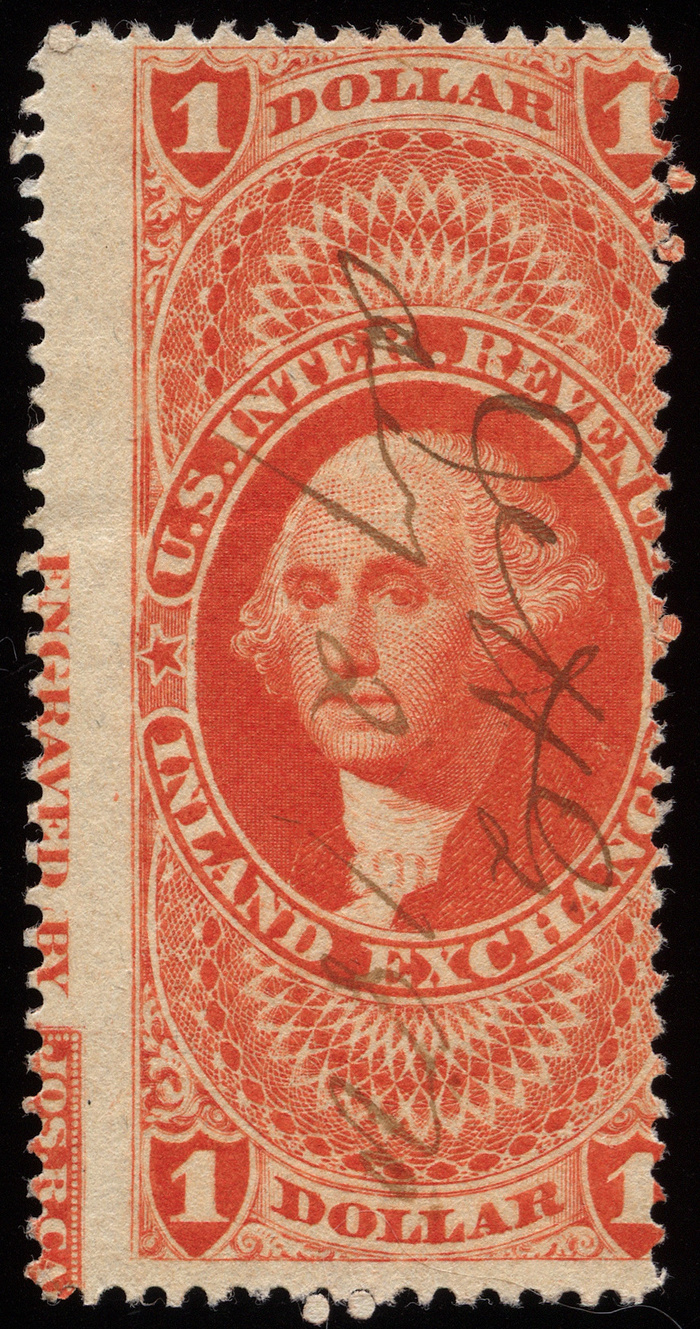
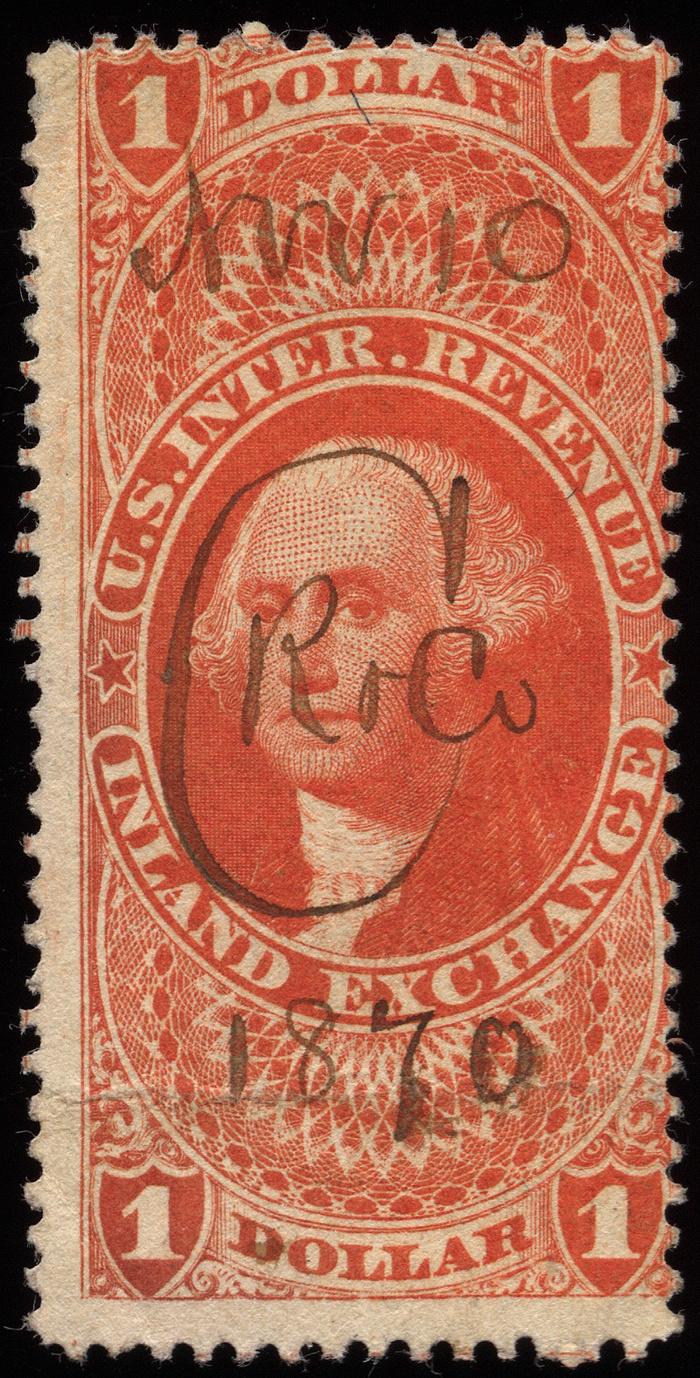
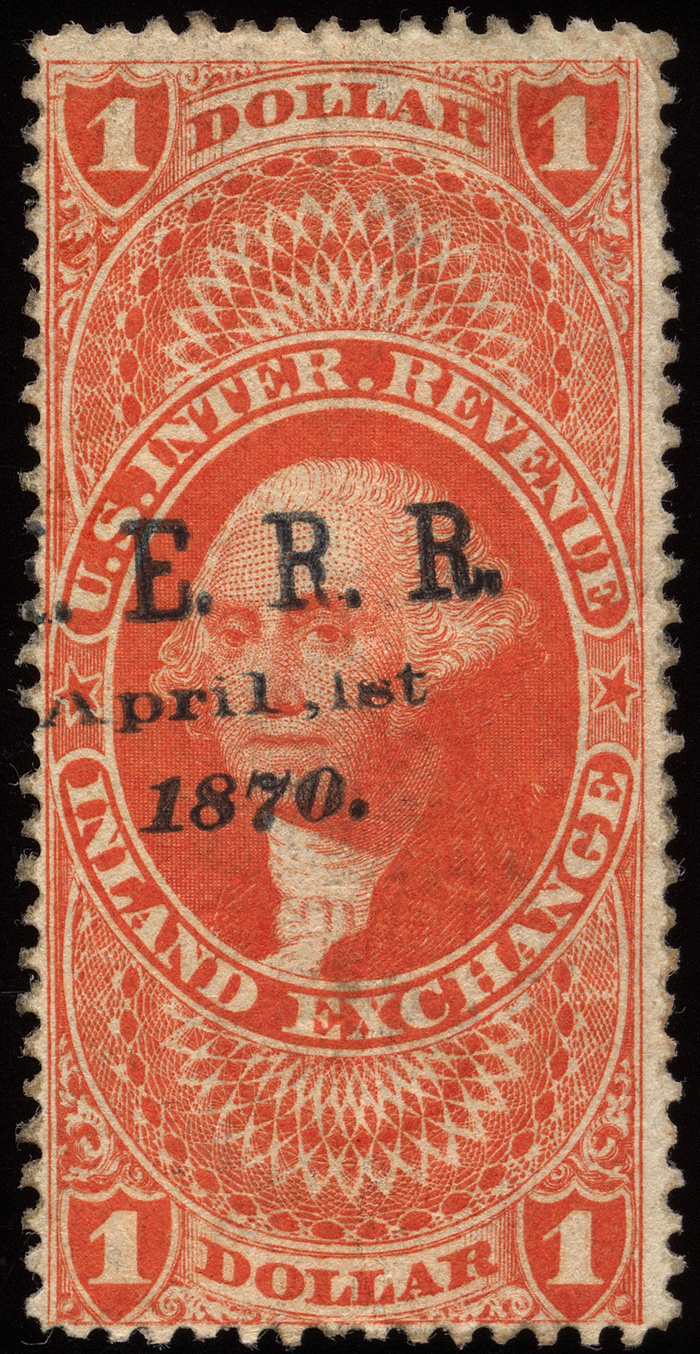
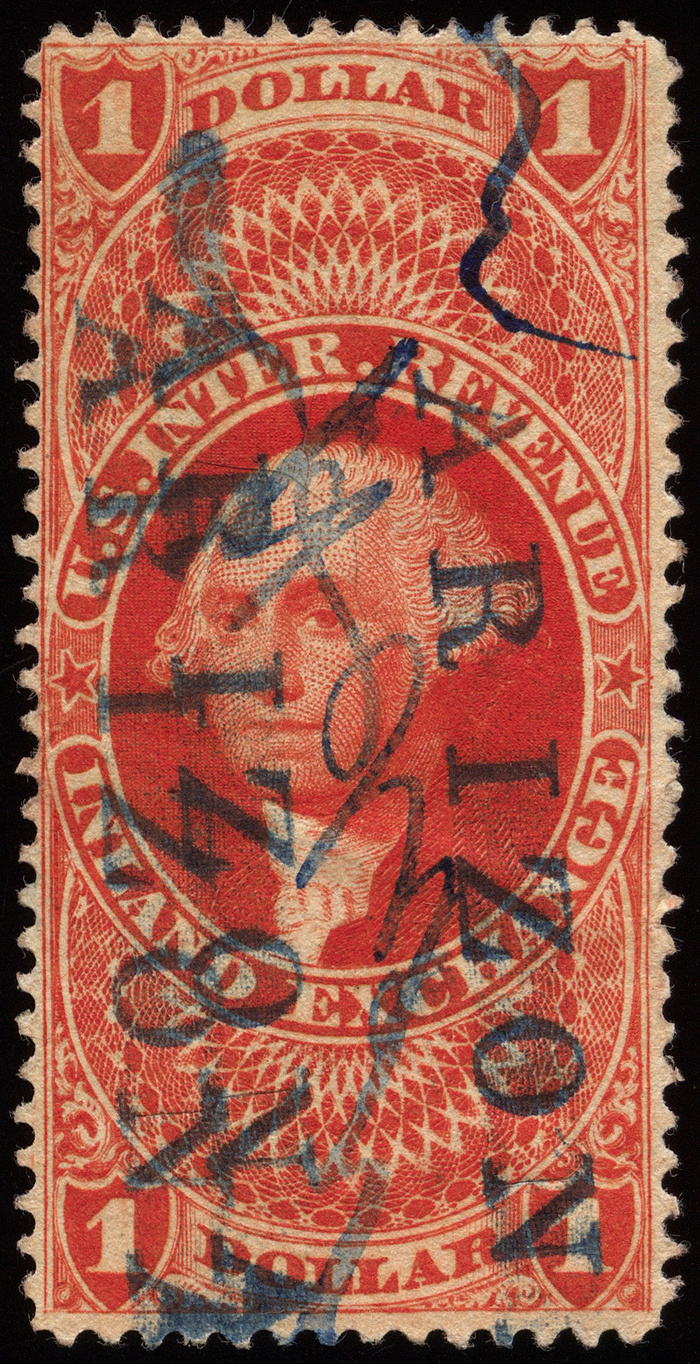
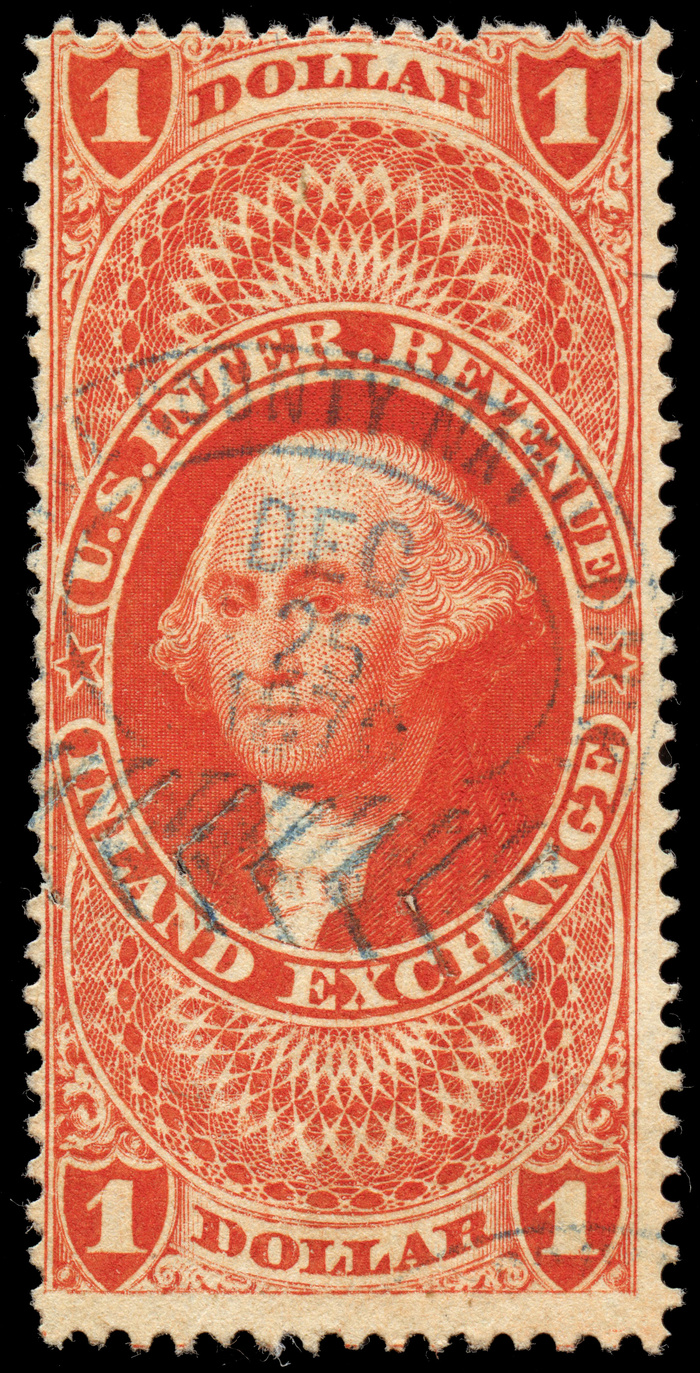
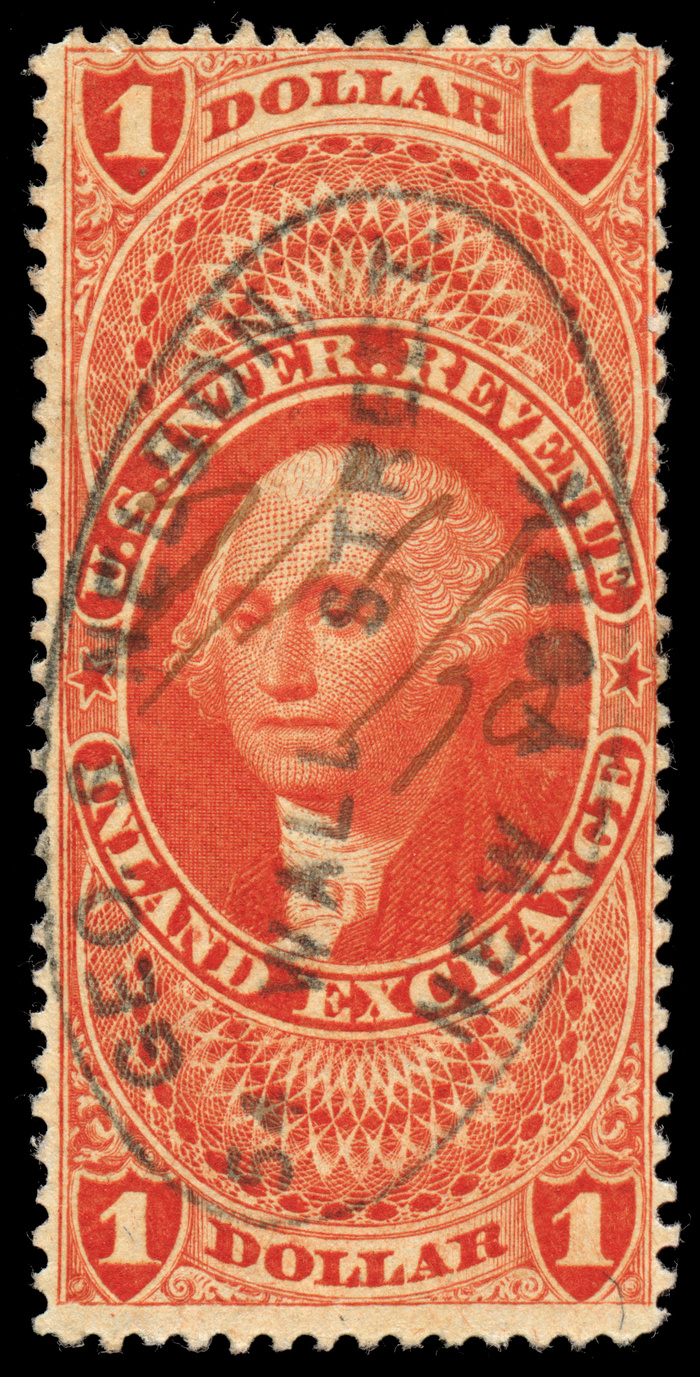
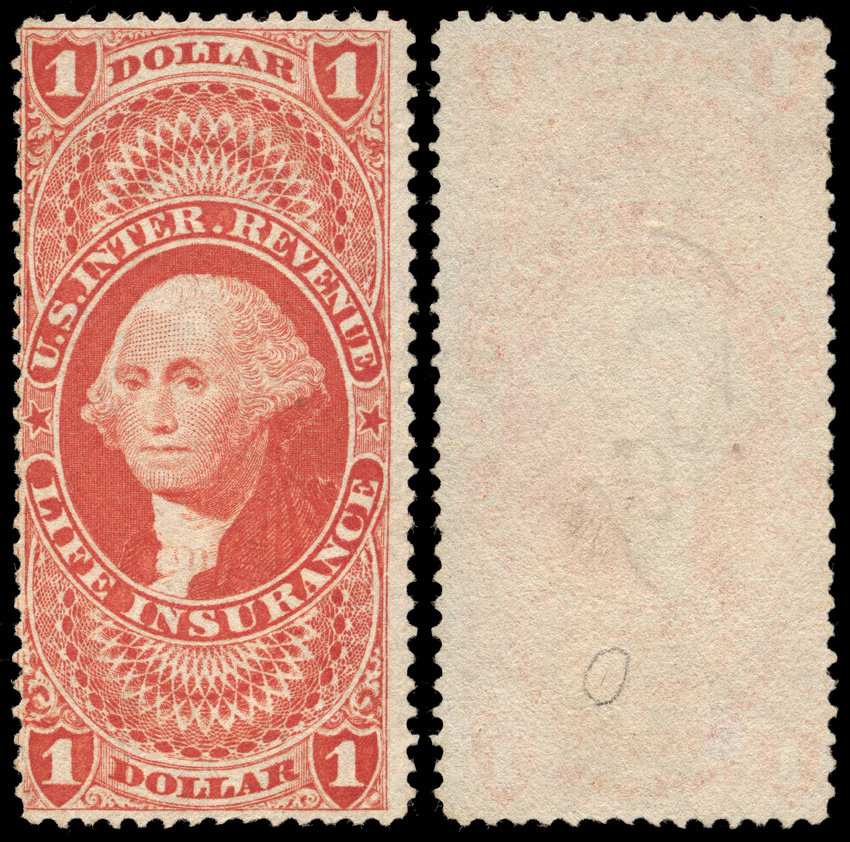
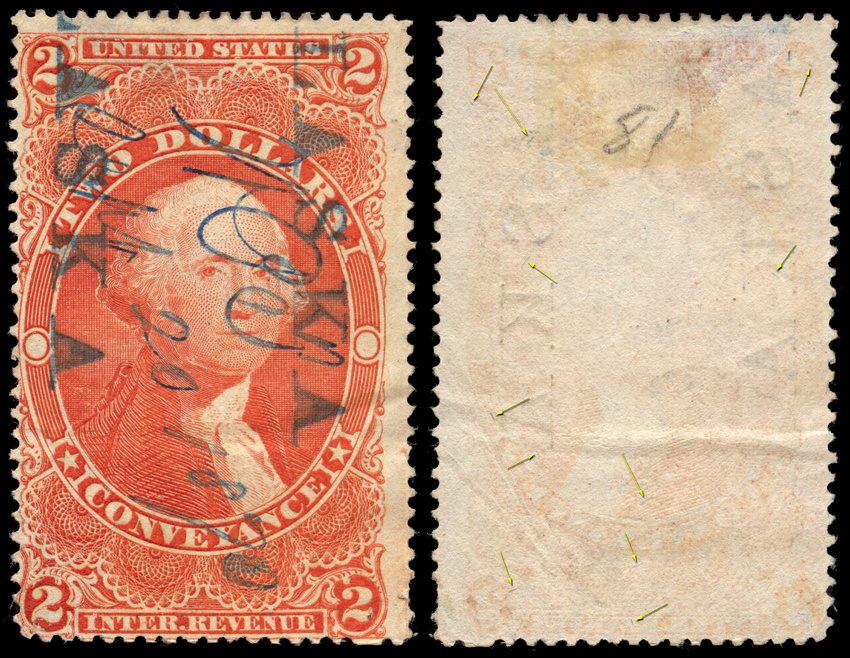
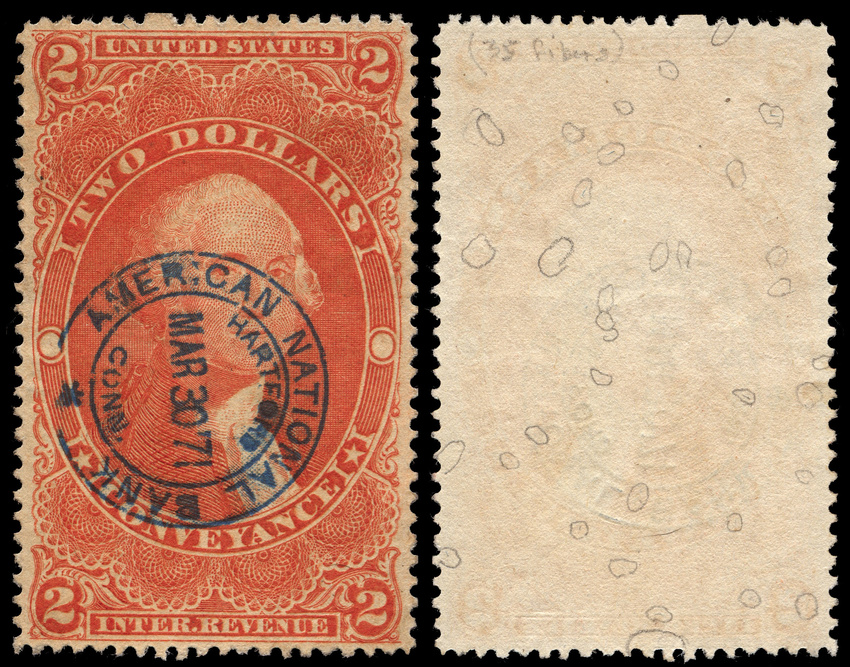
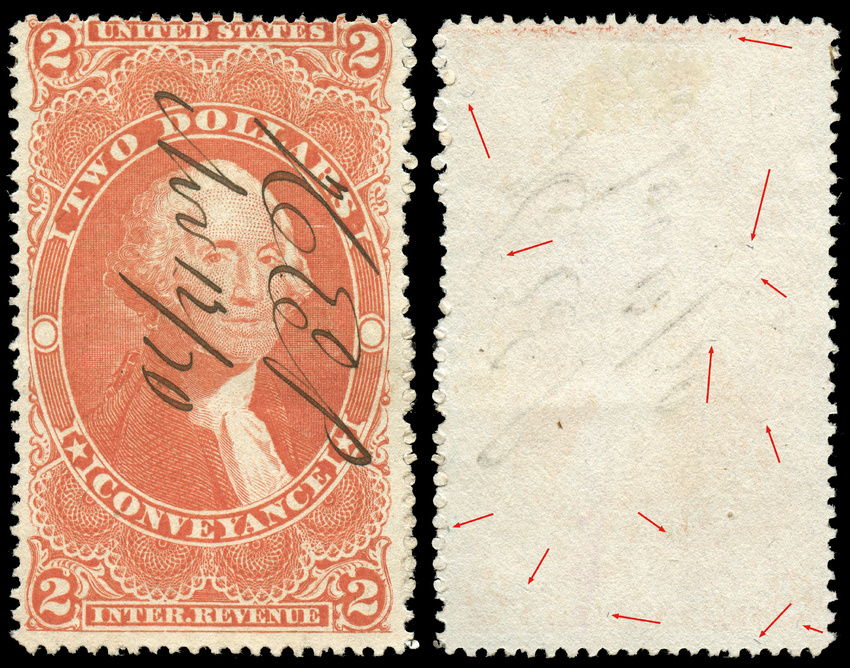
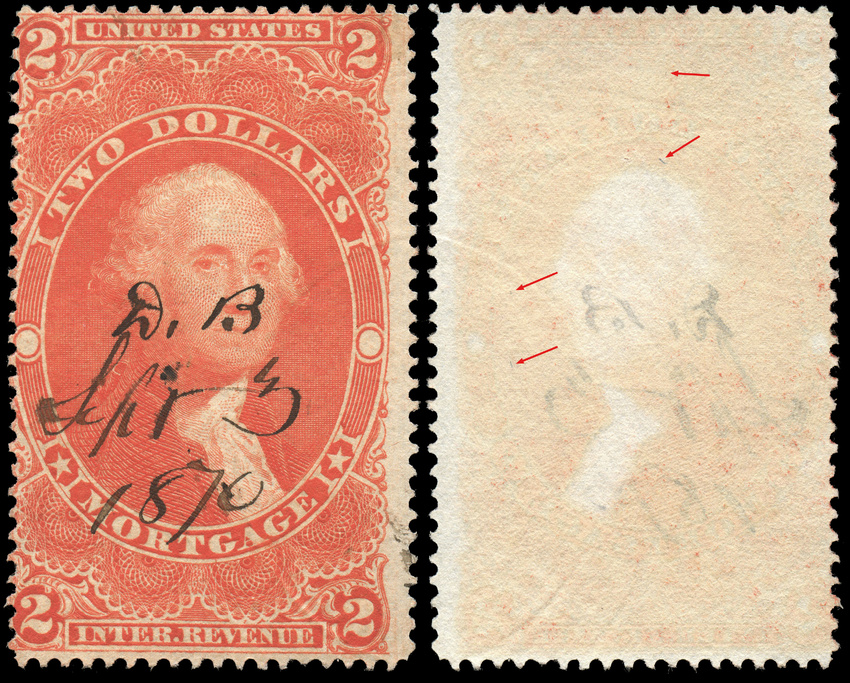
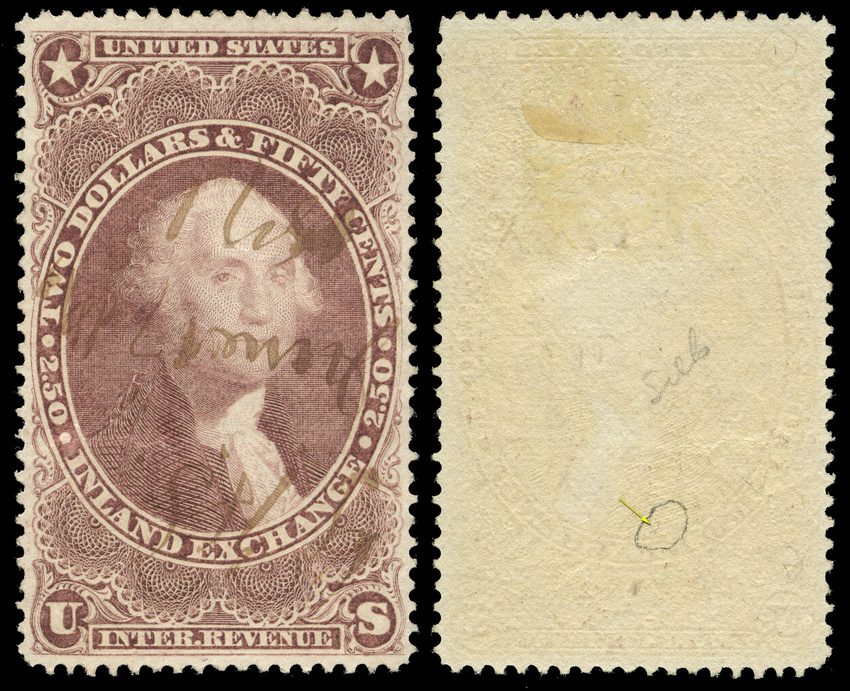
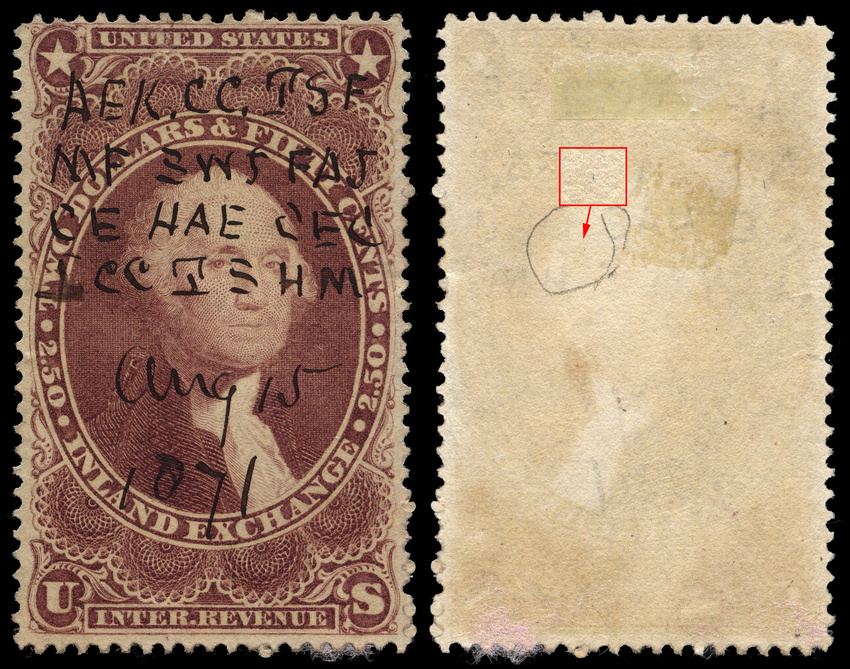
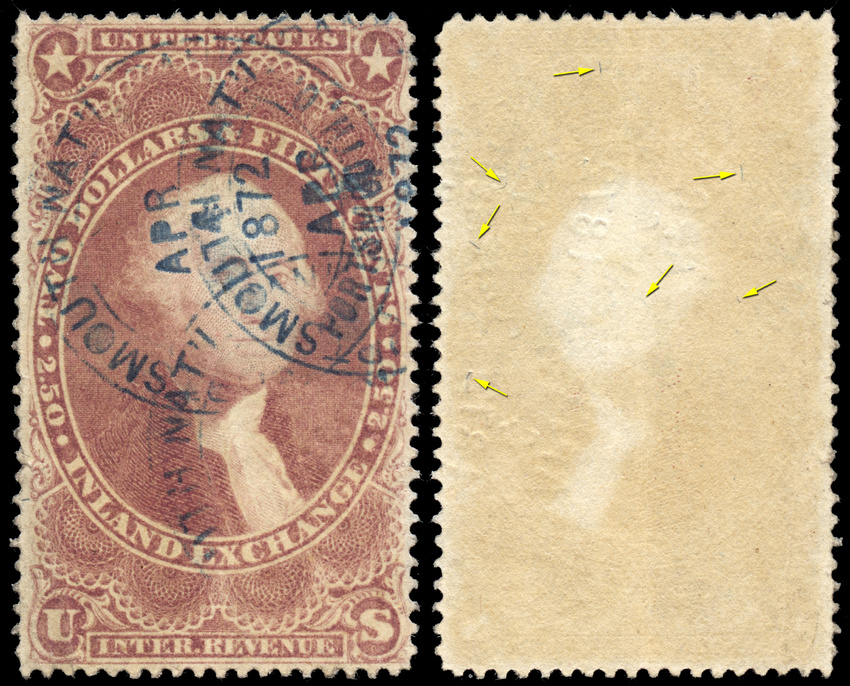
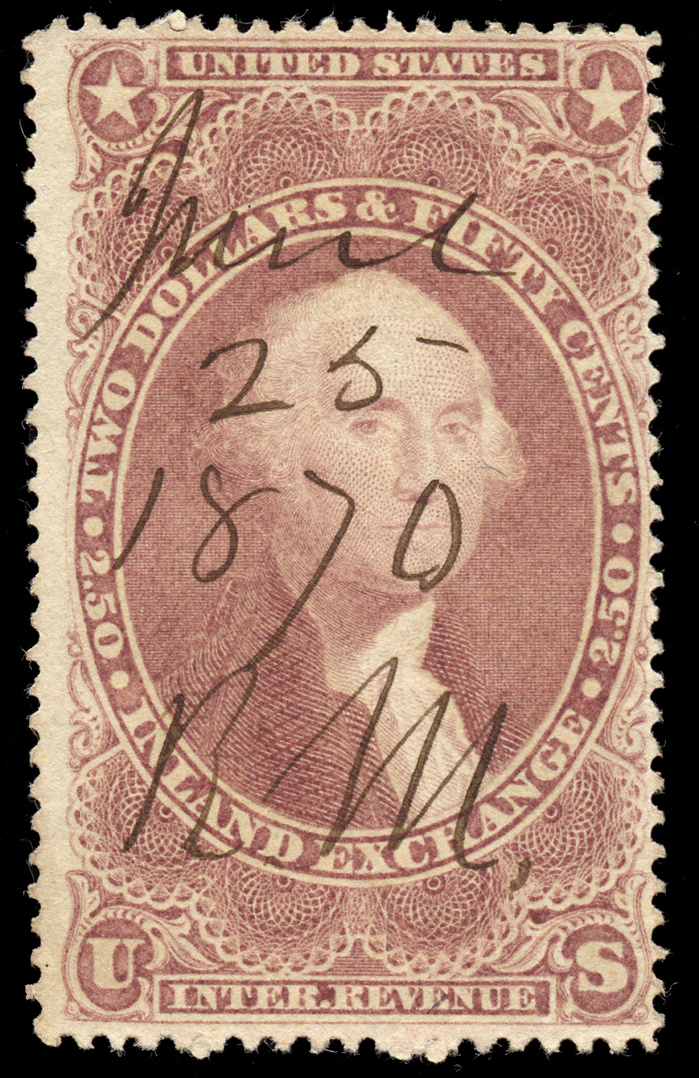
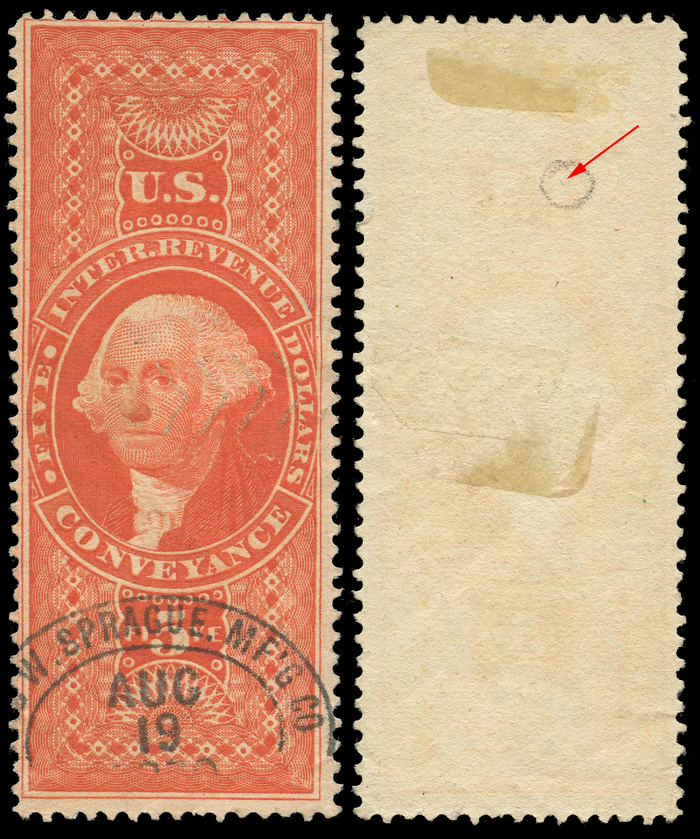
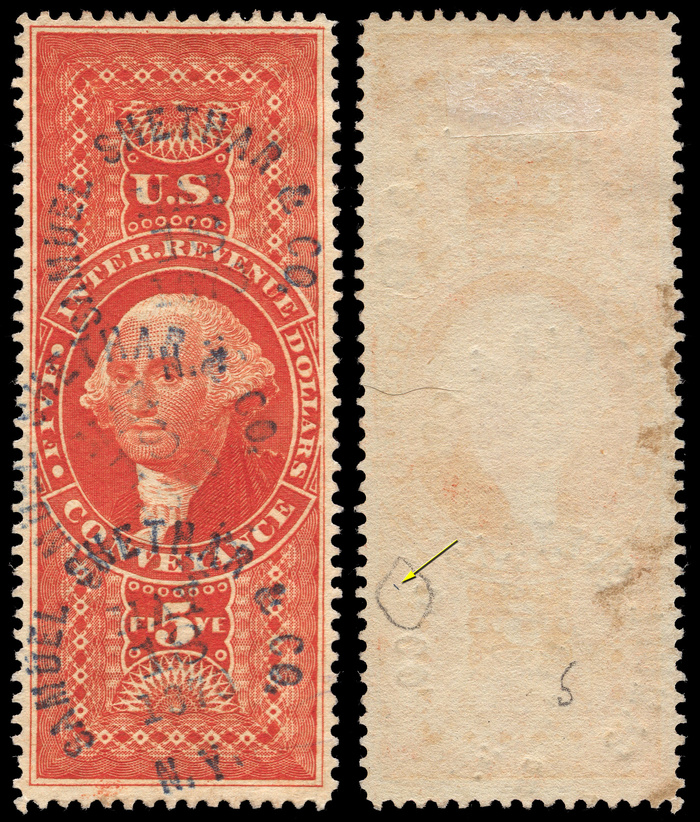
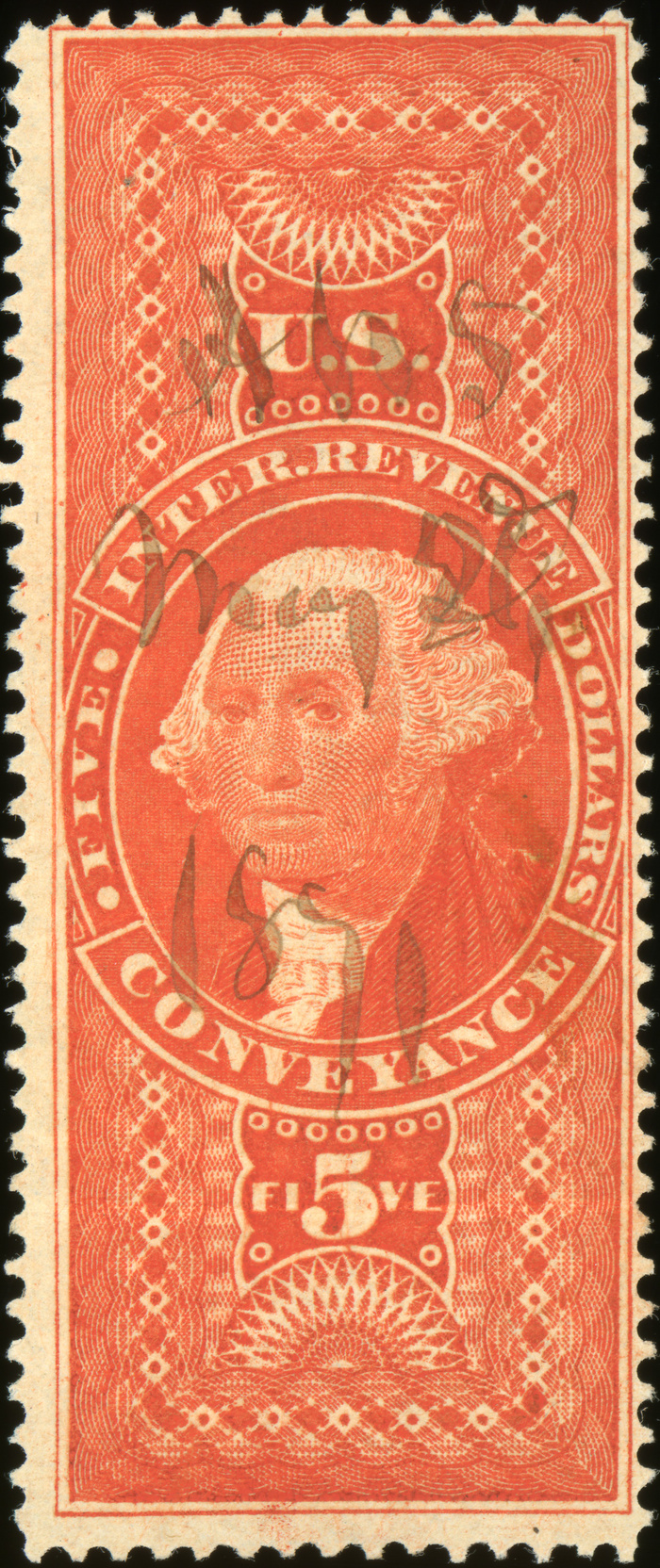
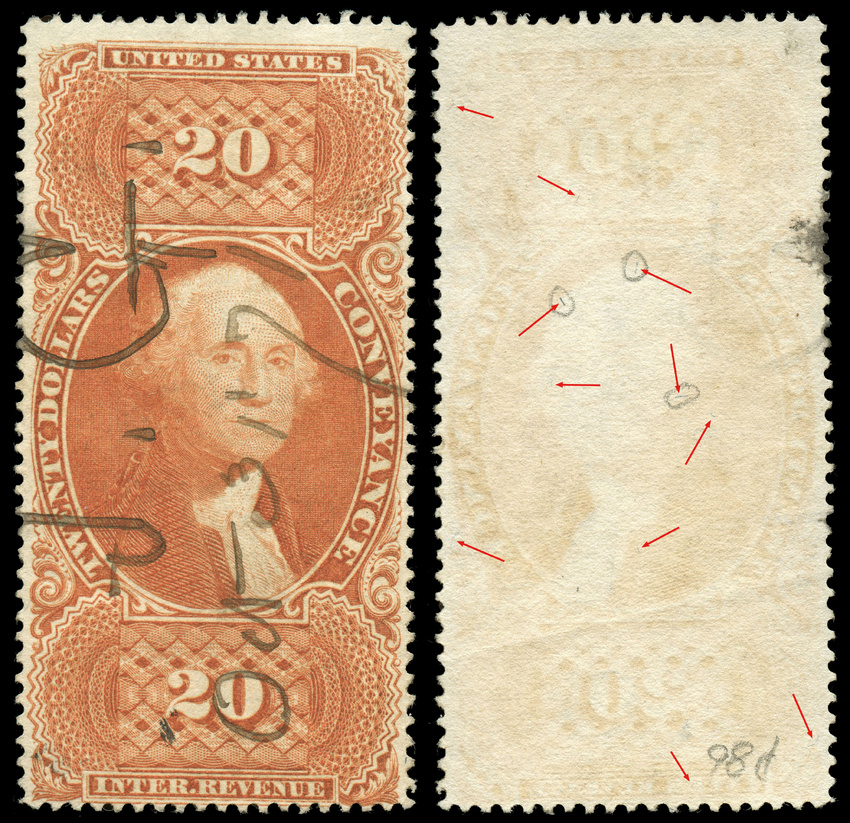
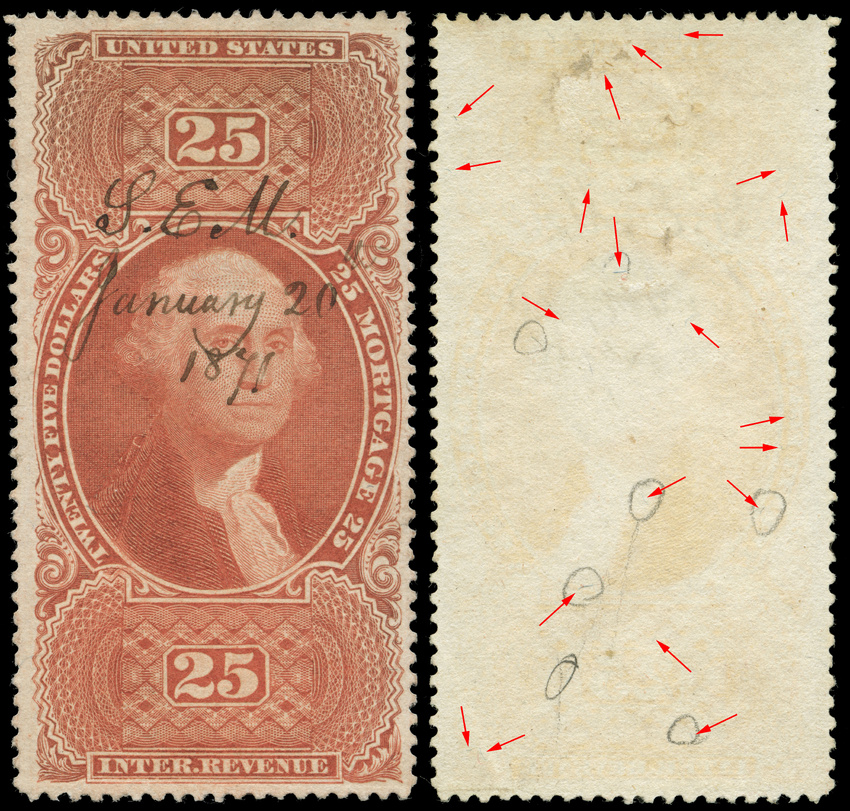
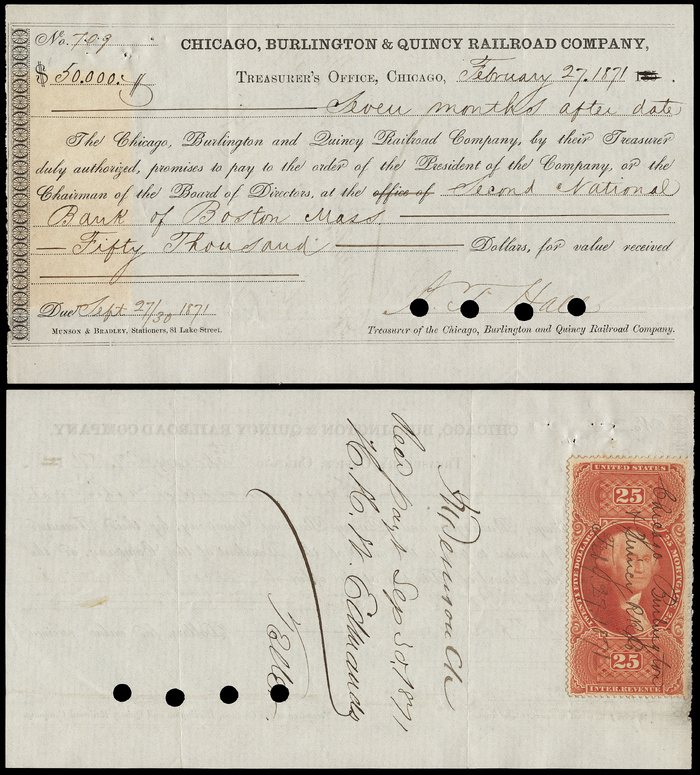
In addition to the information above, the photo gallery below shows all of the 1st issue silk papers in my collection. It is meant to be a visual reference to help in identifying the characteristics of 1st issue silk papers. Even within stamps of the same type (R3d, R6d, R10d, etc.), you will see differences from stamp to stamp, not only in the printing, but in the silk paper itself. This includes not only the frequency of blue silk threads, but also in the characteristics of the threads themselves. Some threads will be extremely fine and/or short in length, whereas others will be long or coarse/thick.
As wide a variety of examples as I might be able to image here, there is no substitute to sitting down yourself with stamps and comparing them side by side using bright light and high magnification, getting a feel for colors and textures...
Please bear with me, as this page is a work in progress. I need to go back and reimage some of the older acquisitions and scan the backs of the stamps.
Click on any thumbnail below to pop up a window with more information and a zoomable high-resolution image.
© Copyright 2003-2026, DBH. All rights reserved.
Contact Me Site Map
Privacy Policy
Member of:

